




The logistical **bottleneck in the Strait of Hormuz**, through which 20% of global crude oil and 33% of fertilizers transit, has triggered an inflationary shockwave that particularly impacts the Canary Islands, a remote peripheral region. The escalation of Brent by 64% and the spike of 81% in distillates—jet fuel and diesel—compromise air connectivity and **structurally increase the inter-island transport costs of goods**. This scenario is exacerbated by a 76% rise in urea since December, a critical input that, combined with rising freight costs, threatens to **squeeze the profitability of local agricultural operations** already operating on narrow margins under the Specific Supply Regime (REA).
For the archipelago, this ‘real inflation’ described by the strengthening of the dollar against the commodity complex represents a direct erosion of purchasing power greater than the official IPC-U figure of 2.4%. The **expectation of no rate cuts in 2026 increases the cost of financing for Canary Islands importing SMEs** at a time when input costs—such as corn—anticipate a more expensive shopping basket. The Canary Islands, dependent on a **Type 9 corn market, faces 2026 where the cost of living will be dictated by the geopolitics of oil and the grain shortage**, necessitating an urgent revision of transport aid allocations to prevent supply shortages or the bankruptcy of the primary sector.
The disconnection between the availability of meat in the market and the reality of the livestock census at origin will **reconfigure the import routes to the archipelago**. This structural contraction, driven by higher feed corn prices—which have risen by 14% since September to $4.24—**directly pressures the margins of Canary Islands importers operating under the Specific Supply Regime (REA)**, confronting them with record beef prices of $400 per cut of choice quality.
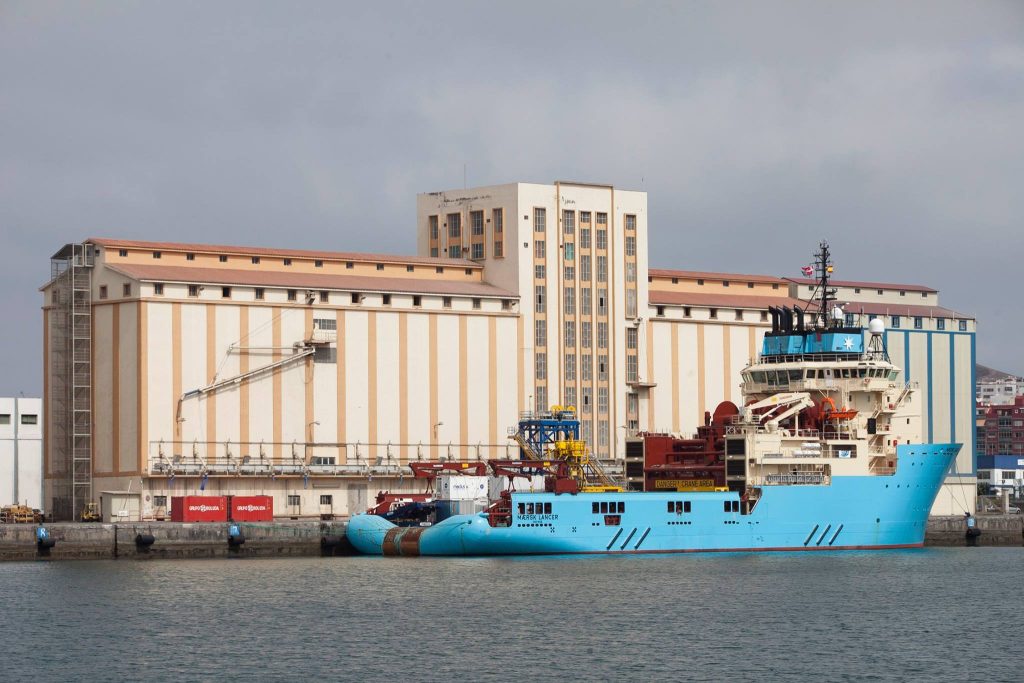
The **Port of La Luz and Las Palmas, a thermometer of domestic demand**, is beginning to detect a strategic shift in protein consumption. The rising cost of bunker fuel and the energy volatility derived from the conflict in Iran act as the definitive factor that is breaking the resilience of beef demand. This movement suggests that the island consumer, faced with the choice between filling their fuel tank or buying red meat, is opting for more economical proteins.
The food security of the islands, although not compromised in volume, becomes extremely sensitive to the volatility of oil derivatives and fertilizers. The paralysis in the publication of Renewable Volume Obligations (RVO) for 2026 has generated an accumulation of byproducts that, rather than lowering feed prices, are being absorbed by a growing poultry demand. For Canary Islands ports, this implies a **business reorganization** and a prioritization in cold storage terminals, favoring the turnover of poultry goods over the prolonged storage of beef, whose stocks in cold storage are starting to show signs of stagnation.
The outlook for the rest of **2026 puts the spotlight on weather conditions and port efficiency**. Unlike the 2022 crisis, where the focus was the disruption of grain supply in Ukraine, the current conflict centers the risk on transportation and refining costs. The ports of Tenerife and Gran Canaria are preparing for a **cycle of sustained high prices**, where the ability of purchasing algorithms to respond to geopolitical headlines will determine the final price on supermarket shelves, in a market where **food sovereignty depends, now more than ever, on the price of crude oil and transatlantic freight**.







