




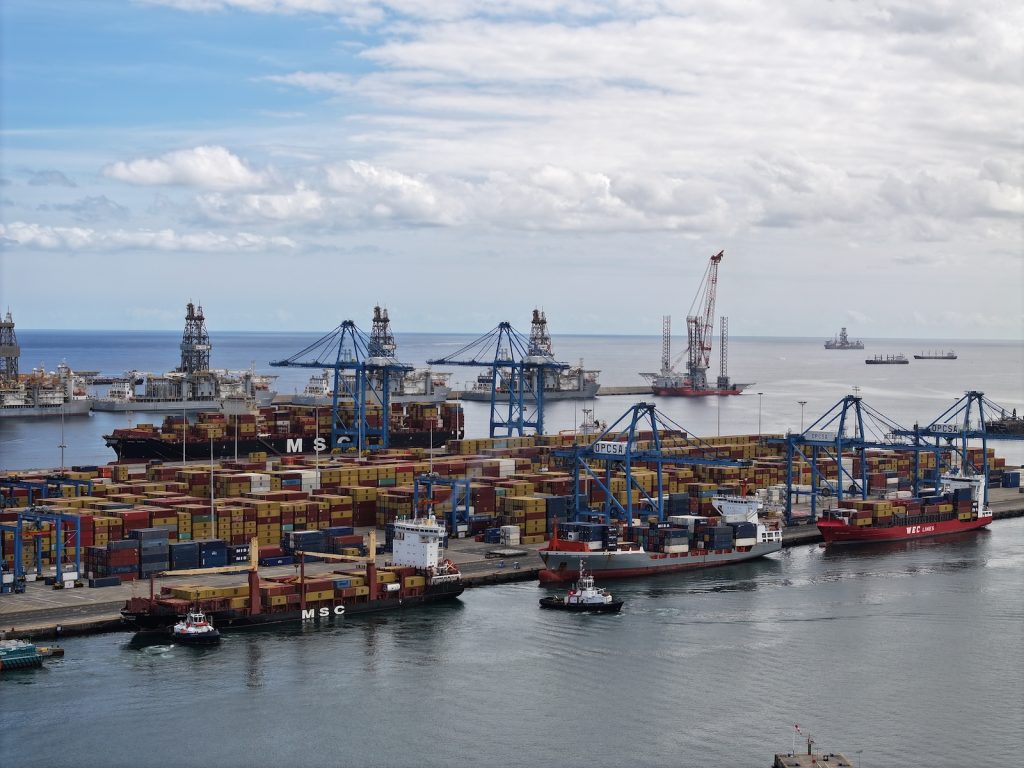
In light of the evidence that the ‘price hike‘ of the ETS is beginning to divert routes towards North Africa, the European Commission has mobilized an emergency fund this quarter through the Connecting Europe Facility (CEF). The objective is clear: to offset the costs of green taxation with an aggressive modernization that will turn the Canary ports into the first zero-emission hubs in the Atlantic. This is not charity, but a logistical sovereignty maneuver to prevent the EU from losing control of its routes against the competition from Tangier Med.
The main investment of these new funds focuses on the massive deployment of OPS (Onshore Power Supply). Brussels has allocated a specific budget so that by 2026, Las Palmas and Santa Cruz de Tenerife can provide shore-to-ship electrical connection to all container ships and cruise ships at berth. This technology allows ships to turn off their auxiliary engines while moored, completely eliminating emissions generation in port. For shipping companies, this represents a direct relief in their annual emissions allowance (EUA) calculation, reducing the final bill they must pay to the European treasury.
However, the most disruptive aspect of this fund allocation is the financing of storage infrastructures for green methanol and ammonia. The Commission has understood that the only way for the Canary Islands to compete with Morocco is not by lowering fees, but by offering what Morocco still does not have: carbon-neutral fuel. According to the criteria of the latest CEF call, the Canary projects have received a funding intensity of up to 50% due to their status as an Outermost Region (RUP), a competitive advantage aimed at accelerating the energy transition before traffic diversion becomes irreversible.
Despite this financial injection, technicians from DG MOVE warn that the funds are not a blank check. The granting of these CEF funds is strictly linked to the digitalization of traffic management. The implementation of Single Maritime Window systems that reduce the waiting times of vessels is required. In Brussels, it is known that every hour a ship remains inactive in Las Palmas, the ETS bill continues to accrue; operational efficiency is now, more than ever, a tax-saving tool for the shipowner.
The challenge for the Canary administration this quarter will be the speed of execution. While CEF funds flow, the shadow of the review of the 5,000 GT threshold looms over the European Parliament for the end of the year. If the EU decides to lower the limit and force smaller vessels (tugs, supply barges, and regional ferries) to pay for their emissions, the current injection of funds will barely cover the new economic gap. The race against time for the Canary ports is no longer just against African competition, but against Brussels’ own legislative calendar.
News written by Pedro Marrero. Edited and verified by José L. Jiménez. Cross-checked information free from institutional filters. This analysis has not been funded by official advertising nor conditioned by lobbying interests.







