




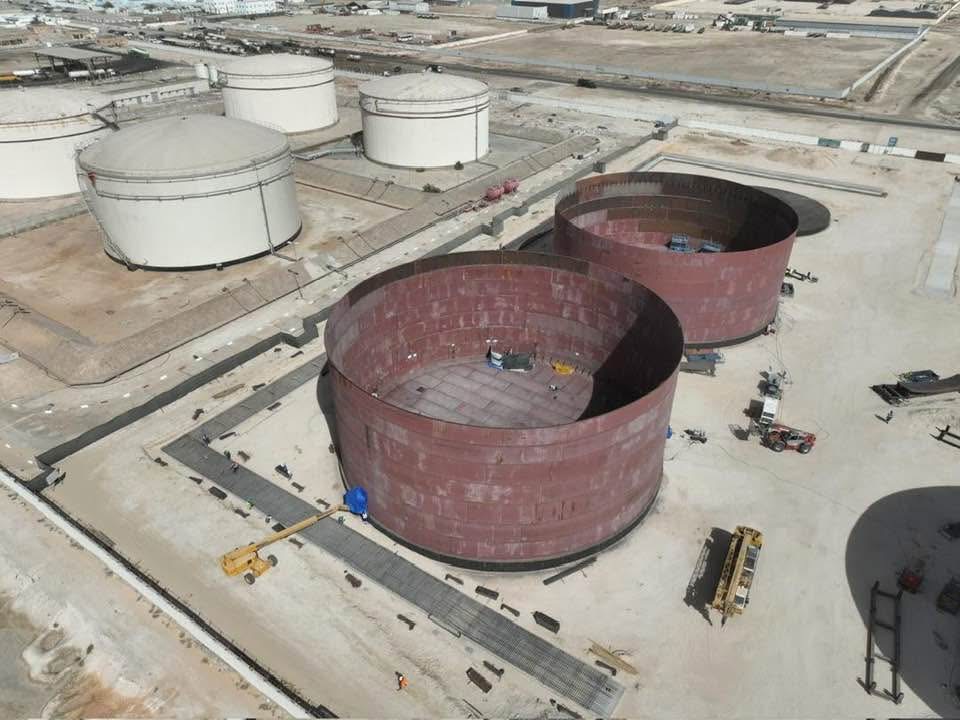
While at the Port of Las Palmas Oryx maintains a low profile while awaiting the renewal of its contract in December 2026, the geopolitical landscape along the coast of Mauritania is changing drastically. Mauritania’s Prime Minister, Mokhtar Ould Diay, has confirmed a significant leap in the country’s critical infrastructure that directly impacts the competitive balance in the Atlantic: the doubling of its hydrocarbon storage capacity.
Until recently, the vulnerability of Nouakchott was evident. With only 60,000 cubic meters of reserve, the country relied on a constant supply from the Port of Las Palmas to avoid collapsing within days. However, under Mohamed Ould Cheikh El Ghazouani, a more proactive Mauritania has emerged. With an investment of 44 million dollars, fully financed with national funds, the country has launched an ambitious expansion program.
Mokhtar Ould Diay has been unequivocal in defining this roadmap, linking economic independence with national security. According to the leader, the decision to self-finance these works is not incidental, asserting that: ‘Financial sovereignty guarantees energy sovereignty.’ This statement encapsulates the ambition of a country that seeks to stop being a spectator of international crises and become a resilient player. With the recent completion of a 23,000 cubic meter tank and the advancement of an additional 100,000 cubic meters, Mauritania will reach a total capacity of 123,000 cubic meters. This volume not only assures internal consumption amid global supply tensions but also positions Nouakchott as a logistics hub capable of retaining flows that traditionally sought refuge in the Canary Islands.
The Mauritanian advance occurs at a ‘perfect storm’ moment for the naval sector. As Panos Laskaridis warned in the context of the Strait of Hormuz crisis, instability forces the search for safe and responsive ports. While Las Palmas suffers from emissions trading scheme (ETS) rates imposed by Brussels, ports outside the EU such as Nouakchott or the new Dakhla Atlantic emerge as alternatives free from bureaucratic burdens with renewed infrastructures.
Ould Diay emphasizes that this strengthening is part of an ‘enlightened vision of the Head of State’ to protect the country from market fluctuations. By doubling its storage, Mauritania is not just stockpiling fuel; it is safeguarding its economy and sending a clear message to international shipping companies: the monopoly of services in the mid-Atlantic has a new and ambitious competitor.







