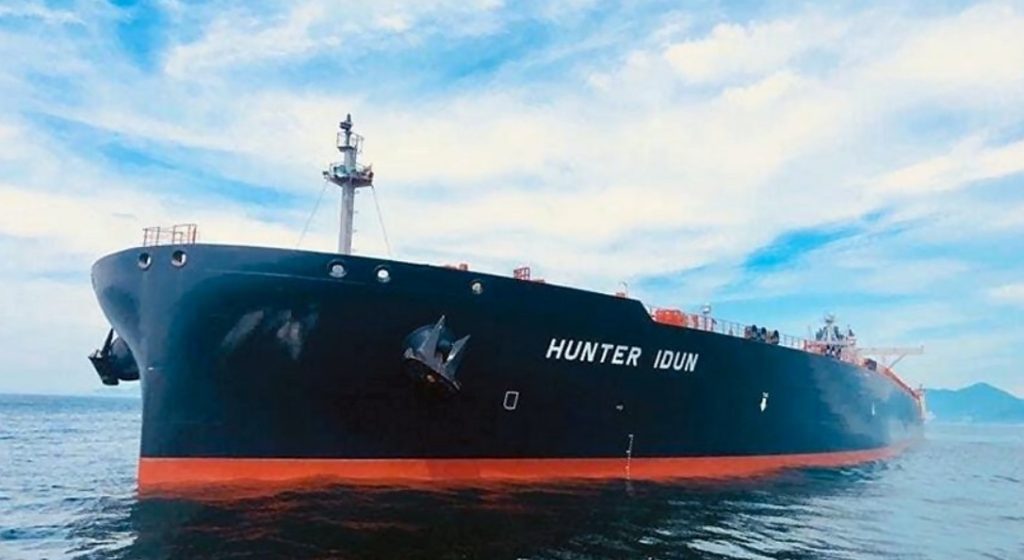
The dominance of global maritime trade and the legal protection of flag states have reached a turning point in international courts. The International Tribunal for the Law of the Sea (ITLOS) has issued a ruling in favor of the Republic of the Marshall Islands regarding the illegal detention in 2022 of the supertanker Heroic Idun and its entire crew. The court’s ruling imposes total compensation exceeding 14 million dollars, formally establishing itself as the largest monetary compensation awarded in the history of this specialized international tribunal, as confirmed by the Maritime Administration of the island nation.
The origin of the corporate and diplomatic litigation dates back to August 12, 2022. On that date, the Heroic Idun —a large-capacity tanker sailing under the flag of the Marshall Islands— was intercepted by a patrol boat of the Equatorial Guinea navy while within the Exclusive Economic Zone (EEZ) of São Tomé and Príncipe, according to records from the marine insurer Gard. Following the armed interception, the vessel remained detained under the custody of Equatorial Guinea until November 11, 2022, when the country’s authorities proceeded to transfer control of the ship and its sailors to Nigerian security forces.
The human and operational cost of this jurisdictional dispute in the Gulf of Guinea translated into a prolonged captivity for the onboard personnel. In total, the crew of the tanker spent 288 days in detention before their final release was authorized. Given the severity of the events, the ruling from ITLOS details the extent of the financial damage and introduces a specific allocation of over 4 million dollars exclusively intended to compensate for the physical and psychological mistreatment suffered by the sailors during the months of detention, setting a binding precedent regarding the responsibility of coastal states.
The court ruling stabilizes the risk balances for shipping companies dedicated to transporting hydrocarbons on complex routes in West Africa. Meredith Kirby, Deputy Commissioner of Maritime Affairs and legal representative of the Marshall Islands in this case, stated that the decision to elevate the case to the court was essential to safeguard the fundamental rules of the law of the sea against state interference. The defense of the case has pivoted on the need to ensure the humane treatment of sector workers, the safety of floating assets, and the preservation of the marine environment, critical factors for the continuity of transatlantic crude oil trade.
The ITLOS ruling weakens the position of countries executing unilateral interceptions outside their jurisdictional waters, redefining the risk premiums that hull and machinery insurers require in logistical conflict zones. By financially penalizing the arbitrary detention of tankers, capital markets and logistics operators gain additional protection guarantees for their investments in raw material transportation. The ruling from May 2026 restructures the balance of power between coastal nations and open registries, sanctioning that economic sovereignty cannot be exercised at the expense of the fundamental rights of commercial crews.