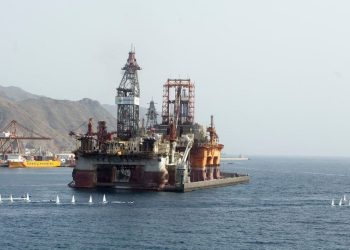
Senegal is preparing one of West Africa’s most ambitious energy tenders. The Senegalese government will make up to 109 hydrocarbon blocks available to national and international investors out of the 113 identified in its territorial waters and sedimentary basins. The decision, confirmed by Energy and Petroleum Minister El Hadji Abdourahmane Diouf, seeks to capitalize on the offshore discoveries of the past decade and accelerate the African nation’s economic transformation, Europa Press reports.
The announcement highlights the limited number of previous awards on Senegal’s oil map. At present, only four exploration and production blocks are under active contracts. The strategic move led by the Cabinet of President Bassirou Diomaye Faye is aimed not only at attracting foreign currency and foreign direct investment, but also at implementing a local-content development policy designed to consolidate a domestic corporate network across the hydrocarbon value chain.
From discovery to deepwater production
The opening of this bidding round comes at a turning point for the country’s energy industry. After years of exploration along the Atlantic margin, Senegal effectively joined the ranks of oil producers in June 2024 with the start of operations at the offshore Sangomar field, developed by Australia’s Woodside Energy in partnership with state-owned oil company Petrosen.
The first phase of Sangomar, built around a floating production, storage and offloading unit (FPSO) located in deep water, has a nominal processing capacity of 100,000 barrels per day. The field’s start-up not only changed the country’s fiscal balance, but also drove Senegalese gross domestic product to unprecedented growth rates in the region.
The liquefied natural gas hub on the border with Mauritania
Crude oil development was followed by the takeoff of cross-border gas infrastructure. One year after the Sangomar milestone, British energy giant BP carried out the first shipment of liquefied natural gas (LNG) from Phase 1 of the Greater Tortue Ahmeyim (GTA) project, located in the maritime boundary between Senegal and Mauritania.
The GTA project is designed to produce an average of 2.3 million tonnes of LNG per year over an estimated operating life of more than two decades. The floating liquefaction infrastructure allows the resource to be shipped to European and Asian markets, while reserving gas volumes for domestic power generation and industrial consumption in Dakar and Saint-Louis.
Competition for capital along Africa’s Atlantic margin
Putting 109 blocks on the market will force Senegal to compete for global capital in an environment of strict financial discipline among the major international oil companies. Senegal’s proximity to Atlantic shipping routes and the logistics infrastructure being developed at the Autonomous Port of Dakar and facilities such as Santa Cruz de Tenerife position the country as an attractive hub for independent explorers and major sector players.
The success of the tender will depend on the stability of the regulatory framework, the fiscal terms offered in production-sharing contracts and the authorities’ ability to balance local participation requirements with the high capital intensity involved in deepwater and ultra-deepwater exploration.
The article Canary Islands’ repair hub: Senegal puts 109 offshore oil and gas blocks up for bid was first published on canarymaritime.com.