The abrupt dismissal of Senegal’s Prime Minister, Ousmane Sonko, and the dissolution of his executive ordered by President Bassirou Diomaye Faye have plunged the country into a scenario of profound political and financial uncertainty. The termination of the entire cabinet, announced through an official statement read by the Secretary General of the Presidency, Oumar Samba Ba, symbolizes the definitive collapse of the alliance that brought the two former tax inspectors to power in the 2024 elections. The decision paralyzes governance at a critical moment, with the acting administration exposed to a severe debt crisis that threatens vital regulatory negotiations with the International Monetary Fund (IMF).
The fracture of the Senegalese executive directly impacts the economic viability of the nation, whose leverage ratio closed the 2024 fiscal year at a critical 132% of its gross domestic product (GDP). The IMF has frozen a strategic loan program valued at 1.8 billion dollars following the emergence of severe irregularities in previous public debt declarations. Tensions between the two leaders escalated regarding the management of this bailout. While Sonko maintained an inflexible stance of absolute rejection of any restructuring plan for the 13 billion dollars of sovereign debt advocated by the multilateral organization, warnings from Finance Minister, Cheikh Diba, underscored the unsustainability of public finances if fiscal consolidation reforms were delayed.
The energy subsidy policy has acted as the definitive trigger for the technical break within the government. Diba warned before the National Assembly that the allocation aimed at mitigating fuel prices threatens to exceed the 2026 budget by up to 1.15 trillion CFA francs (approximately 2 billion dollars) if crude oil rises to 115 dollars per barrel. The outright refusal of Sonko to authorize an increase in domestic fuel prices blocked the request from the moderate wing of Senegal’s finances, precipitating a structural liquidity vacuum. The plans of the Finance Minister to resume face-to-face discussions with IMF delegations during the week of June 8, 2026, are now at high risk of postponement.
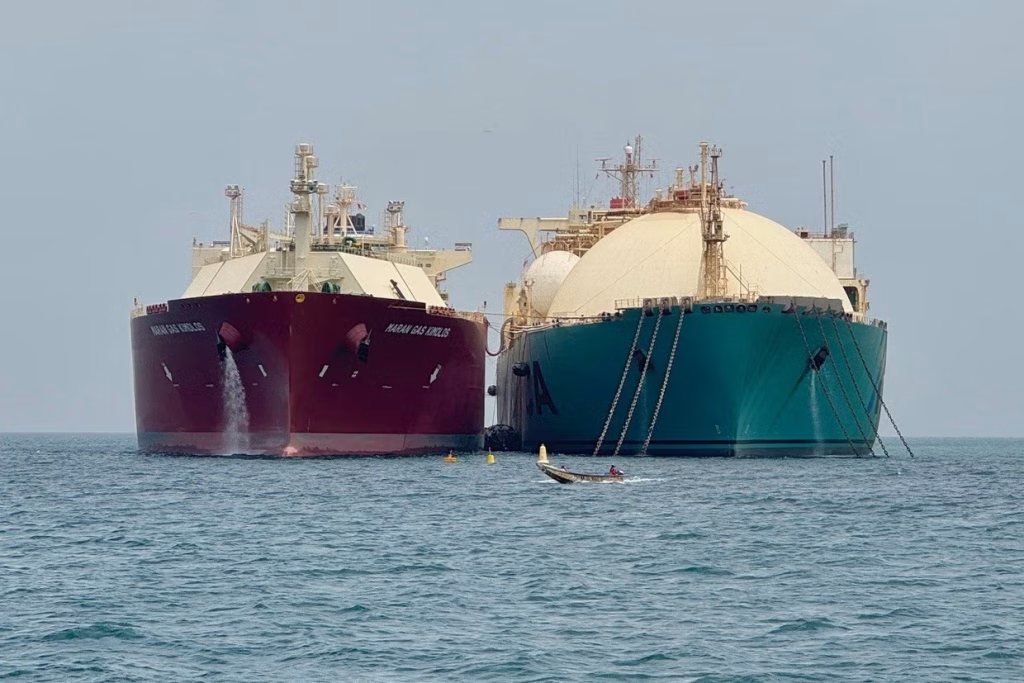
The regional extractive and gas sector observes this institutional drift with extreme caution. Sonko championed a distinctly nationalist and pan-Africanist agenda geared towards oversight and auditing of natural resource concessions in deep waters. Under his mandate, the executive directly revoked about 71 mining licenses and formally questioned the terms of the contract for the exploitation of the Greater Tortue Ahmeyim (GTA) liquefied natural gas (LNG) field, operated in partnership with the multinational BP at the maritime border shared with Mauritania. His exit from power could soften the tone of the reviews of hydrocarbon contracts, although the legislative strength of his party, Pastef, in parliament anticipates fierce resistance to any concessions in front of international operators.
The political future of Senegal is now shifting towards a terrain of complex legislative cohabitation. Pastef retains an overwhelming majority in the National Assembly, which will grant Sonko a decisive blocking capacity over any package of macroeconomic reforms that President Faye attempts to validate in order to unlock international funds. With the precedent of the electoral code reforms approved last month that enable his presidential campaign towards the horizon of 2029, Sonko returns to an active and organized opposition from the grassroots. The balance of power in Dakar is redefined under the shadow of an institutional blockade that compromises the stability of the energy market and of foreign direct investment in West Africa.