




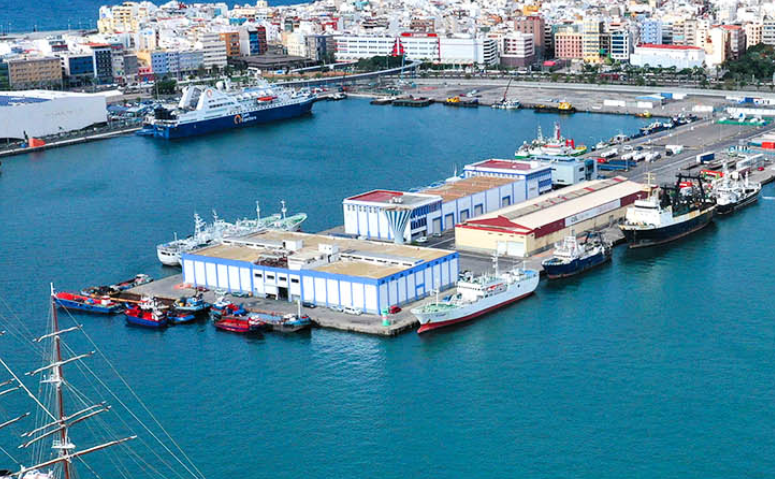
The industrial architecture of the Port of La Luz and Las Palmas is preparing for a forced change of guard. Frigoríficos Hispano-Suizos S.A. (Frisu), a company with a 65-year history that was once the epicenter of cold logistics in the mid-Atlantic, has received the final judicial blow. The Commercial Court No. 2 of Las Palmas has communicated to the parties the approval order for the liquidation plan for the company, marking the end of an era for the fishing and commercial sector of the islands.
The disaster that ‘burned’ the balance sheet
The case of Frisu serves as a lesson on the vulnerability of concentrated strategic assets. The bankruptcy is not the result of a slow market erosion, but rather the devastating impact of a voracious fire on July 20, 2023. That afternoon, flames consumed the Frisu IV vessel at the Fishing Dock, a 3,000 square meter asset that had just been inaugurated following a 1.5 million euro investment.
The fire not only destroyed the infrastructure; it evaporated the operational capacity of the firm by losing: 1,000 tons of merchandise, including bait for the Japanese fleet and products from the 5 Océanos chain, owned by Frisu’s owner, Montesano. A critical ice factory for the unloading of fresh fish and an administrative concession that extended until 2046 have disappeared.
The spark
Under case number 0000707/2024, the liquidation is being processed as a special procedure for micro-enterprises, underscoring the drastic reduction in the company’s structure following the disaster. The order at the end of 2025 formalizes what the market had already discounted: the impracticality of continuation.
The list of creditors reflects the complexity of Frisu’s network: from financial giants like Bankinter to logistics providers such as Serex Marítimos, Grenke Alquiler S.L., and the Tax Agency itself. The dissolution entails the immediate cessation of the Board of Directors, led by Garcia Pascual Canarias.
Cold liquidation
The liquidation of Frisu opens a competitive void and a real estate opportunity in the Port of Las Palmas: The Port Authority of Las Palmas must now manage the reversion or new bidding for a strategic concession at a time when the port seeks to modernize its value-added services. With Frisu’s exit, the cold storage market in the Canary Islands —vital for food security and naval supply— remains in the hands of fewer operators, which could put pressure on storage prices in the short term.
Frisu’s ambitious plan to hybridize industrial cold with coworking and telework spaces lies buried under the ashes of the Frisu IV vessel, a reminder that diversification requires, above all, operational resilience against physical disasters. The end of Frisu is not just a footnote in the judicial bulletin; it is a reminder that in the Atlantic economy, the distance between a million-euro investment and total liquidation can be as short as the short circuit that allegedly sparked the flames at the dock.







