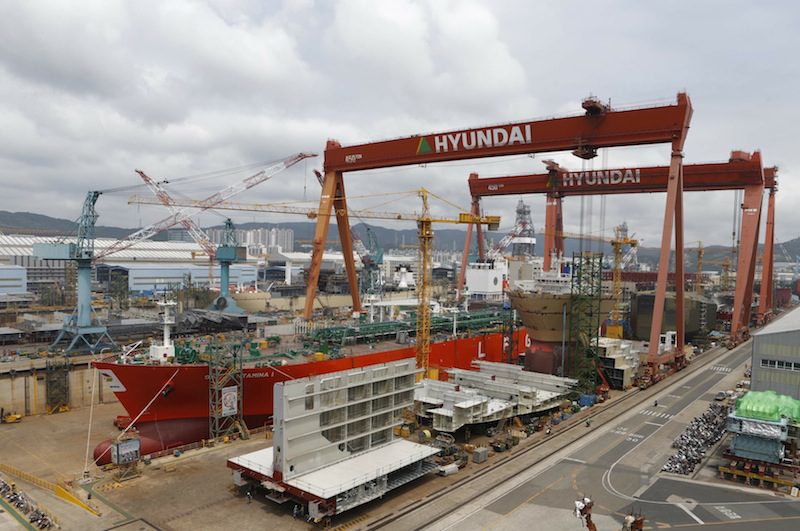
The struggle for control of the future Casablanca shipyard has taken a strategic turn following the entry of an Italian naval operator into the bidding process. The company, with a solid operational base in the ports of Genoa and Marseille, has submitted a last-minute proposal supported diplomatically by Rome and Paris. This move represents an attempt by the powers of the European Union to curb the advance of the South Korean conglomerate HD Hyundai Heavy Industries, which had until now been leading the options to be awarded the contract in partnership with the Moroccan engineering corporation Somagec alongside a Spanish operator with interests in the Canary Islands.
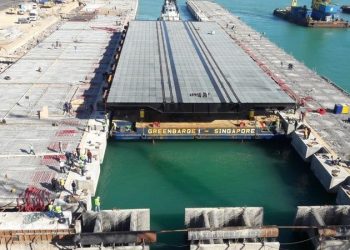
The tender, managed by Morocco’s National Ports Agency (ANP), involves the privatization of the development, operation, and maintenance of the port complex through a 30-year administrative concession. The projected infrastructure requires an estimated investment of over 300 million dollars to develop an area of 210,000 square meters. The technical design includes a dry dock of 244 meters in length, a lifting platform for ships of 9,000 tons, and 820 meters of operational docks, a complex that aims to become the largest maintenance, repair, and overhaul (MRO) center on the African continent.
Pressure on the Mid-Atlantic Naval Repair Market
The entry of the Italian competitor adds a new geopolitical dimension to a bidding process that also includes a third consortium made up of partners from Chinese, Spanish, and Moroccan capital. This multipolar competition in the Casablanca axis introduces a factor of direct pressure on the traditional naval repair centers of the Mid-Atlantic, led by the ports of Las Palmas and Santa Cruz de Tenerife, which have so far concentrated a significant portion of the technical services for commercial fleets in the region.
For the South Korean group HD Hyundai, establishing a base in Morocco is crucial to counteract the loss of global market share against Chinese shipyards, which currently lead new orders with 47% of the market compared to 44% for South Korea, according to metrics from Clarkson Research. However, Italy and France’s industrial counteroffensive seeks to retain the influence of European shipyards at a strategic maritime crossroads, leveraging the reconfiguration of global routes and the increase in traffic of commercial and military vessels along the African Atlantic façade.