




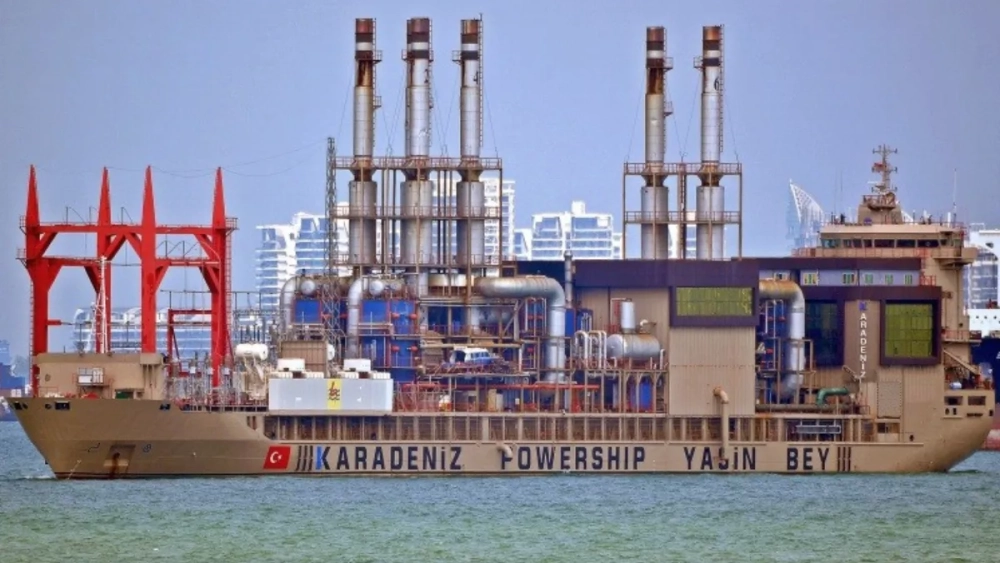
And they didn’t want Totisa gas because it was polluting. Mariano Hernández Zapata (PP), Minister of Ecological Transition, has launched a desperate offensive at the docks of Las Palmas. Under a cloak of discretion, Zapata and his Energy Director, Alberto Hernández, have held a series of meetings with Asocelpa, Fedeport, and Oneport to try to sell the unsellable: the installation of a floating power plant funded by Turkish capital in a saturated port of Las Palmas. The minister’s message to the business community has been an ultimatum disguised as pragmatism: either the 200-meter length of the ship in the docking line is accepted, or the island faces the darkness of zero energy. The arrival of the ship surely anticipates one thing: The suicide of the PP in the capital of Gran Canaria as soon as the device begins to emit smoke relentlessly, scaring away customers from the shopping center El Muelle, the terrace of the Port Foundation, Poema del Mar, staff from the Naval Arsenal, and causing cruise ships to leave, as it will be impossible for tourists to sleep next to that monstrosity. Zapata is from La Palma and there the problem of the Gran Canarias PP does not reach.
The port of Las Palmas, the economic engine of the region, is in a state of ‘full capacity’. The President of the Port Authority, Beatriz Calzada, has already expressed her rejection of sacrificing critical commercial space to accommodate a ship that burns diesel and which, according to the ministry’s own estimates, should remain docked for at least five years. For business owners, the dilemma is a trap. They recognize the risk of a blackout following Endesa’s withdrawal from renewing equipment in Jinámar and the fiasco of the Sampol power plant, but criticize the imposition of this ‘nonsense’ while blocking gas projects with lesser environmental impact, such as the Totisa project.
The measure, however, transcends the technical and delves into the realm of electoral calculation. Zapata’s insistence on imposing the ship against the criteria of the Port Authority —also under the control of Coalición Canaria and the PP in the governing pact— threatens to fracture the electoral base of the popular party in the capital of Gran Canaria. The Port of La Luz is the economic and emotional heart of the city; punishing its operability for five years to patch an administrative negligence of ten years is a bill that the PP will hardly be able to avoid at the polls. The weariness of seeing a port blocked by a ‘third-world’ solution promises to take its toll on a party that has traditionally made efficient management its hallmark.
With Maritime Captaincy rejecting anchorage for security reasons, the only option is the dock, diminishing competitiveness for a facility that thrives on the agility of its berths. The Port’s Board of Directors has the final word, but time is against Zapata. While the minister tries to disguise a five-year stay as a ‘quick solution’, the business owners lament that the energy strategy of the islands has ended up depending on a foreign ship, highlighting that in the Canary Islands, energy planning is today a ship adrift looking for a place to moor.







