The business of maritime services in the African Atlantic is entering a phase of intense geopolitical and financial competition. The signing of a strategic investment agreement between Ghana and the United Kingdom, valued at 215 million pounds sterling (about 275 million dollars), is beginning to be recognized in the ship repair sector of the Canary Islands. The dry dock in Tenerife is paralyzed by bureaucratic hurdles, and this June, a U.S. mission arrives to learn about the island’s advances in defense projection, a mission that has been meticulously prepared since January, as Canarymaritime reported last February.
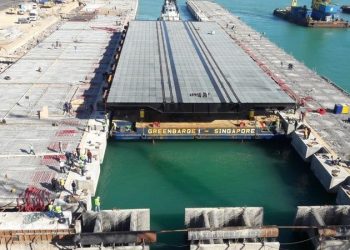
In Ghana’s case, the core of this alliance for growth is the construction of a floating dock worth 101 million in the port city of Takoradi, designed to become the first commercially scaled dry dock in the Gulf of Guinea. This maneuver, supported by corporate diplomacy from London, aims to directly capture the lucrative market for technical maintenance of commercial fleets, container ships, and offshore oil platforms operating along the West African coast, a flow of capital that has historically depended on the shipyards of the Canary archipelago.
For the Canarian port infrastructures, the emergence of Takoradi represents a direct challenge to their dominance in the Central Atlantic. The docks in Las Palmas and Santa Cruz de Tenerife have consolidated their economic success by acting as the reference workshop for ships transiting African routes, leveraging the lack of reliable industrial facilities with European standards on the continent.
The Gulf of Guinea concentrates a massive volume of crude oil exports and commercial shipping, but the lack of specialized shipyards forced major shipping lines and gas and oil operators to send their vessels to Spanish island terminals. The launch of the Ghanaian project threatens to retain that added value within the Sub-Saharan region itself, depriving Canarian workshops and stevedoring companies of multimillion-dollar contracts and a substantial part of their traditional port activity.
Financial Restructuring and New Competitors on the African Coast
The injection of British capital arrives at a critical moment for the economy of Ghana, which is desperately seeking new engines of growth after overcoming a severe financial crisis and completing a strict restructuring program of its external debt following its declared default in 2022.
The administration of President John Dramani Mahama is using this logistical agreement as a roadmap to restore the confidence of international markets and attract long-term private investment in productive sectors. The floating dock project anticipates the creation of 430 direct industrial jobs with a strong gender quota policy, positioning the country as a hub for industrial services that goes beyond the mere export of traditional raw materials such as gold, cocoa, or crude oil, a strategic shift that imitates the blue economy development model advocated by the port authorities of the Canary Islands.
The impact for ship repair companies based in Las Palmas is immediate in terms of operational costs and rate competitiveness. Ghanaian shipyards will enjoy the advantage of geographical proximity to offshore oil fields and major cargo ports in the ARA-Africa region, reducing idle navigation times and costs for transporting damaged vessels or those undergoing scheduled technical stops.
Although the Canarian ports maintain a clear technological superiority and a supply chain of spare parts and highly skilled labor, the consolidation of competitive infrastructures on the continent will force the Spanish facilities to accelerate their digitalization, flexibly adjust water surface occupancy rates, and reduce customs bureaucracy if they want to avoid a massive exodus of clients from international fleets to the new docks in Takoradi.