




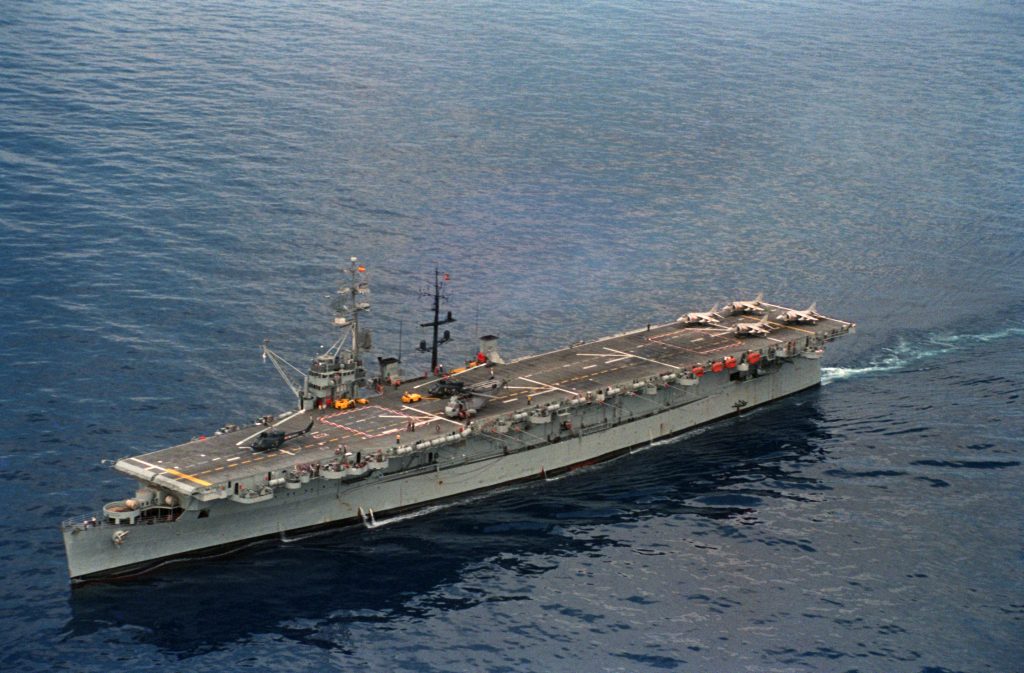
The autumn of 1977 left an indelible mark on the docks of Las Palmas. The aircraft carrier Dédalo (R-01), with its unmistakable silhouette of a light aircraft carrier of the Independence class, led a group of ten ships that turned the Port of La Luz into the operational base for the ‘Mar Canarias’ maneuver. This deployment aimed not only at tactical training off the coasts of Fuerteventura but also served as a showcase for the modernization of a Navy that was beginning to stand on equal terms with its Western allies. Alongside the ‘Dédalo’, the attack transport ‘Galicia’ and the frigates of the Baleares class (‘Cataluña’, ‘Andalucía’, and ‘Extremadura’) formed a steel wall completed by five destroyers of the Fletcher and Gearing classes: ‘Lángara’, ‘Blas de Lezo’, ‘Churruca’, ‘Alcalá Galiano’, and ‘Jorge Juan’.
The ‘Dédalo’ was, at that time, the soul of the fleet. Its origin as the USS Cabot, a veteran of World War II who survived kamikaze attacks in 1944, endowed it with an aura of invulnerability. Delivered to Spain in 1967 and finally purchased in 1973, its presence in the Canary Islands in 1977 demonstrated the Navy’s ability to project anti-submarine warfare helicopters and, years later, the revolutionary vertical take-off Harrier aircraft.
Those exercises in Fuerteventura were the prelude to a decade of intense activity for the flagship. From heroic rescues in Ibiza to the military training of the then Prince of Asturias in 1987, the ‘Dédalo’ was the nerve center of the Spanish naval power until the ‘Príncipe de Asturias’ (R-11) took over in the late eighties. Today, the memory of the ‘Mar Canarias’ operation of 1977 remains as a testament to a time when the Spanish Navy, with second-hand ships but first-rate crews, maintained strategic balance in the Canary Strait axis.







