




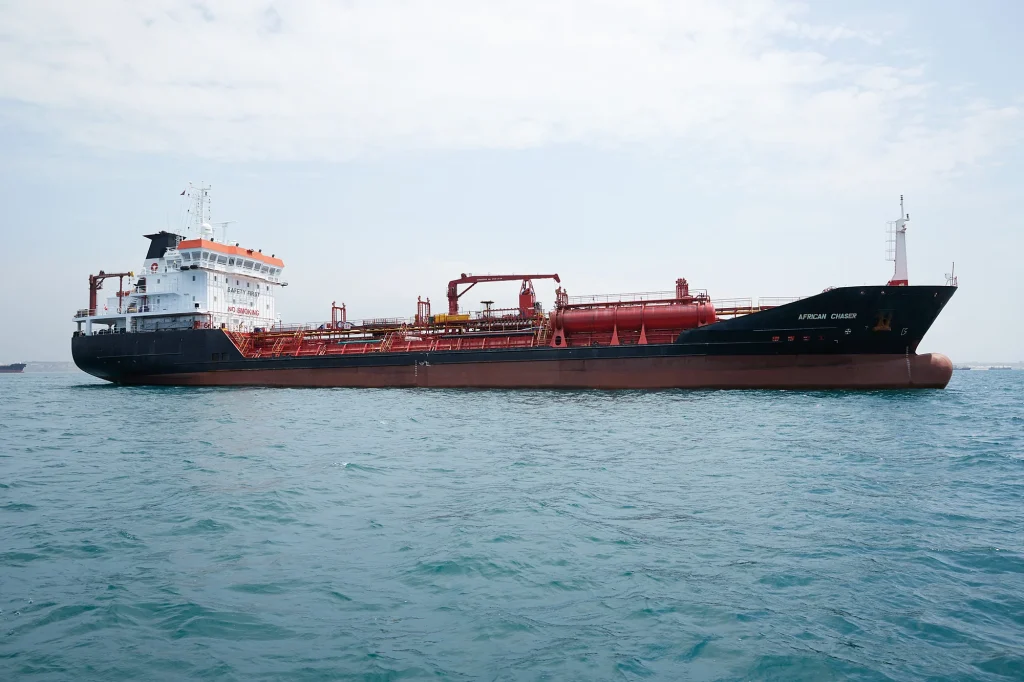
The massive diversion of routes around the Cape of Good Hope has **strained the operational capacity of the Canary Islands’ ports**, where fuel availability has been reduced to critical minimums. While Las Palmas imposes waits of ten days under heavy wave conditions, the ports of West Africa, from Togo to Namibia, are entering a phase of technical shortages due to a demand that the regional supply is unable to digest.
The main supply center for the Canary Islands is facing a **test of endurance that goes beyond simple inventory management**. Fuel availability for vessels in Las Palmas is currently limited, as confirmed by market operators at weekend closing prices. Suppliers are demanding **delivery times of approximately 10 days to ensure supplies at competitive prices**. The situation is complicated by weather factors; the heavy swell has forced bunkering operations to be exclusively moved to the inner anchorage and the dock, under the close supervision of port agents.
This scarcity in the archipelago is a **direct reflection of a tectonic shift in global maritime trade**. The abandonment of Red Sea routes and the closure of the Strait of Hormuz have turned passage through the Canary Islands and the African coast into the only survival route for traffic between Asia and Europe. This route change has soared fuel demand across the region, but the supply infrastructure has not grown at the same pace as the number of ships now circling the continent.
The Collapse of the Western Coast: From Lomé to Cape Town
In West Africa, the situation has shifted from congestion to overflow. The ports of the region are experiencing **low availability of products due to the local supply being structurally incapable of meeting the increase in orders**. In strategic centers like Lomé (Togo) and Walvis Bay (Namibia), buyers must check the availability of stems with a notice of between 10 and 11 days, an unusual figure for markets that used to operate more agilely.
The **supply map shows black spots of forced inactivity**. In Luanda (Angola), suppliers have indefinitely ceased to supply VLSFO (very-low-sulfur fuel oil), while obtaining marine gas oil (LSMGO) requires at least a week’s notice. In Lagos (Nigeria), the situation is identical: access to VLSFO demands a 10-day margin. South Africa maintains a precarious stability in Algoa Bay, but prices reflect market tension: in Durban, LSMGO has climbed to around 3,000 euros per metric ton, a figure that pushes out operators with weaker financial backing.
The Mediterranean on Alert: Piraeus and the Hormuz Factor
While the Canary Islands try to manage their queues, the Mediterranean watches with trepidation the evolution of the conflict in the Persian Gulf. In the Strait of Gibraltar, securing supplies promptly has become a challenge that requires reservations seven days in advance. However, the biggest alarm signal comes from the eastern Mediterranean. In the port of Piraeus, **high demand is generating critical difficulties in the availability of boats and docks**. Local suppliers warn that if the flow of crude through the Strait of Hormuz remains interrupted, the port could face a total product shortage between late April and early May.
In this context, Istanbul has become a thermometer of fear. Turkish buyers are **massively securing their reservations** in anticipation that fuel may simply not be available next month. The Canary Islands, situated at the crossroads of these tensions, establish themselves as the necessary but insufficient bunker. Amid the roar of engines waiting at the anchorage in Las Palmas and the silence of empty pumps in Angola, the logistics of April 2026 issues a clear verdict: energy is no longer purchased, it is negotiated with ten days of faith and at war economy prices.







