




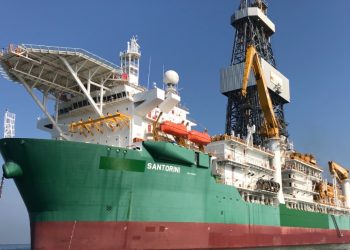
The ports of Las Palmas, Santa Cruz de Tenerife, and Granadilla are consolidating as the essential strategic node for the new era of deepwater drilling in Africa. The latest report from Westwood Global Energy Group, published this March 2026, places five giants in the sector—Transocean, Noble, COSL, Seadrill, and Valaris—as the absolute dominators of the global order book. For the Canary Islands, this concentration of industrial power is not a distant statistic; it represents the cash flow and the technical workload that supports its auxiliary industry along the African coasts. The geography plays in favor of the archipelago at a time of corporate reconfiguration. Transocean, which currently operates a marketed fleet of 23 floating platforms, is in the middle of absorbing Valaris. The result of this operation, expected to conclude in the second half of this year, will create a drilling titan valued at 17 billion dollars with a combined fleet of 73 units. This consolidation ensures that the largest order book for 2026 will be in the hands of a single operator with a historical and logistical presence in the Canary Islands. The operational focus inevitably shifts towards the neighboring continent. While South America, driven by Brazil, continues to account for 33% of globally contracted days, Africa emerges as the playing field where these companies deploy their most sophisticated assets. The availability of drilling vessels and semi-submersible rigs from Noble—already leading bookings for 2027 and 2028—and COSL finds in the Canary ports the necessary maintenance base for campaigns on the western African margin and the Gulf of Guinea. Consultant Westwood highlights that, although the use of platforms fell by 25% last year, bookings for 2026 have already seen a 4% uptick. This cautious optimism translates into greater demand for technical services in the islands. Companies like Seadrill and the Chinese state-owned COSL have increased their confirmed workdays, ensuring that Canary Island infrastructures remain the mandatory pit stop for well reconditioning and asset intervention before crossing into African fields. The outlook for 2027 already exceeds 8,300 days reserved globally, which equates to 62% of the current year’s order book. Analysts warn that the shortage of next-generation platforms could delay projects until 2028. In this scenario of high occupancy and the consolidation of giants, the Canary Islands reaffirm themselves not only as spectators but as the critical logistical support for the fleets of Transocean and Noble to fulfill their commitments at Africa’s energy frontier.





© 2026 canarymaritime