At the beginning of the last century, the port of Las Palmas was a British colony; a century later, much the same thing is still happening. In the past, the intermediaries were men such as Juan León y Castillo, and now, as 2030 approaches, more or less the same pattern continues. Such was the control exerted by English capital in Las Palmas that even from South Africa, political dissidents were deported to the Canary Islands as if it were ‘their own’ territory. In January 1914, the Rand mining region of South Africa was engulfed by labor unrest, prompting the Union of South Africa government to declare martial law. The administration decided to capture the nine leading agitators and secretly deport them outside the country.
The vessel chosen for this clandestine operation was the SS Umgeni, a 2,622-ton ship built in 1898 by James Laing shipyard in Sunderland and owned by the Bullard, King and Company shipping line. Powered by a 402-horsepower triple-expansion steam engine and capable of reaching 13 knots, the vessel was urgently requisitioned by the authorities.
On January 28, 1914, the nine leaders were forcibly put aboard in the port of Durban. The crew was unaware of the purpose of the voyage until the ship had crossed the three-mile maritime limit, at which point the commander received strict orders to cancel calls at East London and Port Elizabeth and set a direct course for the Northern Hemisphere.
Persecution in the fog
Once the labor faction in Cape Town learned of the operation, a desperate attempt at a maritime interception was organized. Colonel Cresswell chartered the Magnet, a modest steamship normally used to transport prisoners to Robben Island. Several union supporters put to sea intending to catch up with the Umgeni as it rounded the Cape of Good Hope and warn the captain that the government operation was illegal. The deportation ship’s lights were spotted in the distance over the waters of Table Bay, but the small Magnet failed to catch up with it.
The South African Parliament would later compensate Bullard, King and Company with an additional £1,000 for the loss of cargo and passengers resulting from the forced diversion.
The island blockade
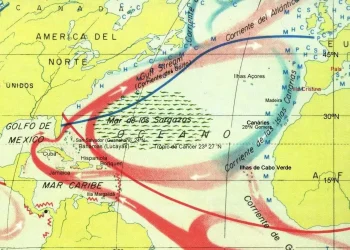
Without wireless telegraphy equipment on board, the SS Umgeni crossed the Atlantic toward the Canary Islands to take on the coal needed to complete the journey to Britain.
As the ship’s imminent anchorage in the bay of Las Palmas de Gran Canaria approached, the British authorities issued drastic orders to the head of the port. Civilian vessels were prohibited from boarding or approaching the South African ship, with access restricted exclusively to port officials. The measure was intended to prevent any contact between the nine deported trade unionists and the local population or the international press while the coal was being loaded.
Fragments from the French press
Visual records of the voyage were preserved by the Paris-based photographic agency Rol Agency. Its archives include a glass-plate press negative dated February 23, 1914. The agency’s archivists incorrectly labeled the plate with the caption [23-2-14].
The technical record mistakenly classified this coal freighter as a battleship or naval warship. A few months after the SS Umgeni passed through the Canary archipelago, the First World War broke out, and the British Admiralty requisitioned the vessel for naval supply and coal transport duties. It also served as a ship of the Nigerian Navy in West Africa.
On December 7, 1917, the ship departed from the Isle of Arran and the River Clyde bound for Lagos under fleet command, but a violent storm that broke out in the North Atlantic separated the vessels off Ireland’s west coast. The SS Umgeni disappeared forever without leaving a single survivor. Weeks later, waves washed wreckage and lifeless bodies onto Irish beaches, giving rise to a second theory maintained by researchers: that the ship may have been struck by torpedoes fired by the German submarine UB 22 near Robin Hood’s Bay in Yorkshire.
The article “The secret deportation of British labor leaders that rocked the port of Las Palmas in 1914” was first published on canarymaritime.com.