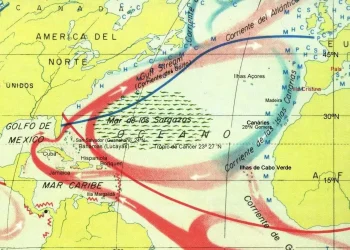
These Englishmen would have been stunned to see that in Tenerife, island businessmen were just as capable as their counterparts in London of drinking whisky with tap water. The great fortunes of the 19th century did not arise from nothing, but from the exhaustion of old Europe. While the continent was drowning in its own debts, Tenerife was fulfilling what it had always been: an Atlantic pivot endowed with natural pride and an unassailable geographical position. Perhaps all of this will be recovered in the 22nd century from Granadilla, given that bureaucracy interferes in everything. So much so that it is illegal to serve whisky with tap water from Emmasa, despite its being better than many bottled waters from mainland Spain.
Back then, there were not four road engineers from Las Palmas, tainted by the system, blocking the development of the island’s port from what was then the Port Authority, despite the efforts of Juan León y Castillo, a road engineer, to set the pace for the Canary Islands. In Telde, he is praised, although in practice he was a corrupt official.
The port’s modest bureaucracy
In 1816, Lewis Gellie Hamilton disembarked at the Port of La Orotava at the age of 17. Unlike northern Scotland, Tenerife offered light, dynamism and a fully established trade in wine and cochineal. According to historian Alastair F. Robertson — a member of the Tertulia Amigos del 25 de Julio — in a study translated by Emilio Abad, the Hamilton family did not come to civilize the island, but to join a commercial hub that was already holding its own against the empire’s major routes. He entered the service of Gilbert Stuart Bruce, but Lewis possessed the cool pragmatism of the British merchant who knows where the true center of gravity lies. He founded the Bruce Hamilton Company and, in 1839, secured the representation of the Lloyd’s insurance company. When Puerto de la Cruz ceded its hegemony to the capital, the firm adapted to Santa Cruz’s growing importance by building the Igueste Semaphore in Anaga.
The refuge from financial turmoil
The irony of this story is that the “distinguished” Scottish family arrived in the Canary Islands fleeing its own urban hardships. Grandfather Archibald had built up a mercantile fortune in the gray port of Greenock by trading with the American colonies. His son John bought shares in a marine rigging factory and co-founded the Renfrewshire Banking Co. in 1802. However, after being widowed and remarrying, the family structure fell apart, leaving a tangle of inheritances among half-siblings separated by 15 years.
Fraudulent bankruptcies in the metropolis
The true driving force behind the Hamiltons’ arrival on the island was the metropolitan establishment’s ethical collapse. In 1814, the eldest son, Hugh Hamilton, was tried in Edinburgh for “improper conduct” after orchestrating a scheme involving cross-credit arrangements and forged signatures that ruined several companies. Cornered by the courts and with his assets confiscated, Hugh used his influence in 1817 to send his half-brother Lewis to Tenerife. While British justice dragged on all the way to the House of Lords, the island offered the young man the stability and institutional refuge his own country denied him.
The illusion of Atlantic progress
Tenerife did not allow itself to be absorbed; it absorbed the immigrant. In 1839, Lewis consolidated his social standing by marrying Sevelina Edwards. His descendants soon turned Santa Cruz into the nerve center of a network that reached all the way to the City of London. His son John James operated from the Bishopsgate office under the name Sinclair Hamilton and Co. From there, the Hamiltons demonstrated that the levers of international politics could be moved from the Canary Islands’ Atlantic shores, even supplying Enfield rifles to the Confederate states during the American Civil War.
Gravel, coal and island pride
When Lewis died in 1872, Tenerife was an undisputed logistical power. Santa Cruz had become the world’s gas station, the obligatory coaling stop for every vessel crossing toward South America or Africa. Between 1903 and 1911, Hamilton y Cía. supplied more than half of the port’s coal and managed the Reuters agency. But the decisive factor was not the mineral itself, but how Tenerife’s society channeled that wealth: the Hamiltons co-founded Club Deportivo Tenerife, the Taoro Hotel in Puerto de la Cruz, the Real Club Náutico, the British Cemetery and the Children’s Hospital. The legacy of that era is not nostalgia, but proof that the island was already playing in the global big leagues when Europe was only beginning to understand the Atlantic.
The article “Hamilton: When the English Discovered Tenerife’s Port Was in the Big Leagues” was first published on canarymaritime.com.