One hundred years after the seaplane Plus Ultra cleaved the waters of the bay of Las Palmas to mark the first major milestone of Spanish transatlantic aviation, the Air and Space Army is set to stop time in the heart of the capital of Gran Canaria. This Tuesday, at 17:00 hours, the Plaza de Canarias in front of the Elder Museum and the body of water in front of the Santa Catalina Dock will cease to be a conventional port scene to become a living museum of aeronautical history.
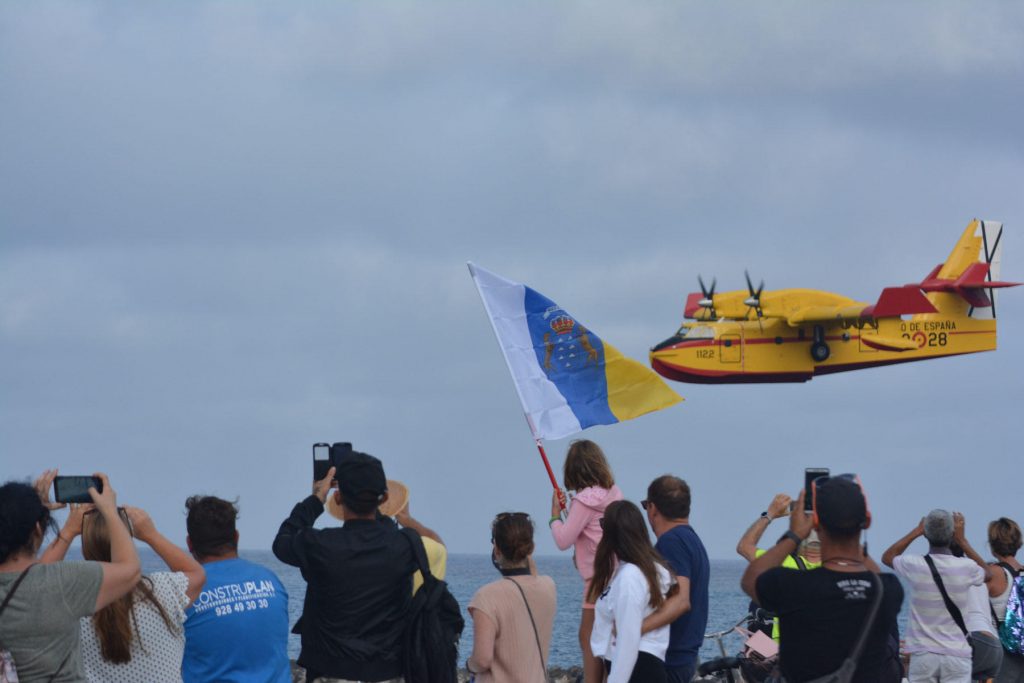
The event, designed as the central event of the Centenary of the Great Flights in the Archipelago, will reach its peak moment with a high-precision maneuver: the water landing of a Canadair from the 43rd Group. Seeing a ‘botijo’ —as these fire-fighting planes are popularly known— land on the waters of the port, next to the shopping center El Muelle, aims to evoke the silhouette of the Dornier Wal that in 1926 amazed a city that was just beginning to look to the skies.
The feat of Ramón Franco, Julio Ruiz de Alda, Juan Manuel Durán, and mechanic Pablo Rada will not remain solely in the air. The Canary Air Command will unveil a commemorative monolith that will serve as a historical anchor in the Plaza de Canarias, reminding that Las Palmas was the necessary technical and spiritual stop for that flight between Palos de la Frontera and Buenos Aires that connected two continents. The monument seeks to embed in urban memory the value of a generation of aviators who operated without GPS, relying on estimated calculations and a bravery that today seems from another era.
As a conclusion to this display of military and civilian pride, the sky of the capital will be traversed by the direct heirs of that Atlantic vigilance. A Super Puma helicopter and a D.4 (CN-235) search and rescue aircraft from the Group 82 of Air Forces, based in Gando, will perform a tribute flyover. It will be the crowning touch to a day that aims to remind that Canary Islands, before being a mass tourism destination, was—and continues to be—the definitive logistic platform in the middle of the ocean.