




Gran Canaria is navigating in 2026 in dangerous waters. With a firm power deficit ranging between 120 and 140 MW, the island’s electrical system —isolated and without interconnection with the mainland— has entered a phase of critical vulnerability. The specter of ‘energy zero’ is no longer a theoretical warning, but an immediate threat that has pushed the regional government to an emergency solution: the hiring of a fossil generation vessel (powership) of the Shark class, operated by the Turkish company Karpowership. However, what is presented as a temporary lifeline is beginning to be questioned as a ‘logistical and environmental madness’ that only perpetuates dependence on hydrocarbons.
The Turkish Patch and the Carbon Bill
The solution adopted by the Canarian executive in collaboration with the PP is essentially a combustion engine at an industrial scale docked at the Port of La Luz, despite the board having left the operational license on the table last November. Although the 125 MW vessel is capable of filling the energy gap in the short term, the structural cost is high. This ‘floating gas station’ requires a constant supply of tanker ships, exposing the islands’ electricity bill to the volatility of the crude oil market and emitting tons of CO2 and nitrogen oxides in a densely populated urban environment. According to critics, it is a 20th-century response to a 21st-century energy security crisis.
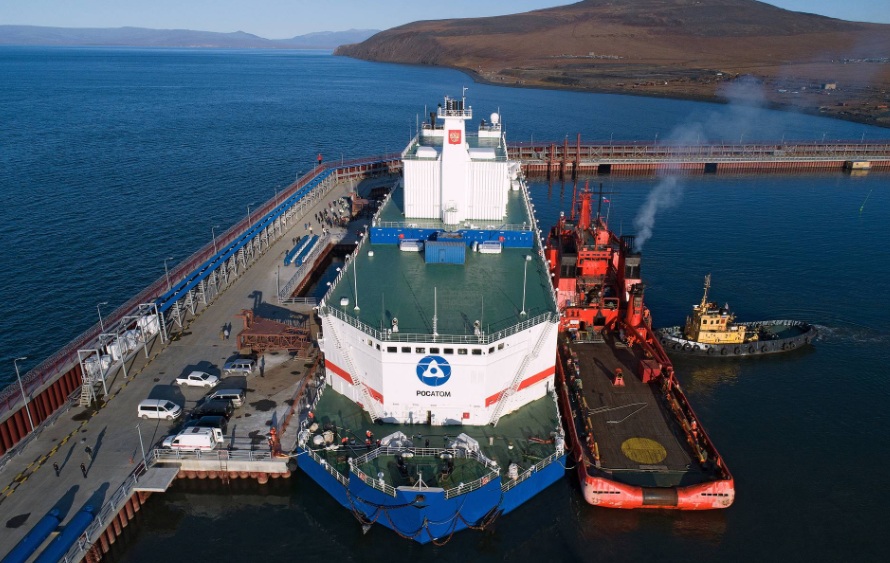
In the face of this fossil fuel inertia, the Peter Huber Center of the University of the Hesperides has put forward a paradigm shift: floating nuclear reactors. The document, prepared by experts Manuel Fernández Ordóñez and Daniel Fernández Méndez, argues that Gran Canaria does not need more chemical patches, but a ‘backbone’ of firm power that only nuclear energy can guarantee with over 94% availability.
Beyond the Kilowatt: The Energy-Water Binomial
The nuclear proposal not only addresses electrical supply, but also touches on the most sensitive nerve of the Canarian economy: water. In an archipelago where 80% of drinking water consumption depends on desalination —a process that consumes up to 12% of the generated electricity— energy insecurity is, by definition, water insecurity.
Technical analysis suggests that a single 70 MW floating reactor, similar to the Akademik Lomonosov currently operating in the Arctic, could desalinate up to 420,000 cubic meters of drinking water daily using waste heat. This represents an efficiency leap that the Turkish vessel, burning diesel to move conventional turbines, simply cannot achieve. While the fossil solution is a temporary lease contract, the nuclear option is proposed as infrastructure for the next six decades.
The ‘Turnkey’ Model Against the Waste Taboo
One of the greatest obstacles to nuclear energy in island territories has always been waste management. Here, the proposal from the Hesperides is pragmatic: a BOO (Build-Own-Operate) model. Under this scheme, an international consortium would supply the ‘turnkey’ reactor, taking responsibility for removing spent fuel and waste back to its country of origin. Gran Canaria would purchase the energy but would not inherit the logistical liabilities.
The comparison is unrelenting. While the fossil vessel reinforces energy servitude and environmental impact in the port, the floating nuclear reactor offers zero emissions and stable operating costs. For the authors of the report, the real recklessness is not exploring nuclear technology, but resigning oneself to burning oil at the dock of a city that aspires to be at the technological forefront. Thus, the Canary Islands face the decision to continue paying the diesel toll or lead the transition towards true energy autonomy.
News written by Gara Vega. Edited and verified by Pedro Marrero. Information cross-checked without institutional filters. This analysis has not been financed by official advertising nor conditioned by lobby interests.







