




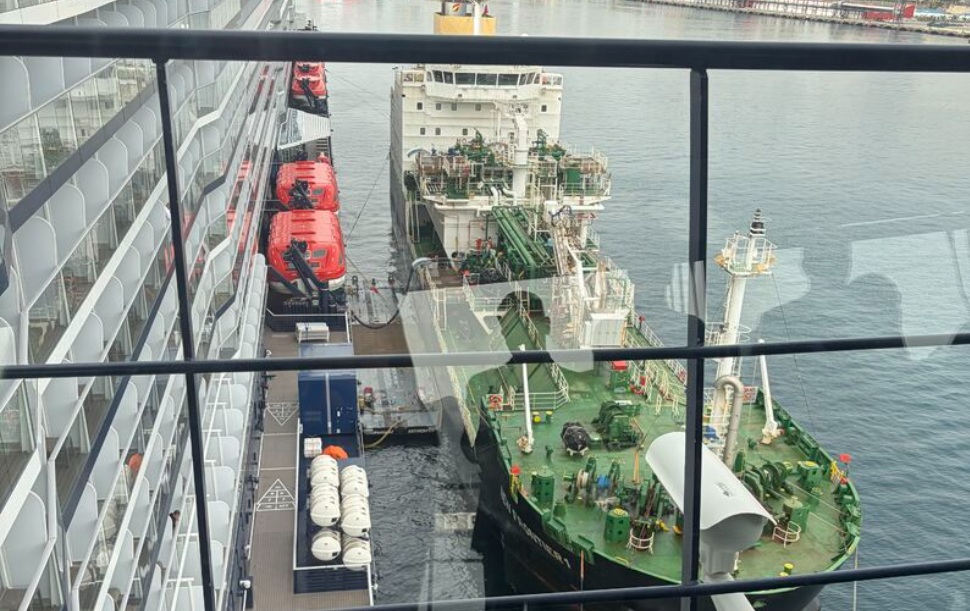
The Port of Santa Cruz de Tenerife has successfully executed its operational baptism in the supply of liquefied natural gas of biological origin (BioGNL). The maneuver, carried out by the Panamanian-flagged supply vessel New Frontier 1 —a strategic asset chartered by the multinational Shell— had as its recipient the state-of-the-art cruise ship Mein Schiff Relax. This energy transfer not only represents a technological advance in the decarbonization of maritime transport; it validates Tenerife as a key player in the clean fuels arena against competition from Mediterranean and Northern European ports.
The significance of the operation was underscored by a dense institutional representation. Key legislative figures such as Guillermo Mariscal and Juan Antonio Rojas were present at the dock, alongside the senior management of the Port Authority of Santa Cruz de Tenerife, led by its director, Pablo Nieto, and Operations Chief, Marcelino Díaz de León. The presence of the maritime captain, José Antonio Conde, highlighted the rigor of the safety protocols required for a fuel that, while sustainable, necessitates highly precise logistics. Spain thus reinforces its position as a leading hub in an industry where sustainability is already the primary selection criterion for major passenger shipping lines.
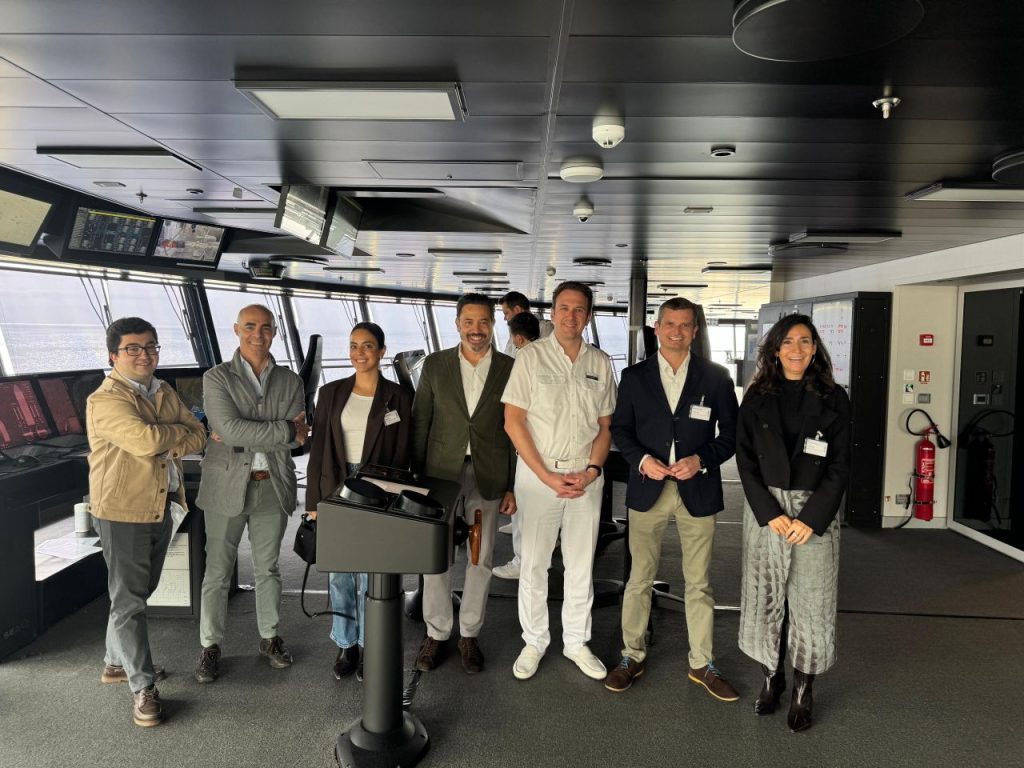
However, operational success coexists with contradictions regarding Spanish industrial sovereignty. While the Tenerife port infrastructure demonstrates top-level technical capability, voices from the sector have pointed out the paradox that the supplying vessel, New Frontier 1, operates under a Panamanian flag and not in the national registry or the Canarian REBECA. This gap between the excellence of land services and reliance on external fleets opens a debate on the necessity of integrating local flagging into the value chain of the energy transition to complete the strategic autonomy of the port system.
The use of BioGNL allows vessels like the Mein Schiff Relax to drastically reduce their carbon footprint by using captured biomethane, a critical intermediate step before the mass arrival of synthetic fuels. For Tenerife, this milestone is the result of sustained investment in storage facilities and cold-ironing protocols. The port ceases to be a spectator on the Atlantic route to act as an active node of responsible energy, capable of attracting the most modern assets of the global fleet that today demand more than traditional diesel: they require verifiable climate credentials.







