




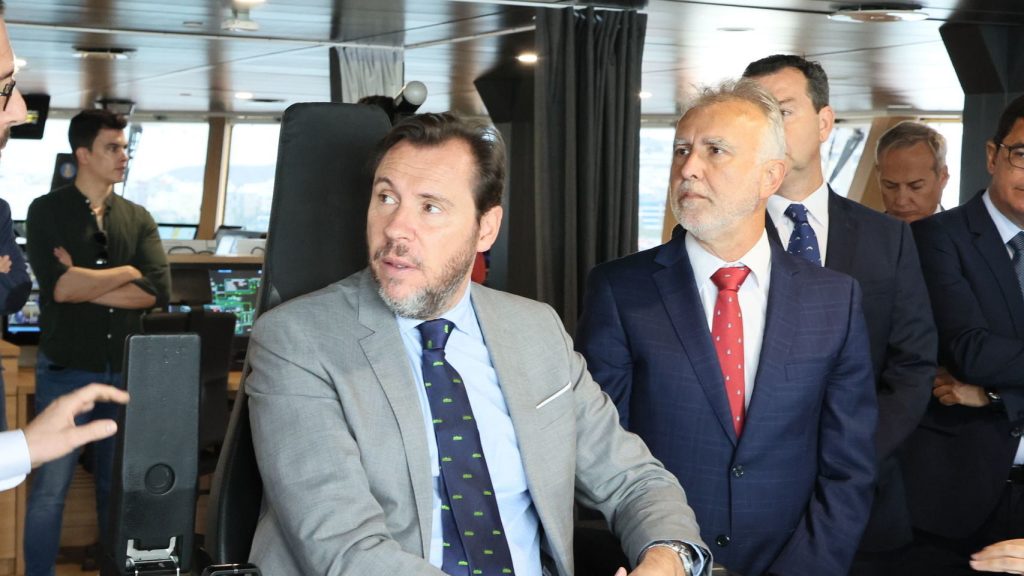
‘As I committed in the Canary Islands, we authorized an investment of nearly 40 million to complete the Ribera dock at the port of Granadilla and improve the capture of new traffic in Tenerife as a key logistics node in the Atlantic.’ This statement is from the Minister of Transport, Óscar Puente. The Spanish government has moved to complete what is set to become the largest industrial hub in the Mid-Atlantic.
The Council of Ministers has approved the bidding for the works to close the Ribera dock at the port of Granadilla, an investment of 39.7 million euros aimed at fully operationalizing this newly built infrastructure. This is not just an engineering project; it is Tenerife’s definitive attempt to capture deep-draft traffic that the Santa Cruz port, constrained by urban geography, can no longer absorb.
The technical intervention focuses on executing the remaining 543 meters to complete a dock over a kilometer long. The project, which will employ 11 reinforced concrete caissons anchored at a depth of -18 meters, places Granadilla in a different league from its regional competitors. These drafts allow for the berthing of next-generation vessels and large-scale logistics operations that require land area that the capital does not provide. With an adjacent industrial zone yet to be developed, the port is shaping up as the nerve center for transshipment and repair of large platforms, just as the sector undergoes a global consolidation process.
This bidding is not an isolated event; it is the spearhead of an aggressive Investment Plan. Between 2025 and 2029, the Canary Islands ports will receive an injection of 600 million euros, of which 255 million will go directly to the Santa Cruz de Tenerife Port Authority. The use of ERDF funds underscores Brussels’ interest in keeping this ultra-peripheral node connected to the trans-European transport networks, safeguarding the islands’ competitiveness against the push from the new ports in North Africa.
The message from Madrid is clear: Granadilla must stop being a concrete promise and become a revenue-generating asset. The enabling of the Ribera dock will free up space in the capital for higher value-added uses, such as passenger traffic and leisure, while shifting heavy logistics and industrial storage to an environment specifically designed for naval gigantism. With the Council of Ministers clearing the financial path, the ball is now in the court of the Port Authority to execute swiftly and prevent the ‘opportunity cost’ from continuing to hinder Tenerife’s growth.
News written by Raquel Molina. Edited and verified by Pedro Marrero. Information cross-checked without institutional filters. This analysis has not been funded by official advertising or influenced by lobby interests.







