




Las Palmas port does not ask questions, it only connects; and in logistics, this is often a very profitable virtue. The silent gas station for Cuban rum and tobacco heading to Europe. Although public debate rarely focuses on it, official data on ship movements tells a very different story: Cuba has a silver bridge with the Peninsula, and that bridge must go through the Port of Las Palmas. The data does not lie.
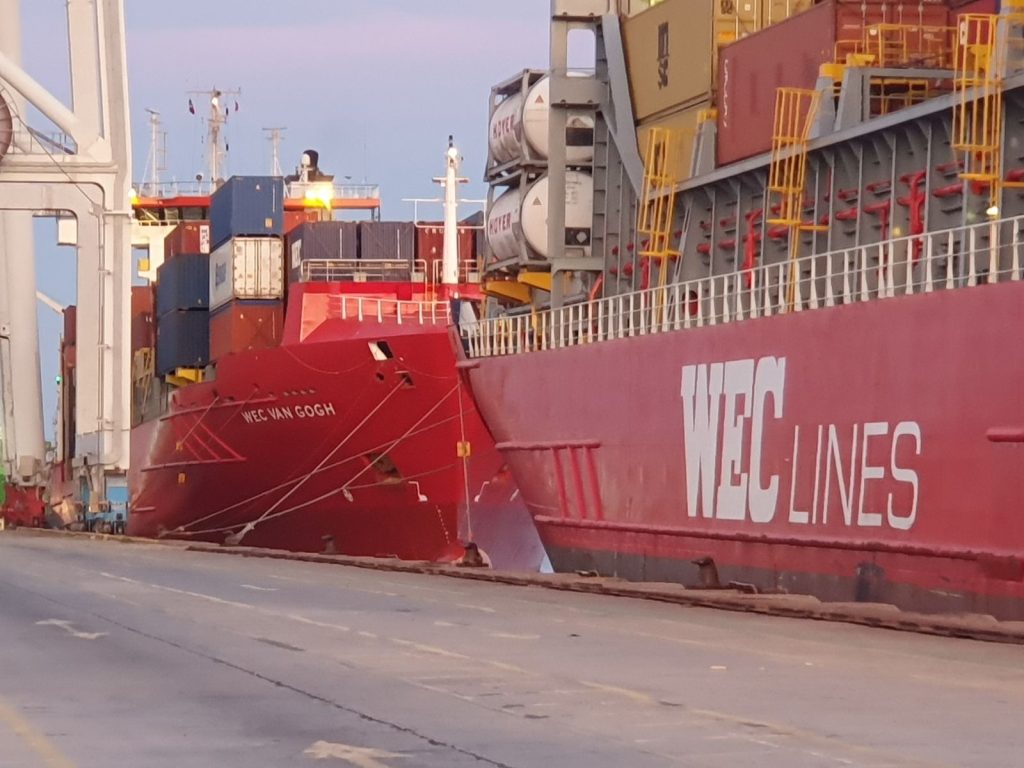
The Caribbean island uses the Gran Canaria port as a key logistics node to place its flagship products in the Spanish market, operating under a discreet transit regime that avoids local clearance but ensures that the goods reach their final destination: Valencia. In this Atlantic chessboard, the name that appears time and again is that of the shipping company WEC Lines.
Volando voy
Its vessels are the ‘trucks’ that move containers from the Port of Mariel to La Luz. This is not a coincidence. The units of this fleet, such as the WEC Vermeer, the WEC Van Eyck and the WEC Van Gogh, are the vectors that support this corridor. Particularly striking is the trail of the Van Eyck, which in December 2025 alone moved the bulk of the shipments of tobacco, liquors and charcoal using Gran Canaria as a pure transshipment platform. December, the month of Cuban ‘gold’: The calendar is calculated to the millimeter.
Cubatas
Between December 1 and 31, 2025, the statistics reflect a peak in activity. Cuba stands out as the origin for high added-value shipments, precisely to close the year and take advantage of the European commercial campaign. During this period, maritime transit traffic in Las Palmas surged by 26.7% compared to the previous year, a figure that explains why this silent hub is so profitable for the island’s interests. If we delve into the details of the cargo, the numbers are surgical: Tobacco (Cigars and cigarettes): Under tariff code 2402, 40-foot containers with shipments of 8.24 tons are recorded.
Regarding rum and liquors, movements in 20-foot containers totaling about 40 tons (divided into shipments of 18 and 21 tons) under code 2208. In terms of charcoal, the less glamorous but constant traffic, with blocks of 21 tons per container classified under code 4402. Valencia is the final destination for 100%. Las Palmas acts as a pure logistics hub; containers arrive, wait under TR (Transit) regime to optimize costs and stops, and ‘fly’ to the Peninsula without being ‘nationalized’ on the islands.
Data from 2025 makes it clear that Cuba is not as isolated as it seems. It uses Canarian infrastructure to insert its strategic exports into Spain, with WEC Lines as the main operator and the Port of La Luz as that necessary piece that connects the Caribbean with major European consumer centers discreetly but relentlessly.







