Saturday, 17 October 2026
  • Login
  • Español
  • English
Suscribirme
Subscribe
canarymaritime.com
No Result
View All Result
  • Home
  • Atlantic Ports
    • Atlantic Africa
  • Blue Energy
  • Logistic
  • Shipbuilding Industry
    • Shipyards and Ship Repair
    • Offshore and platforms
    • Industrial innovation and naval R&D
  • Blue Economy
    • Investment and European Funds
    • Financial Sustainability
    • Private Venture Capital
  • Atlantic Geopolitics
    • West Africa
    • Port Security and Defense
    • Blue Diplomacy
    • Canary Islands as a strategic hub
    • Drug Trafficking
  • Home
  • Atlantic Ports
    • Atlantic Africa
  • Blue Energy
  • Logistic
  • Shipbuilding Industry
    • Shipyards and Ship Repair
    • Offshore and platforms
    • Industrial innovation and naval R&D
  • Blue Economy
    • Investment and European Funds
    • Financial Sustainability
    • Private Venture Capital
  • Atlantic Geopolitics
    • West Africa
    • Port Security and Defense
    • Blue Diplomacy
    • Canary Islands as a strategic hub
    • Drug Trafficking
  • Español
No Result
View All Result
canarymaritime.com
es Español en English
No Result
View All Result
Home Atlantic Ports

Ormuz and the Waves Strangle Bunkering Supply in the Canary Islands and West Africa

Raquel Molina Betancor by Raquel Molina Betancor
11 June 2026
in Atlantic Ports
Reading Time: 3 mins read
0
47
SHARES
296
VIEWS
Compartir en WhatsappCompartir en LinkedIn
Google CONVIERTE CANARYMARITIME EN FUENTE DE NOTICIAS EN GOOGLE

The dynamics of global maritime trade are facing a dual logistical and geopolitical challenge that alters the cost structure in the Central Atlantic and the western African façade. The reactivation of military hostilities in the Persian Gulf, marked by exchanges of ballistic missiles and drone offensives between the United States and Iran at critical points such as Qeshm Island, has pushed the benchmark ICE Brent contract above the psychological barrier of 98 dollars per barrel. This surge in the commodity, combined with an unexpected contraction of U.S. strategic reserves, translates with amplified volatility to the quotations of marine fuel (bunker) in the strategic supply nodes of Las Palmas de Gran Canaria and key ports in West Africa.

In the Port of Las Palmas, the main distribution center of the Canary Islands, the benchmark for low sulfur marine diesel (LSMGO) has shown extraordinary upward behavior. The increase in local quotations has doubled the advances reported in competing markets such as the Strait of Gibraltar. This price asymmetry drastically reduces the traditional discount of Gran Canarian bunker compared to the mainland market, narrowing the margin to just 7 dollars per metric ton in a single trading day. The pressure on prices is aggravated by a structural rigidity of physical supply; local operators demand nomination times of between 7 and 10 days to guarantee the delivery of any technical specification, eliminating any flexibility for the immediate supply market.

The Paralysis of Outside Anchors and the Physical Bottleneck

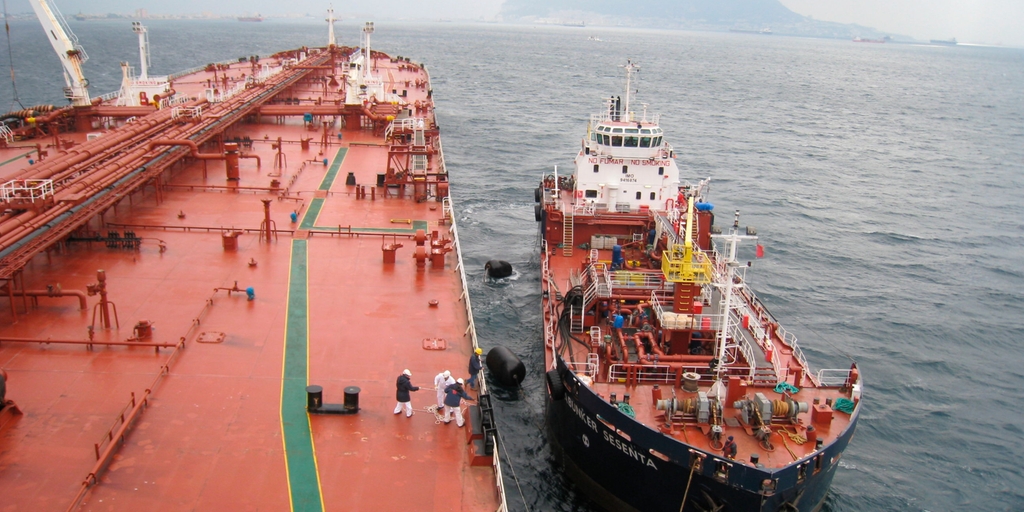
Adding to the financial pressure derived from the Middle East conflict is an operational blockage factor in the archipelago. A prolonged episode of adverse maritime conditions, with forecasts of swells and waves nearing two meters high, forces the suspension of supply operations in the outer anchors of the northern and southern areas of the island. The technical decision, coordinated by local port agencies, concentrates the entire demand of international commercial fleets in the inner anchorage area and alongside the docks.

This geographical restriction transforms the logistical advantage of Las Palmas into a bottleneck. Barge operations that are usually conducted in open waters with high turnover must now be carried out under the space limitations of the inner precinct, leading to structural delays and waiting times of between two and three days for vessels diverting their Atlantic routes in search of fuel. The inability to operate at the outer anchorage penalizes freight efficiency and forces shipowners to incur costs for recurring delays in one of the most congested transit routes on the planet.

West Africa Facing Component Shortages and Inventory Rigidity

The shockwave of this energy crisis significantly impacts the terminals along the West African coast, a region whose supply chain closely depends on refinery flows from northwest Europe. Independent inventories of fuel oil along the Amsterdam-Rotterdam-Antwerp (ARA) axis are at historic lows, sitting 44% below levels prior to the outbreak of the conflict in the Middle East due to shortages of essential components for the blend that typically transited through the Strait of Hormuz. This drought of distillates in European production centers immediately translates into limited availability of fuel for the port economies of the Gulf of Guinea and the southern part of the continent.

At the Nigerian port of Lagos, the main economic hub of West Africa, the VLSFO market is attempting to maintain a precarious stability with delivery windows of between 5 and 7 days, an operational oasis compared to neighboring ports. In Lomé (Togo), a critical point for the transshipment of crude oil and refined products in the African region, shortages compel buyers to plan their supplies with a minimum lead time of ten days. This same rigidity is replicated further south, in Walvis Bay (Namibia), where stock challenges coincide with the arrival of the same strong swell front affecting the Canary archipelago, threatening the technical viability of offshore bunkering operations.

Logistical Reconfiguration in the South Atlantic

The vulnerability of supply in West Africa sharpens at the extremes of the Atlantic corridor. Strategic terminals like Luanda (Angola) are reporting a temporary depletion of their heavy fuel stocks, limiting their operations exclusively to the supply of low sulfur marine diesel (LSMGO) under strict pre-notification requirements. This paralysis forces commercial navigation around Cape of Good Hope to seek alternatives in saturated markets like Durban (South Africa), where the scarcity of immediate product and price hikes of up to 76 dollars per ton consolidate a scenario of high volatility for the operational costs of international maritime transport.

The confluence of a scenario of military hostilities, which increases the price of Brent crude, with the weather restrictions in Las Palmas redefines the commercial balances between Europe and Africa. Faced with the impossibility of securing flexible and economical supplies at traditional Atlantic and West African nodes, major shipping companies are forced to internalize long waiting times and rising fuel budgets. The bunkering business in Las Palmas thus faces a test of resilience where the management of internal port space and the legal security of long-term supply contracts consolidate as the only tools to defend its hegemony against the forced paralysis of its outer waters.


Google CONVIERTE CANARYMARITIME EN FUENTE DE NOTICIAS EN GOOGLE
Previous Post

Connected or Consumed? The Starlink Paradox in the Transatlantic Fleet from the Canary Islands

Next Post

Ten Years of Synergy between Zamakona and Wärtsilä in the Port of Las Palmas

Raquel Molina Betancor

Raquel Molina Betancor

Raquel Molina Betancor is a veteran investigative journalist whose career has been defined by rigor, patience, and in-depth reporting on power structures, corruption, and institutional transparency. She trained in street reporting and court journalism and has collaborated with outlets such as Público, where she produced investigations and analytical pieces grounded in documentation, verified sources, and long-term judicial follow-up. A firm believer in journalism as a craft rather than a spectacle, her work focuses on exposing opaque administrative dynamics and telling uncomfortable stories with facts, context, and a healthy dose of well-aimed grit.

NewsRelated

Maersk abre la campaña de aumento de precios en África occidental antes del Black Friday
Atlantic Africa

Maersk kicks off West Africa rate hikes ahead of Black Friday

15 October 2026
280
El salto tecnológico de Ghana que desafía a los puertos de Canarias: Automatizar terminales
Atlantic Africa

Ghana’s Technological Leap Challenges the Canary Islands’ Ports: Automating Terminals

15 October 2026
283
Aïssata Lam asume la cartera de Pesca en Mauritania, clave para el negocio portuario de Canarias
Atlantic Ports

Aïssata Lam takes over Mauritania’s fisheries portfolio, a key post for the Canary Islands’ port business

12 October 2026
298
Puertos de Las Palmas y Tenerife capital tienen el 84% del negocio pesquero del Atlántico Medio
Atlantic Africa

The ports of Las Palmas and Tenerife’s capital account for 84% of the Central Atlantic fishing business

5 October 2026
268
Marruecos y Mauritania acuerdan conectar el puerto de Dakhla Atlantique con Senegal
Atlantic Africa

Morocco and Mauritania agree to connect Dakhla Atlantique port with Senegal

2 October 2026
286
China coloca seis buques en rotación directos a puertos de África occidental
Atlantic Africa

China deploys six-vessel rotation on direct service to West African ports

2 October 2026
319

Leave a Reply Cancel reply

Your email address will not be published. Required fields are marked *

© 2026 canarymaritime

  • Contact
  • Transparency
  • Code of ethics
  • Legal Notice
  • Privacy Policy
  • Cookie Policy (EU)
  • Intellectual Property Rights
  • Promise to Our Readers
  • Principles on the Use of AI
  • Commitment to Our Subscribers and Advertisers
  • Español
  • English
Gestionar consentimiento

Para ofrecer las mejores experiencias, utilizamos tecnologías como las cookies para almacenar y/o acceder a la información del dispositivo. El consentimiento de estas tecnologías nos permitirá procesar datos como el comportamiento de navegación o las identificaciones únicas en este sitio. No consentir o retirar el consentimiento, puede afectar negativamente a ciertas características y funciones.

Funcional Always active
El almacenamiento o acceso técnico es estrictamente necesario para el propósito legítimo de permitir el uso de un servicio específico explícitamente solicitado por el abonado o usuario, o con el único propósito de llevar a cabo la transmisión de una comunicación a través de una red de comunicaciones electrónicas.
Preferences
The technical storage or access is necessary for the legitimate purpose of storing preferences that are not requested by the subscriber or user.
Estadísticas
El almacenamiento o acceso técnico que se utiliza exclusivamente con fines estadísticos anónimos. Sin un requerimiento, el cumplimiento voluntario por parte de tu proveedor de servicios de Internet, o los registros adicionales de un tercero, la información almacenada o recuperada sólo para este propósito no se puede utilizar para identificarte. The technical storage or access that is used exclusively for anonymous statistical purposes. Without a subpoena, voluntary compliance on the part of your Internet Service Provider, or additional records from a third party, information stored or retrieved for this purpose alone cannot usually be used to identify you.
Marketing
The technical storage or access is required to create user profiles to send advertising, or to track the user on a website or across several websites for similar marketing purposes.
  • Manage options
  • Manage services
  • Manage {vendor_count} vendors
  • Read more about these purposes
Ver preferencias
  • {title}
  • {title}
  • {title}
No Result
View All Result
  • Home
  • Atlantic Ports
    • Atlantic Africa
  • Blue Energy
  • Logistic
  • Shipbuilding Industry
    • Shipyards and Ship Repair
    • Offshore and platforms
    • Industrial innovation and naval R&D
  • Blue Economy
    • Investment and European Funds
    • Financial Sustainability
    • Private Venture Capital
  • Atlantic Geopolitics
    • West Africa
    • Port Security and Defense
    • Blue Diplomacy
    • Canary Islands as a strategic hub
    • Drug Trafficking

  • Login

© 2026 canarymaritime.com