




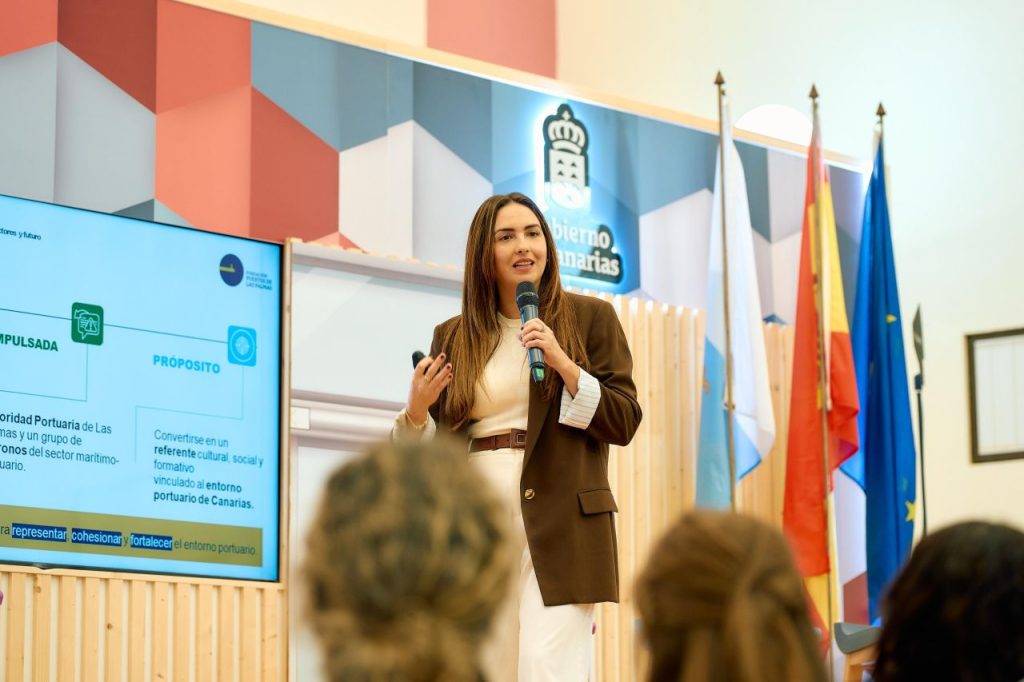
The race for port efficiency in the Canary-Saharan node has taken a turn towards the educational system. During the IV Congress of Vocational Training of the Canary Islands, Betsabé Morales Perdomo (CC) outlined a roadmap that positions local talent as the main barrier to entry against external competition. For the manager of the Foundation of the Ports of Las Palmas, the integration of dual training is not just an academic exercise, but an operational necessity for a port that manages more than 20 million tons annually and increasingly demands an ultra-specialized workforce.
Under the motto “Embarcando hacia el Futuro Profesional”, Morales Perdomo has outlined a roadmap that transcends traditional training. Her strategy proposes a vertical integration where vocational training centers cease to be mere providers of degrees and become R&D laboratories and direct quarries for the companies operating in a port with traffic exceeding 20 million tons annually.
The Foundation’s diagnosis is clear: the blue economy in the Canary Islands faces the structural risk of having to import technical profiles to fill high value-added positions. The commitment of Morales Perdomo seeks to mitigate this vulnerability by transforming sectors such as ship repairs, cold logistics, and advanced port services into local employability niches. ‘Spaces like this are essential to connect Vocational Training with the real opportunities of the sector,’ said the manager, placing employability as the main indicator of the institution’s social profitability.
She reminded that in a context of volatility in international supply chains, consolidating the Canary Islands as a node of excellence in logistics and port security is not just an educational goal, but an economic defense movement. By strengthening the link between classrooms and docks, the port not only guarantees its long-term technical operability but also reaffirms its position as the financial lung of the archipelago.
The alliance between the Foundation of the Ports of Las Palmas, private companies, and the educational system seems to have reached cruising speed. The immediate challenge for the region will be to scale this dual training model, ensuring that it is the young Canarians who lead the imminent digital transformation and decarbonization of one of the most important hubs in the Central Atlantic.







