




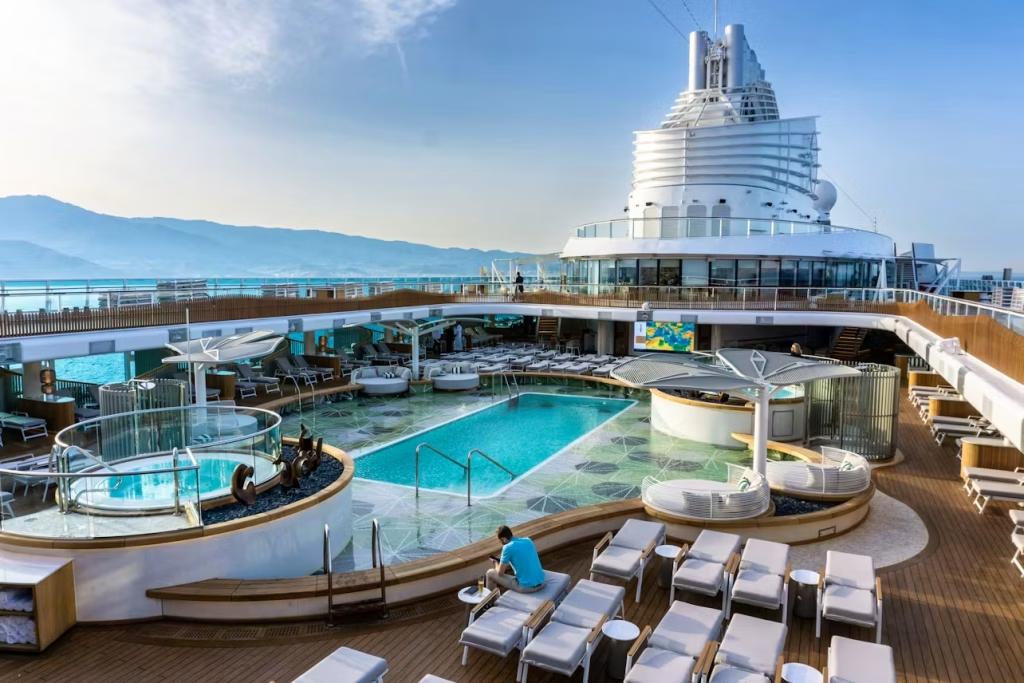
What began as an emergency measure due to the crisis in the Strait of Hormuz is transforming into the rediscovery of a forgotten route. The announcement by Oceania Cruises to redirect its flagship, the Oceania Vista, is the clearest example of how instability in the Middle East is reshaping the luxury tourism landscape, making the western African coast and the Canary Islands the new protagonists of the 2026 season.
The Oceania Vista, which was originally scheduled to sail the Red Sea and Eastern Mediterranean, has canceled its stops in Greece, Italy, Turkey, and Egypt. Instead, the ship will undertake a complete circumnavigation of the African continent, introducing thousands of travelers to destinations that were until recently secondary in major catalogs: Angola, São Tomé and Príncipe, Ivory Coast, Gambia, and Cape Verde.
From necessity to adventure: The rise of Africa
This change in itinerary, initially motivated by safety following the commercial shutdown at Hormuz, is allowing the industry to explore ‘hidden gems.’ Ports such as Luanda and Banjul are attracting a high-net-worth cruise clientele seeking authentic cultural experiences outside the mass tourism circuits of the Mediterranean. What was a logistical challenge for cruise lines — evacuating passengers and replanning 180-night routes — has turned into a marketing opportunity: the scenic and colonial appeal of West Africa is the new frontier for expedition cruising.
The home port of the Cape Route
In this new framework, the Canary Islands act as the key component that completes the Atlantic arc. The Oceania Vista, after navigating up the African coast, will stop at the archipelago before heading to Southampton in June. This ‘technical and tourist stop’ reinforces the position of the Canarian ports not just as a refuge, but as the essential connection hub for ships that now must round the Cape of Good Hope.
For the island economy, this represents a steady flow of ships that, by undertaking longer journeys, require more bunkering services (with VLSFO stabilized at 764.23 euros) and provisioning. The arrival of vessels such as the Vista or the Carnival Glory (which made its inaugural port call last week) confirms that the Canary Islands are today the most reliable and dynamic destination in the Atlantic.
A structural change lasting two years
Analysts agree that these routes are not temporary. Since the industry requires 24-month planning cycles, the diversion towards Africa and the Canary Islands will remain at least until 2028. While the Eastern Mediterranean is experiencing a 3.9% decline in passenger volume, the Macaronesian destinations and the Gulf of Guinea are experiencing a ‘renaissance’ forced by geopolitics. In April 2026, the narrative of tourism is no longer written in Suez but in the currents of the Atlantic. Travelers who expected to see the ruins of Athens are discovering, instead, the lushness of São Tomé or the hospitality of Gambia, consolidating West Africa as the emerging destination that the Middle East crisis has ultimately enshrined.







