The bunkering map in the Atlantic and European periphery is experiencing a reconfiguration forced by geopolitical volatility and climatic contingencies. The price of Brent crude for immediate delivery has seen a drop of $5.67 per barrel, settling at $86.54 in London markets. This decline responds to the diplomatic easing introduced by statements from the White House regarding an imminent peace agreement between the United States and Iran, an announcement that overshadows the seventh consecutive week of declines in U.S. commercial crude inventories, which fell by 7.2 million barrels according to the Energy Information Administration (EIA). OPEC is following the trend by cutting its forecast for global demand growth for 2026 to one million barrels per day, forcing a widespread adjustment in the prices of marine distillates.
The Port of Las Palmas absorbs this global scenario through an unorthodox behavior in its pricing of Low Sulfur Marine Gas Oil (LSMGO). The Gran Canaria market records a sharp drop of $76 per ton over the last twenty-two hours, a significantly more pronounced decline than that experienced by reference ports in continental Europe. The correction has been accelerated by the closure of a spot contract of medium volume, set at the dock at $1,130 per ton for operations between 150 and 500 tons. This singular transaction puts downward pressure on local indices and causes an immediate narrowing of $23 per metric ton in the historical price premium that Las Palmas maintains over the Gibraltar market.
The competitive position of the Gran Canaria enclave faces operational tensions due to severe restrictions on physical supply. The trading companies in the island facility operate with limited stocks across all fuel specifications, forcing shipowners to plan their calls with advance notice windows of seven to ten business days. The supply difficulties are exacerbated by a sudden worsening of weather conditions in the Central Atlantic. Supply operations at the outer moorings of the Canary port remain completely suspended, transferring activity to the inner docks and commercial berths, areas that already experience structural delays due to a shortage of physical space.
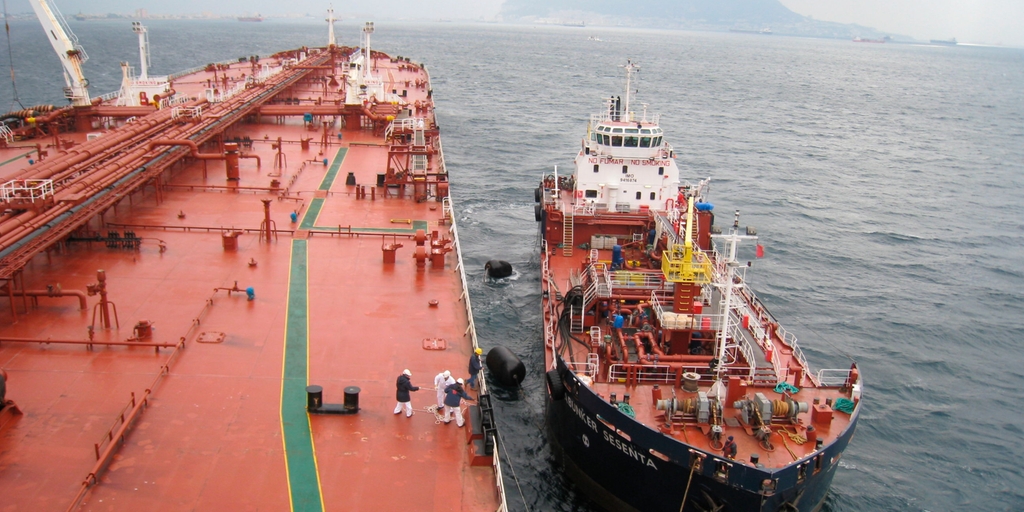
Gibraltar is similarly suffering an operational collapse resulting from climatic factors and demand saturation. The Bay of Algeciras records continuous wind gusts of 25 knots, a situation that has required the activation of maritime safety alerts by the Port Authority. Technical restrictions are slowing down the dispatch of supply barges, generating waiting lines that reach 19 anchored vessels. The accumulated delays experienced by supplying companies range between 24 and 48 hours, a time frame that diminishes the dynamism of the strait despite widespread declines in their rates, where Low Sulfur Fuel Oil (VLSFO) falls by $38, LSMGO drops by $53, and traditional heavy fuel declines by $43 per ton.
The periphery of West Africa benefits indirectly from the geographical bottlenecks of European sites, although it experiences its own corrections in the prices of distillates. The port of Durban records the most severe adjustment in Low Sulfur Fuel Oil (VLSFO) cutting $137 per ton, while its indicator for marine diesel drops by $95. The West African coast closely monitors the operational limitations of Las Palmas to capture opportunity traffic. Sub-Saharan enclaves seek to consolidate as viable alternatives against the extended delivery times from the islands and the forced technical stops imposed by adverse weather in the Strait of Gibraltar.
Marine biofuels also reflect the general deflationary trend in northern markets. The B30-VLSFO blend reduces its cost by $65 per ton at Gibraltar terminals and experiences similar behavior in Rotterdam with a decline of $63. International transit shipping companies face a scenario of high volatility where the nominal price drop of the product does not guarantee rapid refueling. Las Palmas defends its market share in Atlantic supply based on the drastic reduction of its price differentials, but the lack of available inventory and the closure of the outer mooring threaten to divert floating demand toward alternative routes in West Africa.