




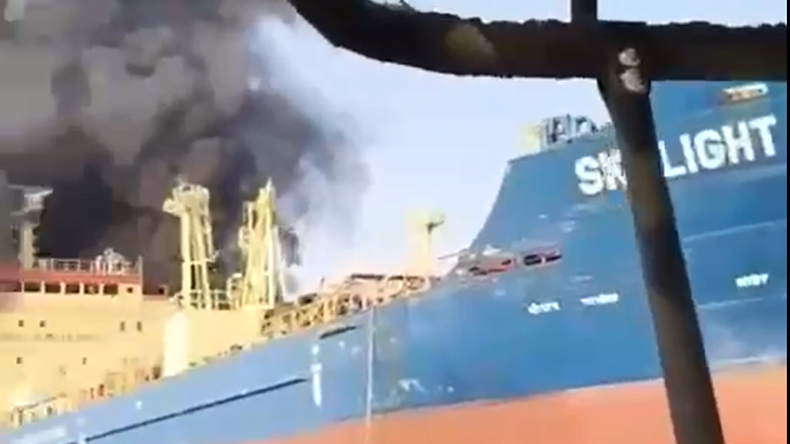
In a place filled with party walls, thinking that something similar to what happened in Las Palmas in 1972 will occur is unrealistic. Here, there is no boldness from shipowners like the Greek George Prokopiou, always keen-eyed these Greeks, who crosses Hormuz at night and without AIS under war risk premiums negotiated ad hoc; this is the exception in a market that, by consensus, prefers the costly safety of the Atlantic route.
The intensification of the conflict in the Strait of Hormuz, through which 20% of the world’s crude oil transits, has triggered a tectonic reconfiguration of commercial routes that positions the Canary Islands in an unprecedented strategic position. While shipowners discount the viability of the escorts promised by the Trump administration in light of the effectiveness of Iranian drones, the shipping sector has initiated a massive diversion towards the Cape of Good Hope. This decision, which adds between 10 and 14 days to voyages between Asia and Europe, transforms the Atlantic axis into the main artery of global trade, with the Port of Las Palmas emerging as the indispensable refueling node before the jump into the Strait of Gibraltar.
The magnitude of this logistical turn is reflected in the saturation of transshipment and bunkering centers. Although the Moroccan port of Tanger Med, which handled 11 million containers in 2025 (an increase of 8.4%), consolidates itself as the major distribution hub for the Mediterranean and West Africa, its capacity is limited by the pressure of nearby supply chains (Renault and Stellantis). In this scenario, the Canaries recover their historical value as a platform for technical services and fuel supply. The increase in navigation through the Atlantic corridor positions Canarian ports on the direct trajectory of vessels that, after circling Africa, need to replenish VLSFO and LSMGO inventories before integrating into the European distribution network.
However, this market opportunity coexists with extreme volatility in costs. If the blockade of Hormuz extends beyond the phase of disturbance lasting days, analysts consulted by Bloomberg or Reuters predict that Brent, currently at $80, could quickly rise to $100, possibly reaching $120 if the conflict becomes prolonged. For Canarian ports, this means managing rising bunker demand in an environment of uncertain replacement prices.
The position of Las Palmas is, therefore, one of strategic vulnerability and, at the same time, critical relevance. The saturation of 60,000 annual transits through Gibraltar and the increasing demand for repair and provisioning services in the Central Atlantic require that Canarian infrastructures operate at maximum capacity. The success of the global supply chain now depends on the efficiency of these intermediate nodes that, in the face of the collapse of the traditional routes through the Red Sea and the Persian Gulf, have become the only guarantors of the flow of energy and goods into the European market.







