




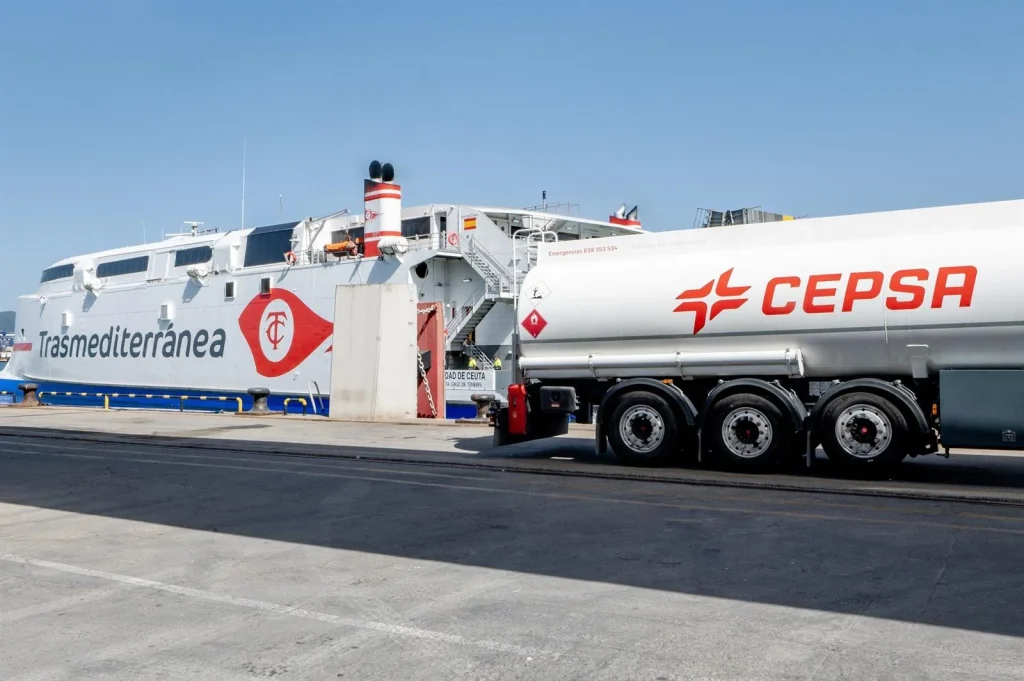
The digital press of Las Palmas sets the pace for the regulator in the biggest fuel scandal in the islands. In the midst of the information blackout in the Port of Las Palmas regarding vegetation supports, it has had to be specialized journalism —in this case, the accurate aim of Canarymaritime— that put the bell on the cat for the Government of the Canary Islands to emerge from its lethargy and confirm what was already an open secret at the docks: the Autonomous Community is acting as the prosecution against Cepsa (Petrocan) and against its own ‘watchdogs’ from the Tax Agency.
This is not an assertion of puffed-up pride and institutional honor; it is an assertion of survival. After the revelation that the Prosecutor’s Office is seeking the ‘corporate death penalty’ (dissolution) for Cepsa due to a fraud of nearly 8 million euros, the Councillor of Finance of the Government of the Canary Islands, Matilde Asián, has had no choice but to confirm that she will be at the trial. Failing to do so would have meant accepting that the ‘superior interest of the Canary Islands’ stops right at the door of the major oil companies. But there’s more: the Administration will not pay for the lawyers of the officials who are charged.
The most painful aspect of the government confirmation is not Cepsa’s fraud —after all, multinational companies are expected to profit, not to be ethical— but rather the role of the Canary Islands Tax Agency. That the Government has to act in a case where three of its high officials are being tried for ‘failure to pursue crimes’ is the implicit acknowledgment of a systemic failure. According to the storyline that Canarymaritime and other digital media have dissected: Cepsa reported diesel as fuel oil (paying €0.56 instead of €222). ATC officials took 28 months to review the documents, and only did so when the Prosecutor’s Office was already at the door with the flashlight on.
Watchdogs or hallway accomplices?
The Government’s confirmation tries to sell an image of strength, but the intelligent reader knows how to read between the lines. It is an attempt to dissociate political responsibility from administrative responsibility. The message is clear: ‘We are also victims.’ While Cepsa stares into an abyss that adds up to 28 years in prison, the Government of the Canary Islands sails in turbulent waters.
The confirmed news following the trail of Canarymaritime leaves an uncomfortable question floating in the Port of Las Palmas: How many other ‘conversion miracles’ of fuel are currently taking place while official radars remain in energy-saving mode? The extreme request from the Prosecutor’s Office that could erase Cepsa (now Moeve) from the legal map is of total gravity and where the Las Palmas Prosecutor’s Office expects decisive measures.
This news was written by Gara H. Vega. Edited and verified by Pedro Marrero. Cross-checked information without institutional filters. This analysis has not been financed by official advertising nor conditioned by lobbying interests.







