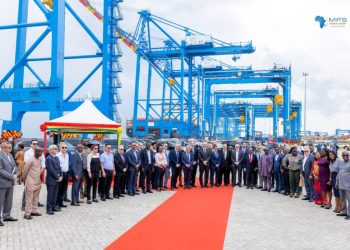
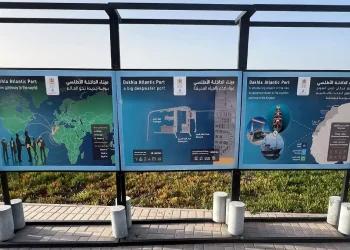
The Government of Cameroon has launched formal negotiations with Terminal Investment Limited (TIL), the port-infrastructure arm linked to shipping line Mediterranean Shipping Company (MSC) and owner of Opcsa in Las Palmas, to advance the deep-water port project in Limbe. After nearly 15 years of administrative paralysis and several failed efforts to move ahead, the arrival of the Swiss firm aims to turn a site planned on the Atlantic coast into an operational commercial hub. On 15 July, the Cameroon prime minister, Joseph Dion Ngute, chaired a high-level summit in Yaoundé with an executive delegation from TIL to discuss options for the future terminal’s technical and financial structure.
The meeting in Cameroon’s capital comes less than a month after Ngute’s cabinet reviewed updated feasibility studies for the project. This political timetable acceleration responds to the need to overcome the pre-planning phase and begin raising private capital. David El-Bez, TIL’s director for the Eastern Atlantic and Africa, confirmed the formal opening of talks after he was invited by local authorities to explore development formulas on the ground. While no concession contract or definitive investment agreement has been signed, the approach to MSC places the world’s first shipping company in a favorable position in the bidding process.
The project is valued at more than roughly €610 million, a figure that requires structuring a public-private partnership scheme or forming an international consortium of lenders. Limbe is expected to become Cameroon’s third major port complex, adding to the operation of Douala’s river port—which has been affected by congestion and draft limitations—and the Kribi deep-water terminal. Limbe’s main competitive advantage lies in its geographic proximity to Nigeria, which would make it possible to channel trade flows to Africa’s largest economy and attract transshipment traffic in the Gulf of Guinea.
MSC already has a footprint in Cameroon’s logistics network through operations at the Douala and Kribi terminals, as well as participation in the rail transport chain connected to Camrail. This local-market penetration gives TIL detailed knowledge of cargo volumes and the region’s operating constraints. However, the Cameroon Executive must precisely define Limbe’s business model to avoid operational overlap or destructive competition with existing ports—clarifying whether the infrastructure will be geared toward container traffic, the energy industry, or multi-purpose cargo.
Ultimately, the future port’s commercial success will depend on the complementary investments in land infrastructure the State commits to. The terminal’s financial viability requires the construction of road and rail access, ensuring electricity supply, legal certainty over the land, and the installation of customs logistics zones. After previously receiving expressions of interest from business groups in the United States and Turkey, Yaoundé now faces the challenge of defining risk sharing, state guarantees, and an execution timeline to prevent the project from suffering further delays.
The article Cameroon negotiates with OPCSA’s owner at Las Palmas port to restart the Limbe project was first published on canarymaritime.com.