




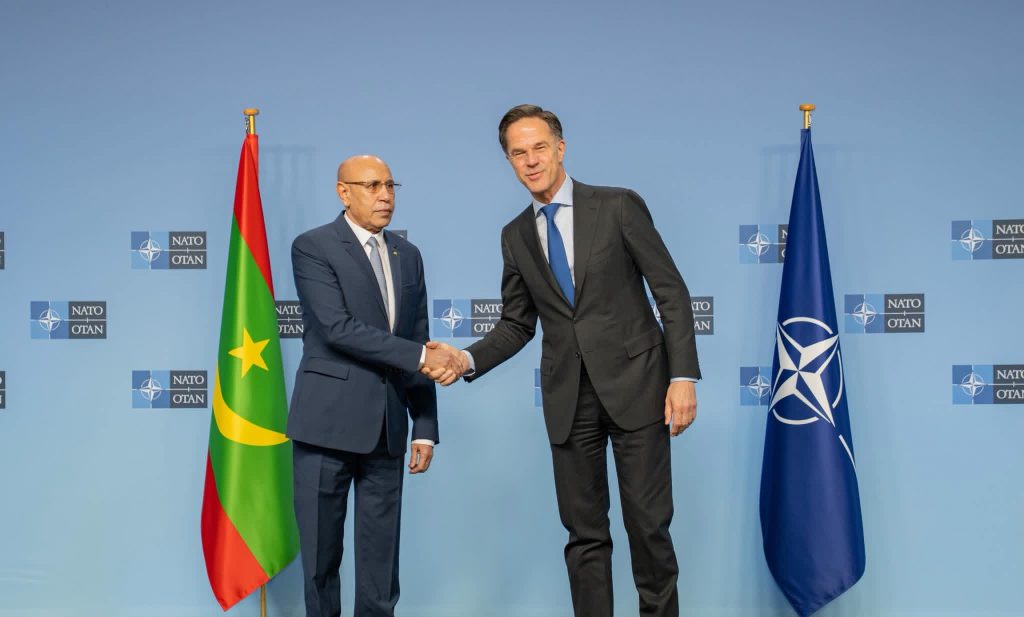
The growing importance of the African Atlantic façade for the security of the Canary Islands gains new momentum. NATO Secretary General Mark Rutte held a strategic meeting this week with Mauritania’s President Mohamed Ould Cheikh El Ghazouani. The meeting, held at NATO’s headquarters under strict information security, marks a turning point in the relations between the transatlantic bloc and the only Sahel country that has managed to maintain institutional stability against the advance of jihadism and Russian influence in the region.
Mauritania, a member of NATO’s Mediterranean Dialogue for over three decades, has become an indispensable chess piece for Brussels’ interests. The discussions between Rutte and Ghazouani focused on the ‘strengthening of cooperation and partnership’, diplomatic terms that mask an operational reality: the role of Nouakchott as a bulwark in the fight against terrorism, maritime security surveillance, and the development of advanced military capabilities in a high volatility environment.
The significance of this visit extends beyond the military dimension. Ghazouani’s trip to Brussels, made at the express invitation of NATO, included a parallel agenda with senior European Union officials on fishing and energy business, as Canarymaritime has learned. This dual engagement reinforces Mauritania’s position as the golden partner in the region for the Canary Islands. Mauritania not only shares hot borders but also acts as a diplomatic and military link in an area where the security of the Canary Islands and southern Europe is at stake on a daily basis.
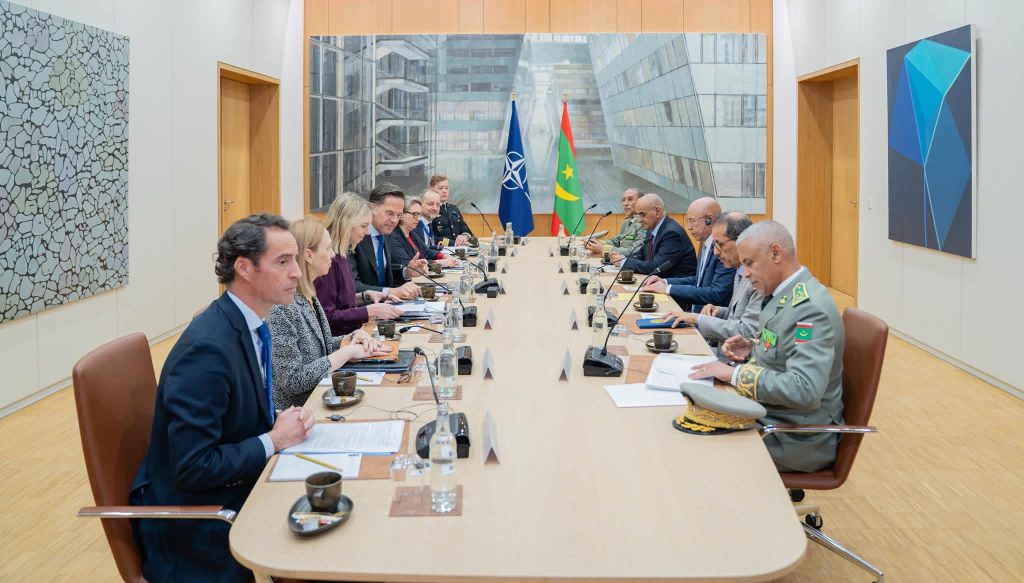
Although the meeting had no media coverage, analysts agree that maritime traffic security in the Atlantic has been a central point on the agenda. With the rise in gas and oil exports off the Mauritania-Senegal coast and the control of migration routes, NATO seeks to ensure that Mauritania’s naval capabilities are aligned with the Alliance’s standards. The discretion of the meeting suggests that agreements for training or intelligence sharing may have been reached, positioning Nouakchott as the gendarme of the southern Atlantic flank.
This diplomatic offensive by Ghazouani at the heart of Europe consolidates his regional leadership and sends a clear message: while the rest of the Sahel fractures, Mauritania chooses the path of integration with Western security structures. For Spain, and particularly for the Canary Islands, this fortifying of the NATO-Mauritania relationship provides an additional guarantee of stability in its immediate neighborhood.







