




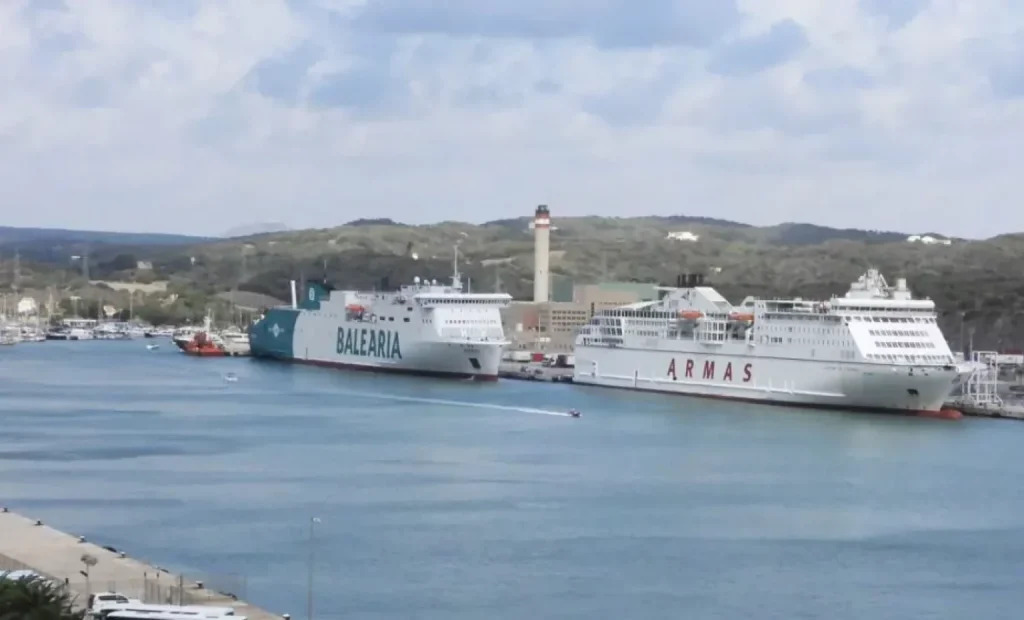
If the flour business in the Canary Islands must be viewed from a European perspective, the Canary market is not relevant. The Haricana doctrine prevails in the islands for better or worse. The National Commission for Markets and Competition (CNMC) has put an end to months of regulatory uncertainty. The agency chaired by Cani Fernández has given the green light to Baleària for the acquisition of the strategic assets of Naviera Armas. The decision, confirmed by sources involved in the process on March 31, 2026, unblocks an operation that had been stalled since last year due to the regulator’s concerns about market share concentration on the routes between the Canary Islands and the Iberian Peninsula.
The ruling comes after a last proposed set of commitments presented by the Valencian shipping company. Baleària has managed to convince competition officials that the integration does not violate free competition in the Atlantic axis or in the public concessions of the Alboran Sea. Although the exact content of the conditions imposed by the CNMC remains confidential, the market believes that Utor will have to relinquish space or frequencies on critical routes where the combined fleets created an almost absolute dominant position.
The DFDS factor and the Strait
The puzzle of dismantling Armas is completed with the entry of DFDS. The Nordic giant takes over the third perimeter of the company, focused on the routes of the Strait. Unlike the Atlantic block, DFDS’s fit has been less contentious for the regulator; its minimal previous presence in Spain limits the impact on competition, with the only exception being the Algeciras-Ceuta line. This parallel advancement allows for coordinating the definitive exit of the creditor funds from the direct management of regional maritime transport.
Financial oxygen against bondholders
The authorization represents a critical lifeline for the capital structure of Naviera Armas. The company, currently in the hands of a consortium of funds led by JP Morgan, Barings, and Bain Capital, was facing a financial abyss in the short term. The debt calendar marked two red-flag dates: a super senior maturity of 42 million euros in July and a larger obligation with bondholders in December.
Without the CNMC’s endorsement, Armas would have been forced into a new and painful refinancing of its liabilities. The entry of Baleària provides the necessary industrial solvency to ensure the continuity of service in an archipelago where maritime connectivity is a basic right. With the integration, the Spanish naval sector is heading towards a de facto duopoly between Baleària and Boluda/Grimaldi, under the watch of a regulator that has prioritized the stability of the operator over the fragmentation of the market.







