




The extractive and primary production industries of the Canary archipelago are facing a severe operational contraction that jeopardizes their financial viability. Consolidated audits by the Economic and Social Council of the Canary Islands expose a scenario of deterioration in the yields of fishing, aquaculture, and livestock, highlighting the weaknesses of a model subjugated to the costs of ultra-periphery. The loss of critical mass in the primary sector coincides with stagnation in the local secondary sector, whose contribution to Gross Value Added (GVA) remains fixed at 12.10%, a rate that distances the islands from the industrial diversification levels of the rest of the State.
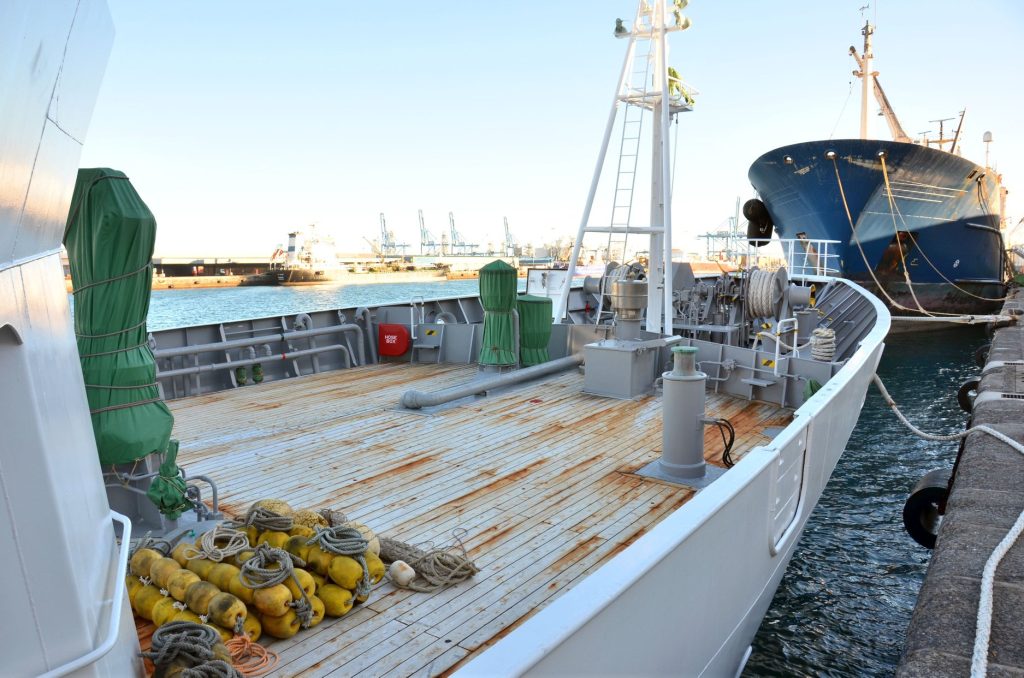
The most acute crisis in the statistical series is located in the fishing and aquaculture complex, whose production volumes suffered a collapse of 28.1% in the last fiscal year, marking the second consecutive year of negative variation rates.
The total volume extracted by island fleets and facilities decreased to 5,056,464 kilos, a figure that marks a cumulative contraction of 41.41% compared to records from the beginning of the decade. By geographical demarcations, the biennial setback hits the islands with the greatest fishing tradition especially hard: La Gomera reports a production loss of 67.56% and Tenerife registers a drop of 63.26%, dragging down the supply capacity of local markets.
This physical downturn destroyed the profit margins of companies in the sector, causing a total revenue collapse of 48.4% year-on-year. The aggregate turnover contracted to 52,660,505 euros, destroying one-third of the value generated at the end of the last decade.
The most affected vector was industrial aquaculture, a strategic component that experienced a collapse of 55.2% in its revenues, decreasing from generating 75,103,924 euros to barely 33,639,790 euros. Meanwhile, the fresh fish division reduced its contribution by 29.5%, placing its returns at 18,864,615 euros and accentuating the vulnerability of the fabric of artisanal guilds in the face of rising marine fuel costs.
The weakness of food-producing sectors finds no solid counterbalance in the secondary sector, whose participation in the economic structure of the Canary Islands is lagging compared to the national average. The Canary manufacturing industry contributes barely 6.09% to regional GVA, a rate that contrasts with the 15.71% recorded by this sector across Spain. The labor market reflects this asymmetry: factories on the islands employ only 5.4% of total employed, compared to 13.5% of the national average, a gap conditioned by the historical disappearance of tobacco, canning, and oil refining factories.
Industrial corporations established in the archipelago face additional tensions arising from the requirements of the climate change regulatory package and the so-called extended producer responsibility. The obligation to undertake intensive investments in decarbonization and energy efficiency raises regulatory operating costs in a fragmented market that is distant from continental supply centers. Without a significant increase in the average business size that allows for operational synergies and undertaking digital transformation, the manufacturing and industrial fabric of the islands faces a scenario of sustained loss of competitiveness in the medium term.







