




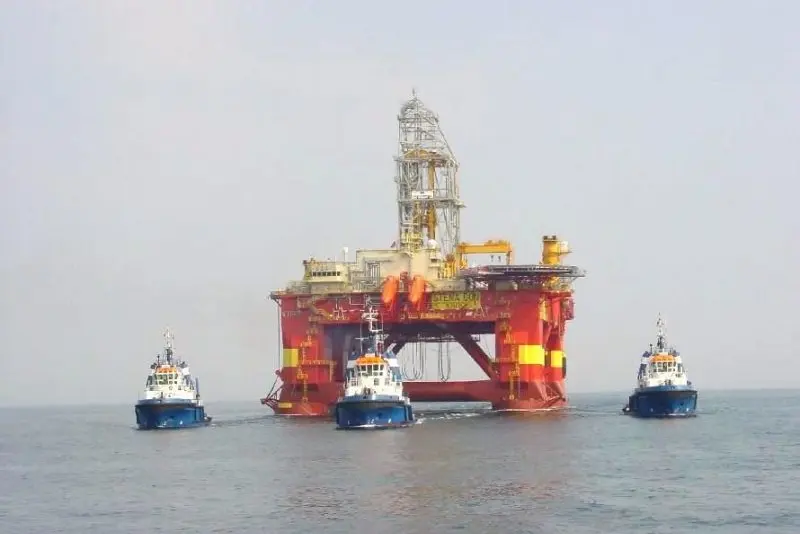
The Ministry of Energy Transition and Sustainable Development of Morocco has executed a shift in its supply policy to safeguard industrial competitiveness against the volatility of commodity markets. Minister Leila Benali has confirmed before Parliament that a total of ten international and local corporations are actively engaged in the search for hydrocarbons within national territory. The main corporate novelty lies in the incorporation, for the first time in the economic history of the Alaouite kingdom, of investors with strictly Moroccan capital in exploration consortia, breaking the traditional monopoly of multinational exploration and production firms.
The technical and investment deployment is articulated through an inventory composed of 53 licenses and state operating permits. Most of the exploratory activity is concentrated in the maritime realm, where the authorities in Rabat have validated 40 offshore licenses, complemented by nine land drilling permits and four active commercial exploitation concessions. The dispersion of these assets responds to a legal framework qualified by the Government as one of the most attractive in the world, specifically designed to mitigate the high financial risk and initial capital involved in deep drilling campaigns in less mature basins.
Insufficient gas discoveries to alter the exporting balance
The exploratory efforts of the National Office of Hydrocarbons and Mines (ONHYM) and its commercial partners have resulted in a series of commercial finds concentrated in the Gharb basin, the Essaouira area, the Tendrara block, and the coastal zone of Larache. The Energy Transition department admits that, while these natural gas fields validate the geological potential, the certified recoverable volumes lack the scale necessary to transform the country into a net exporter of hydrocarbons in the short term. National gas will be allocated to cover domestic industrial consumption and to replace the use of heavy fossil fuels such as coal and fuel oil.
The strategy of Rabat seeks to use natural gas as a complementary transition vector to its deployment of renewable energies. Morocco’s historical vulnerability to imports forced the Government to initiate a deep structural reform of ONHYM, aimed at streamlining administrative bureaucracy and accelerating private investment cycles. The entry of local financial flows aims to stabilize the capital contributions necessary to maintain the pace of drilling in a global context where large energy corporations are restricting their exploration budgets.
Chariot restructures its portfolio in the Atlantic to mitigate losses
In this scenario of sectoral reconfiguration, the British company Chariot (LSE:CHAR) has presented its audited results for the financial year 2025, reflecting the difficulties in stabilizing its valuation metrics in international markets. The energy firm, which is listed on the AIM market in London and continues to record net accounting losses, has recovered operations and a 75% stake in the strategic licenses of Lixus and Rissana, located on the Moroccan coastline.
The company’s management has completely redesigned the Anchois gas project with the aim of substantially reducing initial capital investment without compromising the planned production capacity, estimated at up to 105 million standard cubic feet per day. This restructuring of assets in North Africa is complemented by the diversification of its portfolio towards Angola, where through a transaction with Etu Energias it has secured a position in assets with a production of approximately 40,000 barrels of crude oil per day, ensuring a cash flow equivalent to about 4,000 barrels per day.
Storage logistics concentrated in northern hubs
The operational viability of these extraction projects requires a logistical support that the Government is trying to strengthen against the current tide. Between 2021 and 2025, Morocco executed an infrastructure plan that increased its refined petroleum product storage capacity by more than 30%. This increase in physical inventories provides the national supply system with a strategic reserve equivalent to an additional 17 days of domestic fuel consumption.
The geographical distribution of this storage network, however, reveals a marked concentration of logistical assets in the commercial nodes of the Atlantic axis and the Strait. 80% of the country’s reserve tanks are located in the vicinity of the metropolitan and industrial areas of Casablanca and the port region of Tangier. The action lines of the Ministry of Energy Transition are now focused on channeling investments towards the periphery of the kingdom, with the aim of decentralizing storage infrastructure and correcting internal transport imbalances in emergency situations.







