




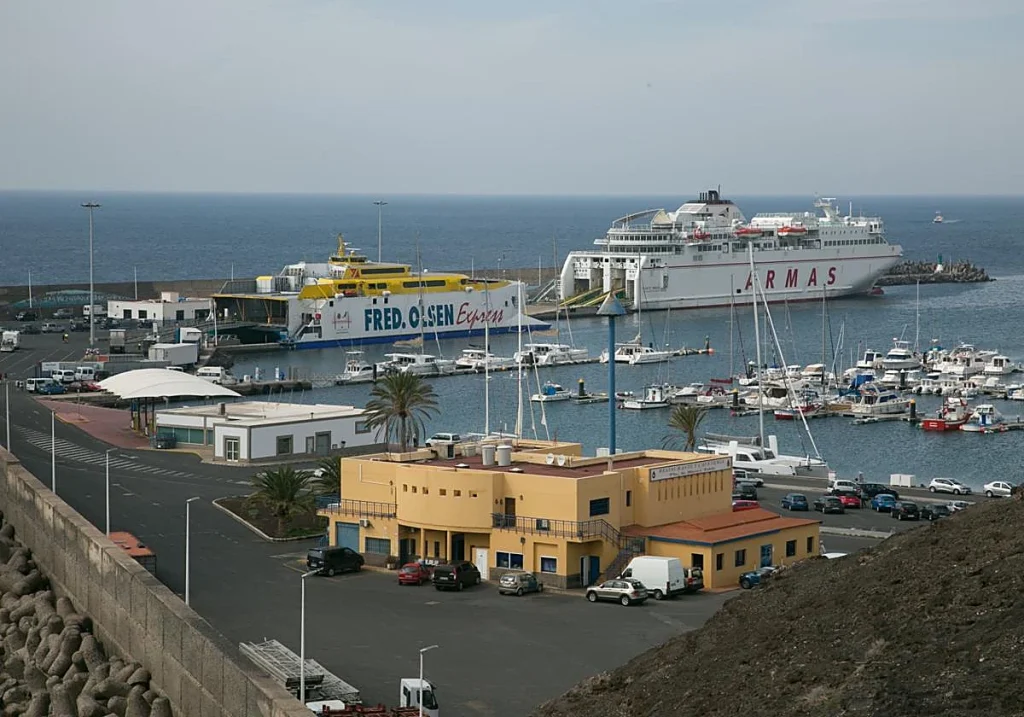
The ports of the Canary Islands navigate a reality of diverging fortunes. The data published by the Canarian Institute of Statistics (ISTAC) for the month of March reveals a 12.9% contraction in the volume of passengers using state ports in the archipelago. The total number of travelers decreased to 535,927, compared to 614,974 the previous year, highlighting a cooling in traditional inter-island transit despite the boom in the luxury segment.
The cruise industry remains the main engine of growth, operating decoupled from the overall decline in domestic movement. More than 636,500 cruise passengers transited through the islands in March, a significant jump from the 549,728 recorded in the same period of 2025. This expansion was led by the major eastern nodes; the Port of La Luz in Las Palmas experienced a 54.7% increase in arrivals, while Arrecife in Lanzarote followed with a 35.8% gain. In contrast, smaller enclaves such as El Hierro and La Gomera suffered double-digit declines in their visitor numbers.
In the regular transport market, Los Cristianos and Santa Cruz de Tenerife maintain their status as the logistical backbone of the archipelago. The former already concentrates one in three passengers moving through state infrastructures. This change in travel patterns has particularly hit La Palma, whose main port recorded a 33.6% drop in traffic, suggesting a recalibration of local demand and maritime connectivity.
Container performance offers a stronger signal of economic activity. Container traffic, measured in TEUs, increased by 11.2% to reach 187,473 units. The Port of La Luz continues to consolidate its dominance as the transshipment powerhouse of the region, handling 70% of all container trade in the islands. The facility recorded a year-on-year increase of 17.8% in its volumes, reflecting its strategic positioning in the Mid-Atlantic corridor.
The logistics sector faces greater frictions in the vehicle transport segment. The transport of vehicles fell by 6.6%, with 172,890 units mobilized through state ports compared to over 185,000 the previous year. This decline in vehicle movement, coupled with the drop in the number of regular passengers, points to a widespread weakening of internal regional mobility, even as international maritime trade and cruise tourism reach new highs.







