




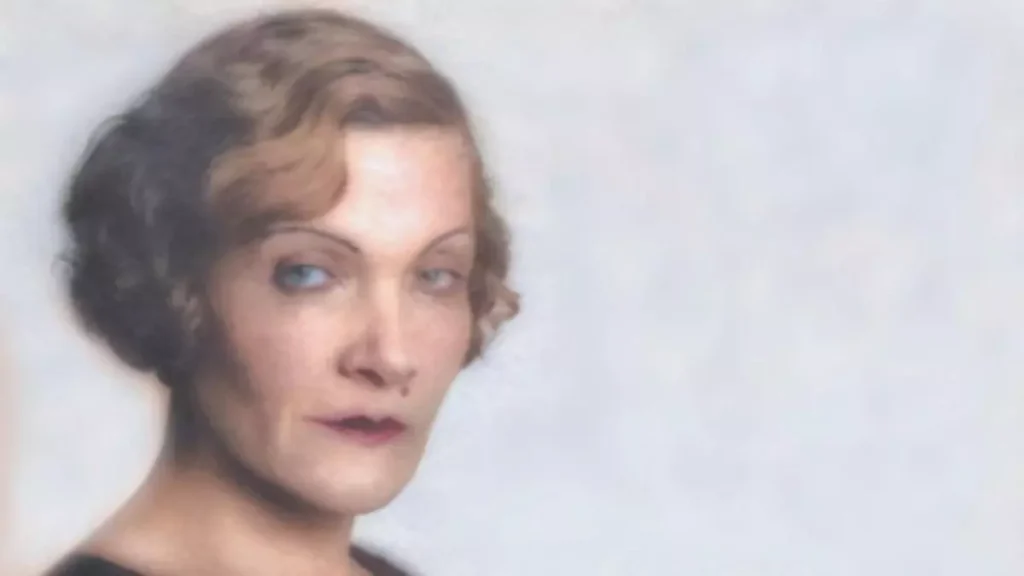
The work of Mercedes Pinto Armas (Santa Cruz de Tenerife, 1889 – Mexico City, 1976) is experiencing a return to the commercial circuit coinciding with the centenary of the publication of her first novel, Él (1926). Pinto’s trajectory reflects the economic and social impact of political censorship on intellectual capital during the dictatorship of Primo de Rivera in Spain.
The reading of her paper ‘Divorce’ as a hygienic measure at the Central University of Madrid in November 1923, where she defended reforming the civil code and the legal dissolution of marriage for mental health reasons, led to her exile order and the subsequent forced relocation of her activities to the American continent. This displacement altered the geographical distribution of her production, making Montevideo, Santiago de Chile, Havana, and Mexico City the centers of exploitation for her copyright and editorial initiatives.
During her stay in Uruguay between 1924 and 1932, Pinto diversified her income sources by engaging with major print media and creating independent cultural enterprises. Her work as a writer at the newspaper El Día of Montevideo and secretary of the magazine Mundo Uruguayo was complemented by the founding of the Compañía Teatral de Arte Moderno, a commercial and educational platform that served as a professional springboard for her children Ana María de Foronda, Pituka de Foronda, Rubén Rojo, and Gustavo Rojo in Latin American cultural industries. During this period, the writer introduced the methodologies of the New School in her lectures in Argentina, Paraguay, and Bolivia, directly linking educational reform with women’s financial emancipation.
The definitive settlement of the author in Mexico from 1943 consolidated the integration of her literary heritage into the industrial circuits of the host country. While her sons positioned themselves as sought-after talents during the golden age of Mexican cinema and later in the co-productions of 1960s Spain, Pinto maintained her connection with mass media through radio consultations under the pseudonym Sor Suplicio and contributions to the supplement Los Jueves of Excelsior. Her death in October 1976 in Mexico City closed one of the most versatile service records in transatlantic literature, whose market value lies in the relevance of her theses on civil rights and the modernization of educational systems.







