




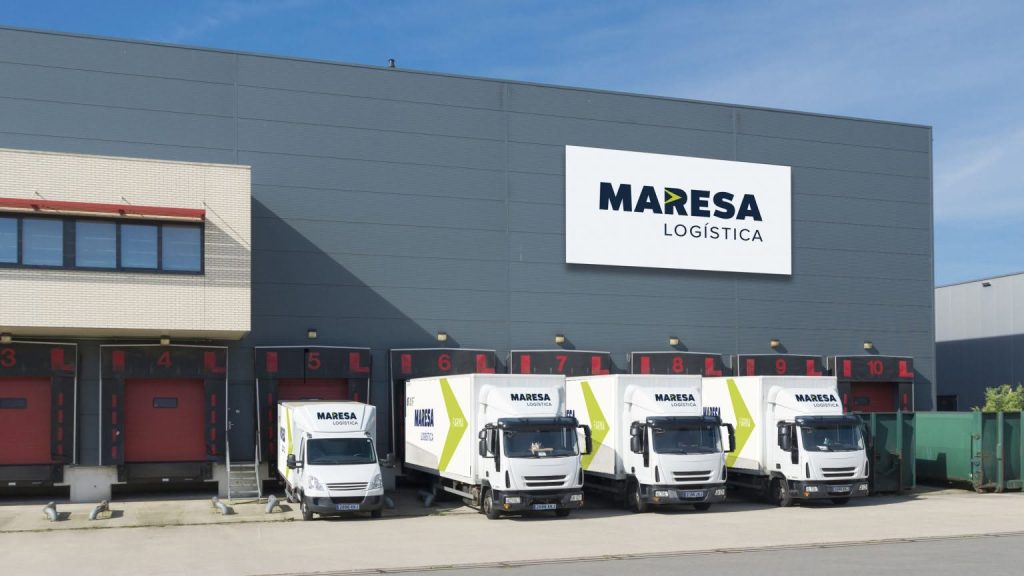
The transport and logistics sector in the Canary archipelago based on the Port of Las Palmas has entered a phase of deep financial reconfiguration. In June 2024, two years ago, the majority acquisition of Maresa Logística by the private equity fund Everwood Capital, carried out through its Transport and Logistics Fund —with a target of 200 million euros—, marked the beginning of a consolidation process aimed at eradicating the traditional fragmentation of the cargo market in the islands. This operation not only alters the ownership structure of a historic operator that was born in 2019 following the merger of Marítimas Reunidas and Martín e Hijos, but also redefines the strategic role of the Canary Islands as a platform for advanced operations towards the African continent.
The influx of institutional money from family offices and private banking clients has provided Maresa with unprecedented financial muscle for local logistics entrepreneurs. Under Everwood’s direction, the Canary company has ceased to operate as an isolated regional player, transforming into the cross-border vector of a large-scale multimodal ecosystem.
The fund has deployed an aggressive strategy of complementary acquisitions on the peninsula, incorporating firms specialized in complex customs management such as Partida Logistics and AGSA, last-mile operators like A Tu Hora Express, and international express transport specialists such as HTG Express, Arin Express, and Trans Paneuropa. This network of subsidiaries allows the Canary division to offer comprehensive connectivity solutions without relying on external intermediaries.
The segregation of assets and focus on core business
The most significant movement within Everwood Capital’s roadmap was solidified in March 2026 with the creation of Prontia Logística. The fund decided to segregate its assets dedicated to storage and refrigerated transport in the northeastern peninsula —grouping the companies Transaez, Arimon Logistics, and Transdusan— into a separate corporate structure with a turnover of 35 million euros. This corporate reorganization has a direct implication for the island market: Maresa Logística is freed from domestic cold operations on the mainland to focus all its resources on international forwarding, maritime transits, industrial palletizing, and high-specialization customs management.
This operational focus seeks to maximize the capacity of Maresa’s infrastructure, which has a workforce of 300 professionals, around a hundred external collaborators, and a fleet of over 300 heavy and semi-light vehicles. The key to the profitability projected by the fund lies in optimizing its 52,000 square meters of cross-docking space distributed across the country’s main industrial nodes. For the Canary business fabric, this restructuring translates into increased frequency of connections and reduced transit times in the supply of goods from the peninsula, a critical factor for the island economy.
The Canary bridge to African markets
Everwood Capital’s investment thesis transcends inter-island traffic. The true strategic value of Maresa lies in its geographic positioning in Gran Canaria and Tenerife, and its projection as a secure customs hub towards the western axis of Africa. The company has stable and operational delegations in Mauritania and Equatorial Guinea, two complex commercial destinations where transit management and knowledge of local customs regimes represent very high entry barriers for international competition.
The investment fund plans to capitalize on the tax advantages of the Economic and Fiscal Regime (REF) of the Canary Islands and the facilities of the Special Canary Zone (ZEC) to attract flows of goods from the European Union that use the Canary ports as a triangulation base towards the expanding African markets.
The combination of Maresa’s experience in extra-peninsular connectivity with the technical support of the group’s customs agencies in the Strait of Gibraltar establishes a logistics platform capable of competing with large global multinational companies in the sector. Thus, Maresa’s transformation symbolizes the shift from a family management model to a corporate structure driven by cost efficiency, commercial synergies, and value capture at the frontiers of emerging markets.







