




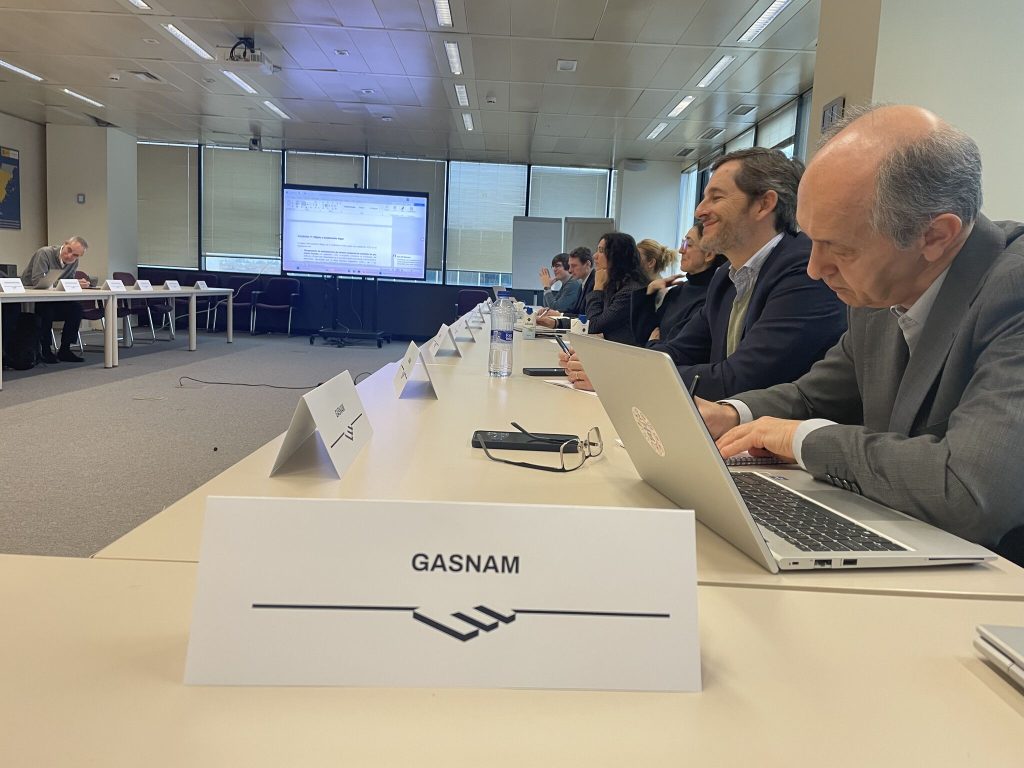
Peninsula, Shell, Repsol, Enagás, and Baleària have validated the new scheme of the bunkering business that will operate in Tenerife. The bunkering sector in Spain has just put an end to the administrative uncertainty that hindered long-term planning. In a highly technical meeting at the headquarters of Puertos del Estado, the heavyweights of the port system and the multinationals of the sector have given the final endorsement to the new LNG supply specification model, BioLNG, and e-LNG. This is not just another document; it is the instruction manual that standardizes the rules of the game along the entire Spanish coastline, eliminating the arbitrariness of each Port Authority and safeguarding the legal security for the millions of euros in investments required for decarbonization.
The specification arrives at just the right moment, with a market that is no longer merely testimonial: LNG supply in Spain has quadrupled in just over two years and BioLNG has already taken 12% of the market share by 2025. The text normalizes critical operations that until now operated in a regulatory limbo, from ship-to-ship supply (STS) to truck-to-ship filling (TTS) or pipeline (PTS). This standardization of access conditions and environmental safety is the missing piece for Spain to stop being just a transit point and to consolidate itself as the ‘green gas station’ of the Mediterranean and the Atlantic, strictly complying with the demands of the European Fit for 55 package.
The importance of this advance is measured by the list of stakeholders that have contributed at the Avenida del Partenón headquarters. Under the guidance of the Ministry of Transport, giants such as Peninsula, Shell, Repsol, Enagás, and Baleària have validated a framework that grants strategic ports like Santa Cruz de Tenerife a brutal competitive tool. The coordination of figures like Federico Navarro and the leadership of Pedro García Navarro at Puertos del Estado have achieved what seemed impossible: bringing fierce competitors to the same table to agree on a quality of service and safety protocols that make renewable gas bunkering as routine as heavy fuel bunkering, but with a sustainability stamp.
What has been cooked up in this working meeting is, ultimately, the future of the blue economy in the Canaries. By finalizing the loose ends of the specification, the Spanish port system sends a clear message to international shipping companies: there are infrastructures, there is fuel, and, above all, there is a clear standard. With e-LNG already on the horizon, Spain is not only seeking to lead supply but also to dictate how the energy transition should be carried out at the docks, turning technical complexity into a competitive advantage that will leave behind those ports still anchored in regulatory improvisation.
News written by Raquel Molina. Edited and verified by Pedro Marrero. Cross-checked information without institutional filters. This analysis has not been funded by official advertising nor conditioned by lobby interests.







