




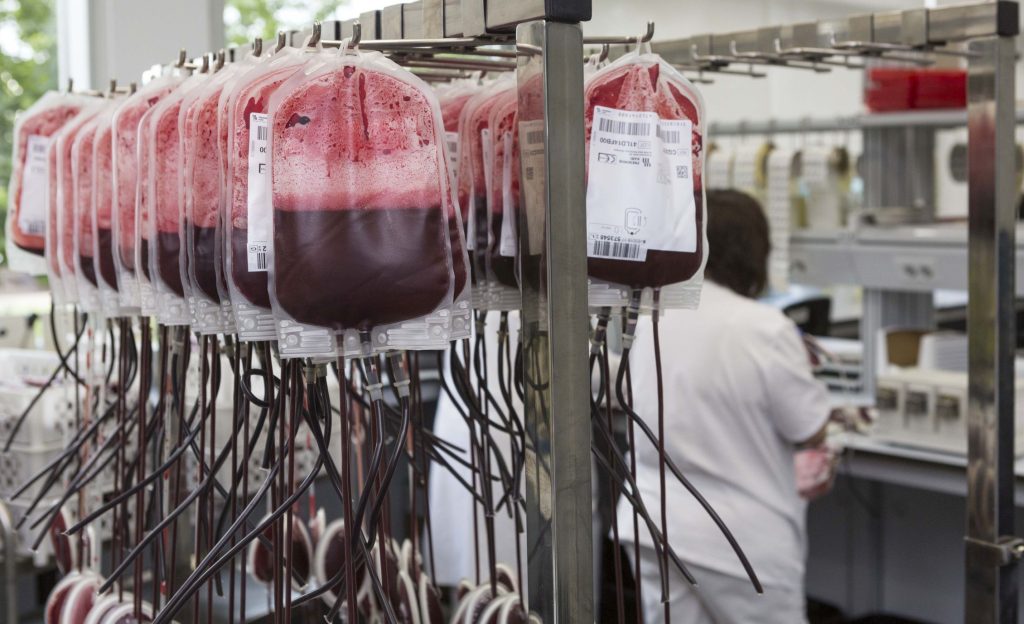
The commercial dock of Las Palmas operates as a **living organism**. Through its terminals, millions of tons of conventional goods —grains, fuels, cement, or pallets of mineral water— ensure the physical subsistence of the Canary archipelago. However, hidden among the automated cargo manifests of 2026, there exists a logistical flow of **high precision** that is not measured in containers, but in grams.
As an example, the port of Las Palmas centralizes practically all biological reception, absorbing 2,486 kilos (from Huelva, Barcelona, Cádiz, and Tenerife) in months like January. The port of Seville received 31 kilos in return from Las Palmas of blood or derivatives.
Under the tariff code for **biological safety** intended for ‘Human blood and animal blood prepared for therapeutic or prophylactic uses’, the port of Las Palmas managed a critical movement of 2,517 kilograms of **hemotherapeutic material**. This invisible flow functions as a genuine **medical umbilical cord** that connects the island’s healthcare infrastructures with the production and fractionation centers of the Iberian Peninsula.
The management of inventory for **plasma, immunoglobulins, and red blood cell concentrates** in a geographically fragmented territory requires a supply discipline that challenges the laws of mass distribution. Commercial airlines absorb medical emergency shipments daily, but **short sea shipping** is the backbone that sustains the large volumes of reserves and heavy diagnostic reagents. In this framework, the connection between the Port of Huelva and Las Palmas is consolidated as the most active route in the system. During the first month of the year, this channel recorded a total of 42 independent operations, an indicator of the **capillarity and frequency** with which specialized logistics operators must replenish the hospital inventories of the eastern islands.
A detailed analysis of customs records reveals a **dual supply strategy**. On one hand, the Huelva-Las Palmas line shows a constant drip of micro-shipments ranging from 1 to 5 kilograms per journey. These operations represent **biological safety refrigerators** with strictly controlled temperature (usually at -20 °C for plasma or between 2 and 6 °C for reagents), integrated into the roll-on/roll-off cargo holds of the vessels covering the Atlantic route. On the other hand, this continuous flow is complemented by large consolidation shipments intended to maintain the structural stock of blood banks. On three specific days in January, the Huelva route recorded peaks of load of 234, 296, and even 341 kilograms in a single trip, totaling a net volume of 1,375 kilograms transferred.
The **health autonomy** of the islands also depends on a mechanism of solidarity and inter-island balance. The reserves of hemotherapeutics are not static; they fluctuate according to surgical needs, peaks in demand from accidents, or local donation campaigns. Official data demonstrate that, in the face of stock tensions in the eastern province, Santa Cruz de Tenerife acted as the main backup node for Las Palmas. Through the inter-island channel, two large-scale operations were coordinated, mobilizing a total of 650 kilograms of blood material (one concentrated shipment of 450 kilograms and another secondary shipment of 200 kilograms). This strategic transfer between the two major reference hospital complexes in the Canary Islands ensures that the care pressure is distributed **homogeneously** throughout the archipelago.
The ecosystem is completed with the participation of major centers from the **pharmaceutical and biotechnology industry** on the continent. From the port of Barcelona, a single high-density operation was dispatched weighing 330 kilograms of hemotherapeutics, directly linked to the distribution of complex plasma treatments and specific coagulation factors that lack local production plants on the islands. Likewise, the port of Cádiz complemented the supply network with the shipment of 131 kilograms distributed across 8 smaller operations.
The customs circuit shows a final aspect: the **return logistics**. The biological flow from the islands is not **unidirectional**. From Las Palmas, 5 shipments to the port of Seville were recorded, totaling just 31 kilograms for the entire month. These movements represent the shipment of complex biological samples for genetic sequencing, surplus plasma intended for industrial fractionation plants, or reference analyses requiring specialized laboratories on the Peninsula. The Gran Canarian port thus demonstrates its dual role as a recipient of critical therapies and sender of diagnostic material, a **silent mechanism** that guarantees health standards in the middle of the Atlantic.







