




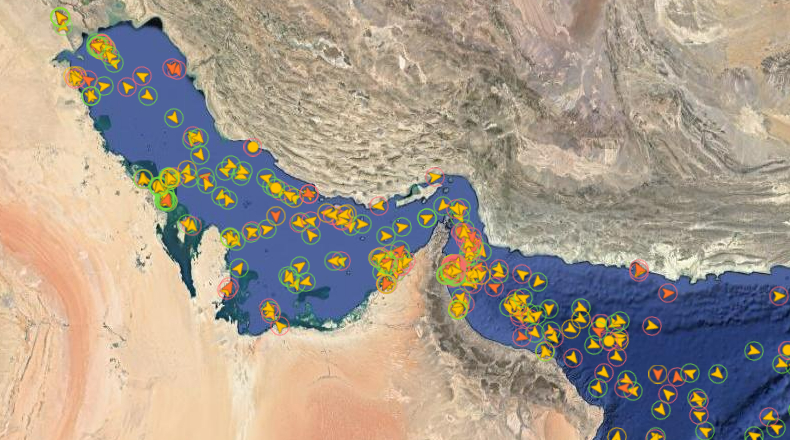
The morning of last Sunday, the global energy tableau has been shattered by a shockwave that, although originating thousands of kilometers away, threatens to strike the economic foundations of Canarias. The impact of projectiles against three tankers and the de facto closure of the Strait of Hormuz by Iran is not merely a regional conflict; it marks the onset of a supply crisis that places the islands in a position of critical vulnerability. With over 200 commercial vessels anchored in a maritime limbo, the archipelago gazes in fear as its dependence on foreign crude becomes a geopolitical trap.
For Canarias, the blockade of Hormuz—through which 20% of global oil flows—translates into an immediate pressure on fuel prices and the logistics of electricity generation. Unlike the mainland, the outermost region of Canarias has no alternative to ‘black gold’ to maintain its thermal plants and air connectivity. The warnings from Jakob Larsen of the BIMCO organization regarding the risks of error during attacks resonate loudly at the port of La Luz: any vessel with a flag of convenience or cross-interests could be next, raising war risk premiums in the Lloyd’s of London market by between 25% and 50%.
This increase in hull and cargo insurance costs, projected by experts such as Dylan Mortimer at Lloyd’s, will directly impact the cost structure of shipping companies operating in the islands. The ports of Santa Cruz de Tenerife and Las Palmas could see freight rates for commodities soar from this March as insurers reassess coverage. Moreover, the risk of Iran deploying naval mines in navigation channels adds a layer of uncertainty that could force a reorientation of global routes, returning Canarias to its historical role as the ‘gas station of the Atlantic’ due to the diversion of vessels around the Cape of Good Hope, but at a prohibitive operational cost.
The U.S. Maritime Administration has already urged to avoid the region, a directive that affects the crew and ownership of numerous vessels calling at Canary ports. In such a fragile electrical system as the island one, a delay of just one week in the arrival of liquefied gas or fuel oil tankers could jeopardize the stability of supply. While Iranian authorities declare the corridor closed, the Government of Canarias and local energy operators enter emergency mode: the ‘Ormuz effect’ is already a reality threatening to increase the cost of living for eight islands that, once again, discover that their security hinges on peace in a strait too distant.







