




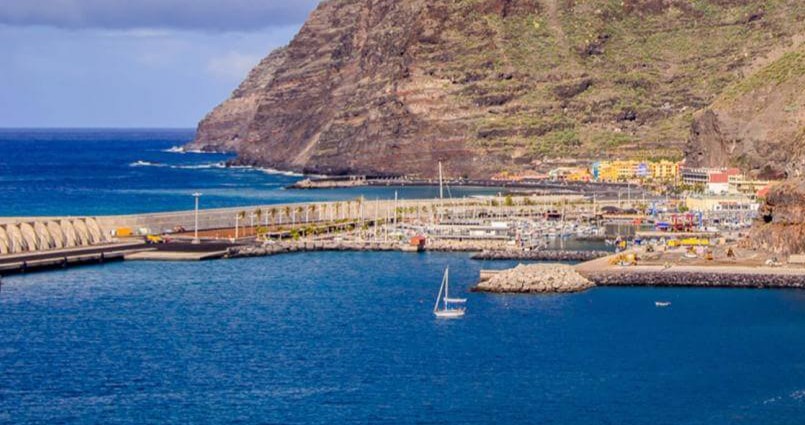
The future of the Port of Tazacorte is moving towards proximity management. The Government of the Canary Islands has confirmed that the process to transfer the management of this strategic infrastructure to the Cabildo Insular of La Palma is already underway. This maneuver, which responds to a formal request from the island corporation, is not just an administrative handover but the start of a decentralization experiment aimed at turning the facility into a benchmark for the blue economy in the Atlantic.
The regional government bases this move on the ‘multifunctional‘ nature of Tazacorte. The port has ceased to be a simple docking infrastructure and has transformed into an ecosystem where the traditional fishing sector, recreational boating, aquaculture industry, and scientific innovation through the Oceanic Platform of the Canary Islands (PLOCAN) coexist. According to the report submitted by the Ministry of Public Works, Housing and Mobility, the complexity of these operators requires an ‘integrated management’ that only a local administration like the Cabildo can guarantee to connect the port with its municipal and island environment.
The central objective of this concession is the implementation of the Smart Ecport model. Under this premise, the island’s management must prioritize profitability and growth through the optimization of resources and processes, aiming to increase the efficiency and productivity of an infrastructure that is vital for the economic reconstruction of La Palma. The government emphasizes the intention to promote a new culture that breaks down the barriers between ‘port and city,’ improving user satisfaction levels and adapting the facility to the constant changes of the global market.
The administrative procedure will now require the Cabildo of La Palma to present a detailed management and operation project that complies with the standards of Law 14/2003 on Ports of the Canary Islands. In Brussels, such transfers are observed with interest, as they align the management of critical infrastructure with European objectives of sustainability and smart specialization (S3). If the Tazacorte model is successful, it could serve as a roadmap for other facilities in the Canary Port Network that seek greater autonomy to enhance their technological and industrial niches.
News written by Gara Vega H. Edited and verified by Pedro Marrero. Information cross-checked without institutional filters. This analysis has not been funded by official advertising or influenced by lobbying interests.







