




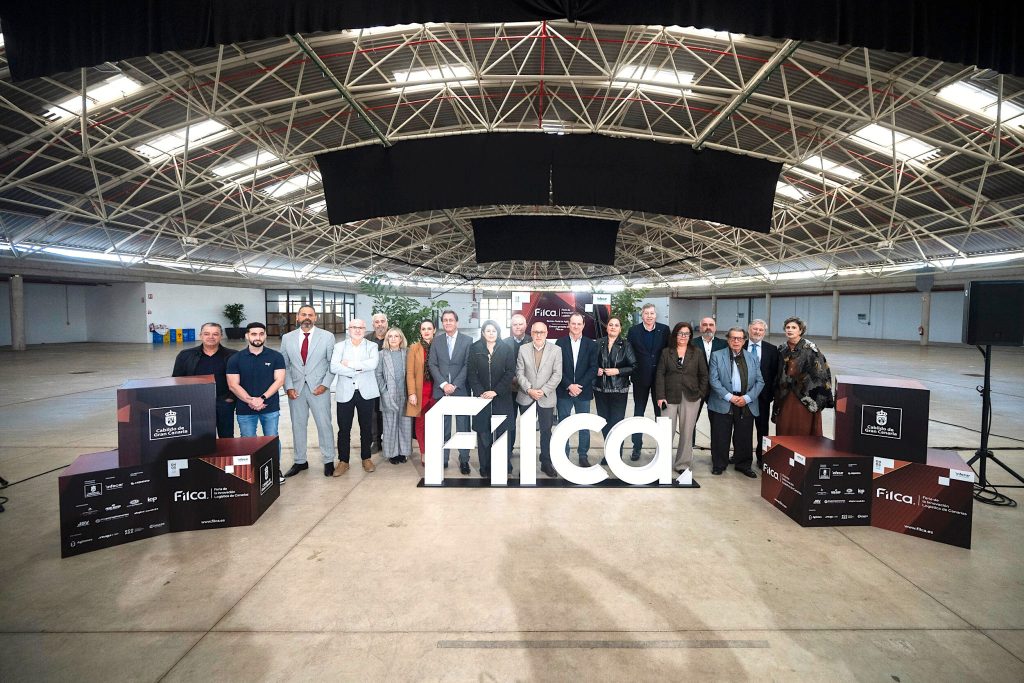
It is not common for the sector that pulls the invisible strings of the Canary Islands’ economy to gather so massively outside office walls. Yet on February 4 and 5, the Agüimes Exhibition Centre will break that inertia with the launch of FILCA, the Canary Islands Logistics Innovation Fair. With 50 companies already confirmed and the banner of “open to innovation,” the event is born with a clear mission: to prove that storage, transport and technology are not just boxes being moved around, but the strategic lung of the archipelago.
Promoted by the Cabildo of Gran Canaria and organised by Infecar—marking its first itinerant edition while its capital-based venue undergoes modernisation—the fair lands in the southeast with a showcase spanning everything from mobile robotics to port management. This is not merely an exhibition of industrial machinery; it is a forum for economic survival in a territory where outermost-periphery status demands efficiency above all else.
Connectivity under scrutiny
FILCA’s programme avoids empty theory and dives straight into the gritty reality of daily operations. The first morning promises intensity with a roundtable dissecting logistics as a strategic axis, featuring key figures such as Beatriz Calzada (Port Authority) and Pedro Suárez (Transport Cluster). But if there is one issue that keeps local business leaders awake at night, it is inter-island freight mobility—a challenge to be tackled by executives from major players including Fred. Olsen Express, Binter and the JSV Group.
Wednesday afternoon looks to the future. The presence of Yaiza Canosa, CEO of Boudica Canosa, will bring an inspiring perspective on where the sector is heading, followed by a panel on digitalisation in which Spar Gran Canaria and data specialists will explain how software is replacing paper across the supply chain.
Sustainability and the fiscal maze
On Thursday the 5th, the focus shifts to sustainability. In the context of climate emergency and new green regulations, the panel on ports and sustainable logistics will be essential for understanding how the Canary Islands can remain competitive without turning their backs on environmental responsibility.
As a finale, the fair will tackle one of the most sensitive day-to-day issues in the islands: customs and taxation. With representatives from the Canary Islands Tax Agency, the discussion will seek to shed light on a bureaucratic system that too often becomes a bottleneck for local trade.
More than an exhibition
Beyond the stands and presentations, FILCA aims to be a space for “real business.” The venue will feature networking and meeting areas designed to enable direct contact between suppliers and clients, without intermediaries. Free entry—available via prior registration on the official website—is a gesture intended to democratise access to an industry undergoing profound transformation. Backed by the Arinaga Industrial Zone (AENAGA) and the Agüimes City Council, this fair is not just a sectoral event; it is the first step in a new phase for Infecar and a statement of intent: in the Canary Islands, logistics is no longer waiting for the future—it is building it in Agüimes.







