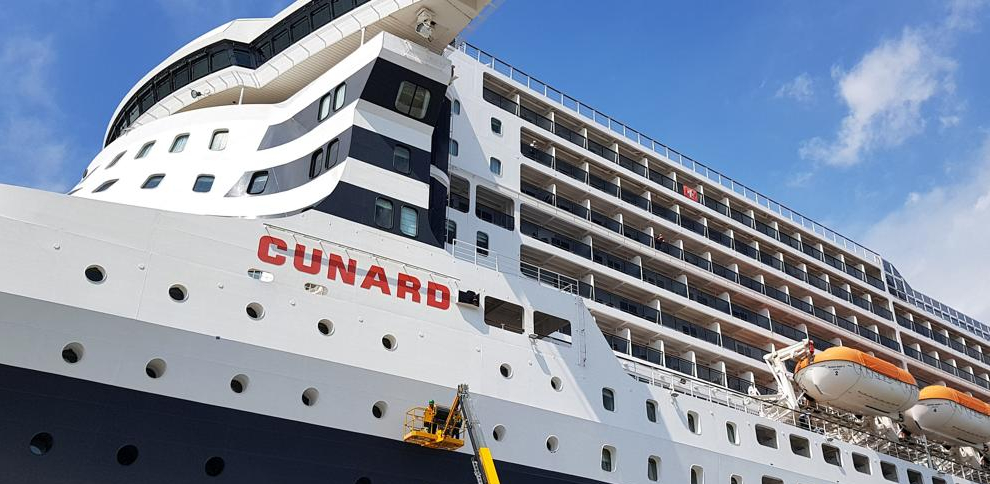
In the ultra-luxury cruise tourism arena, the Queen Mary 2’s call at the Port of Santa Cruz de Tenerife at the end of April 2026 is not just another stop; it is the crowning gem of its World Tour 2026. After 108 days at sea and having crossed the Panama Canal for the first time in its history, the flagship of Cunard has chosen Tenerife as its only Spanish port of call before heading to Le Havre and making its final return to Southampton. This confirms that, for major transcontinental routes, the Canary Islands remain a safe port and a necessary premium provisioning stop after traversing from Namibia and Senegal.
The QM2 does not stop just anywhere. Its itinerary is a surgical selection of 25 calls across 4 continents, prioritizing UNESCO World Heritage sites. The inclusion of Tenerife in this list—sharing the spotlight with Sydney, New York, and Cape Town—reinforces the island’s positioning in the ‘destination cruise’ segment. For Santa Cruz’s commerce, the arrival of QM2 passengers at the end of April will provide a significant injection of high-level direct spending just before the winter high season concludes.
According to data held by Eurocontrol regarding Airspace at the start of 2026, scheduled air connectivity has fallen by 2.6%, which forces port authorities to nurture these ‘jewel’ calls more than ever. The Queen Mary 2 brings with it thousands of travelers with a spending profile that far exceeds the average fee of €148.20 noted in the hotel sector. This type of tourism does not consume accommodation resources but positively saturates the service sector and the luxury dining experiences in the capital of Tenerife.
In Tenerife, defenses at the southern dock are already being prepared. The April call will be the perfect thermometer to confirm that officials and companies at the Tenerife port can manage these giants of naval history with the agility demanded by Cunard. Moreover, this is a golden opportunity for the Port Authority of Las Palmas to sell ‘Canarian sustainability’ to passengers coming from visits to Hawaii and French Polynesia, direct competitors in the narrative of volcanic paradise.