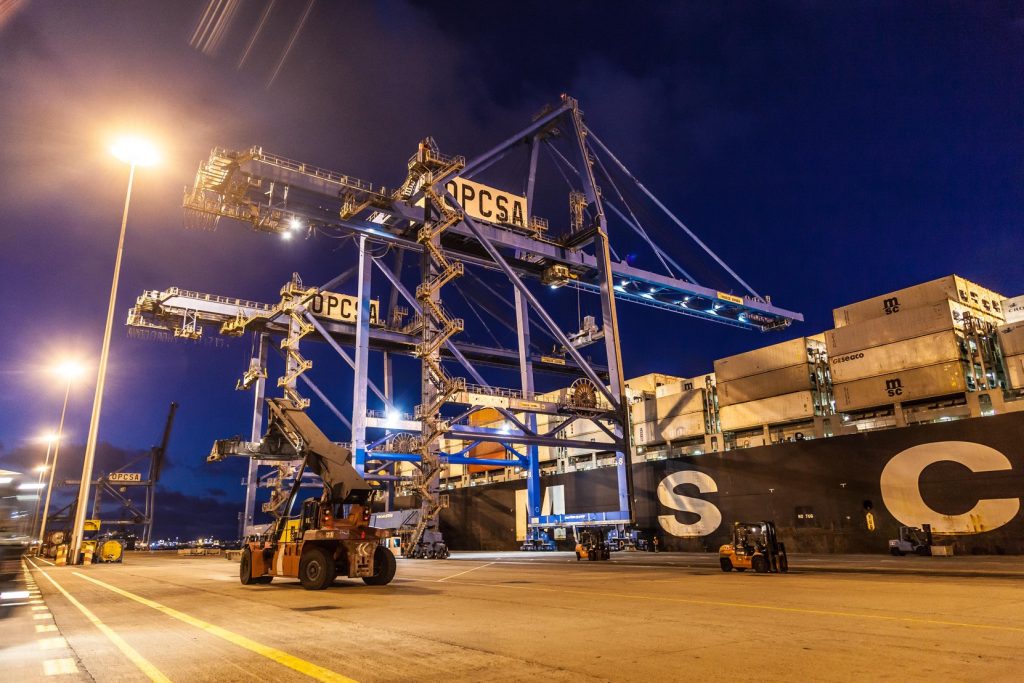
The 2025 exercise has confirmed the Port of Las Palmas as the ‘great positive anomaly’ of the Atlantic. While Mediterranean giants such as Algeciras or Barcelona have shown signs of stagnation,Las Palmas has increased its container traffic by 15.7%, managing to surpass Marseille and secure a spot in the Top 15 of ports in the European Union. This rise is not a matter of chance, but rather its consolidation as a ‘buffer port’: a safe space where Europe manages the logistics of African energy outside of regulatory bottlenecks.
The Growth Axis: Goods and Commodities
At the terminals of Gran Canaria, business operates on three defined fronts. Liquid bulk (fuels) and provisioning continue to be the liquidity engines, but it is containerized cargo that adds value, exceeding 6 million tons. Interestingly, while frozen fish experienced a slight decline of 7.6%, fresh fish saw a historic rally with a 57% increase, signaling a revitalization of local and artisanal fleets operating in the Canary-Saharan Bank.
Geography of Investment: Origins and Destinations
The origin of the vessels outlines a marked map of global interests: Nigeria has emerged as the main emitter of energy assets. Ports like Port Harcourt, Apapa, Onne, and Forcados are the names most frequently found in the shipping routes, sending crude and derivatives that make technical stops in Las Palmas before heading to the European continent. And Europe? The logistical destination: The outbound flow is primarily directed north. Barcelona, Algeciras, Setúbal (Portugal), and Le Havre (France) are the main recipients of the cargo transiting through the Canary ‘hub.’
Asia and America, long-distance trade, has reinforced Las Palmas’ role as a bridge for grain exports from Ibero-America (especially towards the African market) and as a connection point for mainline routes from China seeking to avoid the instability of the Red Sea.
The Specialization of the ‘Satellites’
Outside the capital, the most interesting data comes from the smaller ports. Arinaga has specialized in providing technical services and water, doubling its provisioning income (+105%), indicating a very efficient ‘service port’ strategy. Meanwhile, Arrecife and Puerto del Rosario serve as the main entry points for high-margin tourist flow, with the cruise sector growing by 11%, more than compensating for the maturity of regular inter-island passenger traffic.
News written by Pedro Marrero. Edited and verified by Gara Vega. Information cross-checked without institutional filters. This analysis has not been funded by official advertising nor conditioned by lobbying interests.