




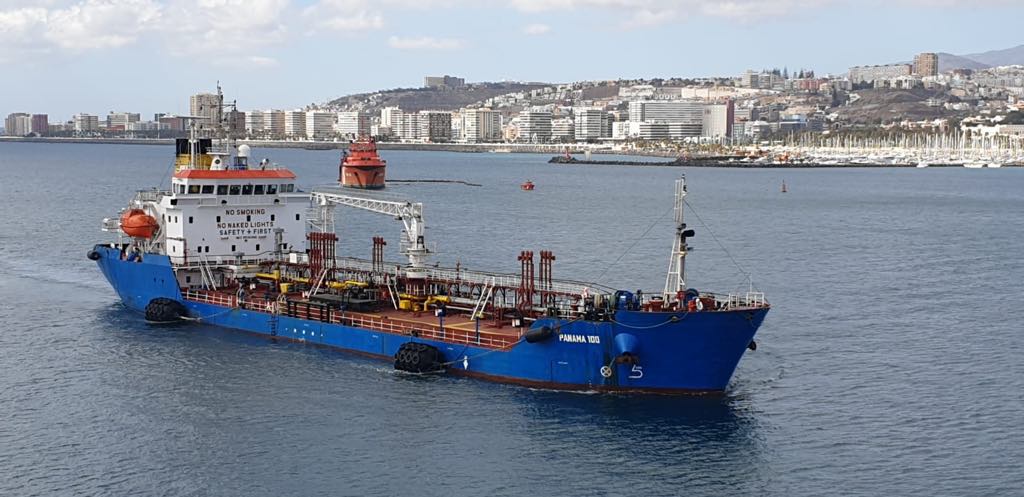
The fuel supply map in the Central Atlantic and the Mediterranean has woken up on February 5, 2026, under extreme logistical tension. While the supply centers in Gibraltar, Algeciras, and Ceuta remain practically paralyzed due to a storm with winds exceeding 40 knots and waves that prevent any barge maneuver, Las Palmas positions itself as the bastion of resistance in the region, albeit not without its own operational complications. In the Gran Canaria port, the availability of bunkering has become a technical luxury: delivery times of at least 10 days are now required for all grades of fuel, a timeframe that reflects the immense pressure the island port system is under as an alternative to the paralysis of the Strait.
The situation at the Canary supply center is under absolute vigilance. Weather forecasts for Las Palmas predict waves exceeding two meters until February 8, a condition that threatens to suspend bunkering operations in the outer anchorages. This physical limitation, coupled with a scarcity of quick product, forces shipping companies to surgical planning. In a market where Gibraltar accumulates queues of waiting vessels and Barcelona demands notice periods of up to a week, the port of La Luz becomes the key piece to maintain commercial flow, despite the fact that supply remains limited and local providers operate at the edge of their logistical capacity.
The contrast with the rest of the Atlantic board is evident. While in Northern Europe, the ARA (Amsterdam-Rotterdam-Antwerp) center grapples with lead times of up to 7 days and Sweden requests more than 10 due to a lack of product, the African axis offers a mixed situation. Lomé (Togo) reports a healthy availability of VLSFO, while strategic enclaves such as Richards Bay in South Africa or Port Louis in Mauritius face a product drought that will not be resolved until mid-month. In this context of global scarcity and adverse weather, the resilience of Las Palmas is not just a matter of port service, but of pure survival for the routes connecting Europe with the Southern Hemisphere.
For the investor and shipowner observing the market in February 2026, the reading is clear: supply security has shifted southward, but congestion is the new toll. With the Strait of Gibraltar blocked until at least February 11, all attention falls on the capacity of the Canary docks to manage a demand that no longer seeks the best price, but the guarantee of not being stranded in the middle of the ocean. Las Palmas, once again, demonstrates that its geostrategic value is directly proportional to the fury of the weather on conventional routes.
News written by Pedro Marrero. Edited and verified by José L. Jiménez. Cross-checked information without institutional filters. This analysis has not been funded by official advertising nor is it conditioned by lobbying interests.







