




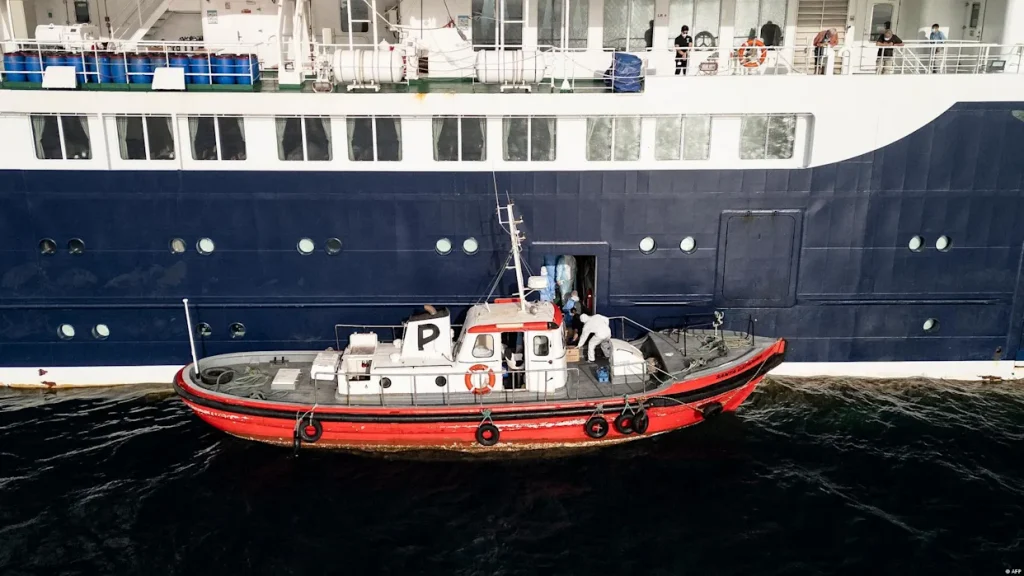
The port of Granadilla de Abona is preparing for an unprecedented technical transformation this Saturday. The infrastructure of southern Tenerife, characterized by its geographical isolation and logistical profile, will serve as the base for the disembarkation of the MV Hondius following a journey marked by an outbreak of hantavirus. The Ministry of Health and the Government of the Canary Islands have designed a deployment that prioritizes biological containment over conventional port operations.
The initial deployment includes the establishment of a strict sanitary cordon at the dock. This safety perimeter, guarded by security forces and Health Security technicians, will prevent unauthorized personnel from accessing the docking area. This measure aims to safeguard the island against any transmission risk, establishing a zero zone where circulation will be restricted exclusively to intervention teams equipped with high-level protection.
The first phase of the operation will commence the moment the moorings are secured to the bollard. Medical inspectors from Health Security will board the vessel to conduct a thorough triage of the 146 occupants. This direct clinical examination will verify the absence of symptoms among passengers who have remained under preventive confinement since Cape Verde. Only after the technical validation of individual epidemiological reports will the start of the staggered disembarkation process be authorized.
The subsequent logistical plan is divided into two critical axes: industrial disinfection and controlled repatriation. Specialized teams in biological decontamination will proceed with a deep cleaning of the ship’s ventilation systems and common areas, eliminating any trace of the pathogen. Simultaneously, the passengers will be transported directly from the port area to the takeoff runways via a secure corridor, avoiding transit through the passenger terminals of Tenerife airports to ensure that their return to their home countries occurs under total safety conditions.
The designation of the Canary Islands as a strategic humanitarian platform reinforces the archipelago’s capacity to manage international health crises. The solvency of Tenerife’s logistical infrastructure allows it to absorb the impact of an emergency of this magnitude while minimizing the exposure of the local population. The success of the operation in Granadilla de Abona will serve as a precedent in coordinating biosecurity protocols for the expedition cruise sector in the Central Atlantic.







