




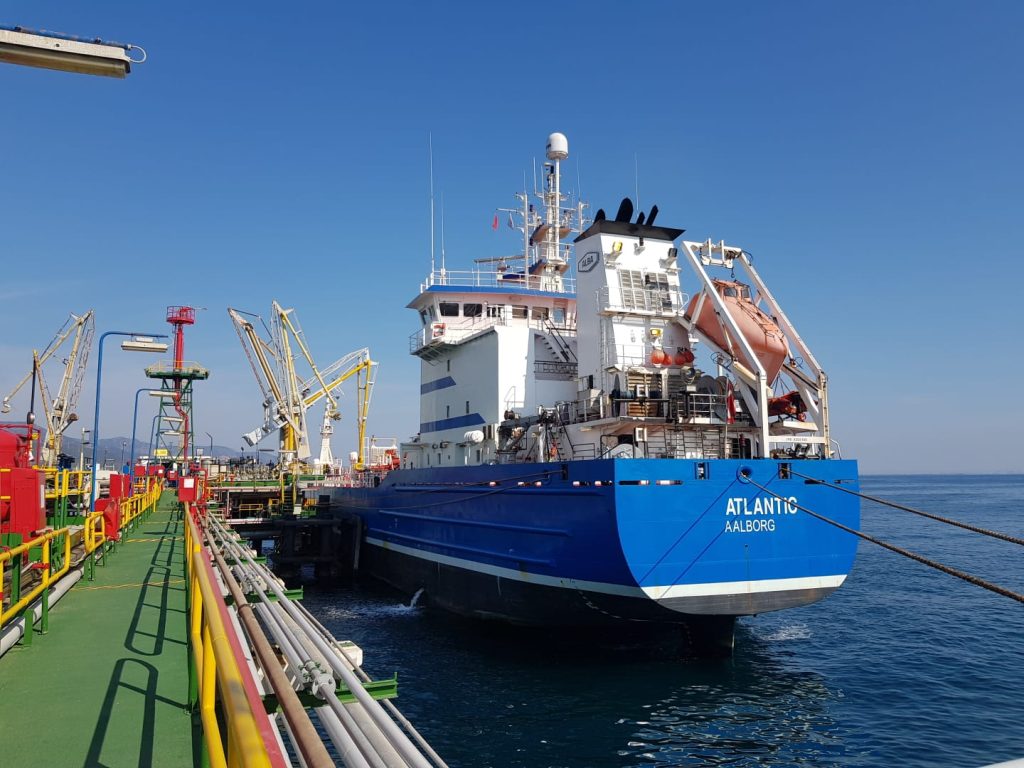
The marine fuel market in the eastern Atlantic has recorded a new price uptick, with direct repercussions for the Port of Puerto de Las Palmas, one of the main bunkering hubs for maritime traffic between Europe, Africa and the Americas. The widespread rise in quotations follows the upward move of international crude, with the Brent crude oil contract reaching $85.19 per barrel after gaining $1.68 in last Friday’s session.
In the main European and African ports, marine fuel prices have reacted quickly. VLSFO — the very-low-sulphur fuel oil that has dominated the market since the entry into force of international environmental rules — rose by around $20 per tonne in Durban, $12 in Rotterdam and $8 in Gibraltar. At the same time, low-sulphur marine gasoil (LSMGO) recorded sharper increases, especially in Gibraltar, where the price jumped by more than $100 per tonne following a one-off high-priced operation that supported the benchmark index.
The marine fuel market in the eastern Atlantic has recorded a new price uptick, with direct repercussions for the Port of Puerto de Las Palmas, one of the main bunkering hubs for maritime traffic between Europe, Africa and the Americas. The widespread rise in quotations follows the upward move of international crude, with the Brent crude oil contract reaching $85.19 per barrel after gaining $1.68 in last Friday’s session.
In the main European and African ports, marine fuel prices have reacted quickly. VLSFO — the very-low-sulphur fuel oil that has dominated the market since the entry into force of international environmental rules — rose by around $20 per tonne in Durban, $12 in Rotterdam and $8 in Gibraltar. At the same time, low-sulphur marine gasoil (LSMGO) recorded sharper increases, especially in Gibraltar, where the price jumped by more than $100 per tonne following a one-off high-priced operation that supported the benchmark index.
For the Canary Islands, and in particular for the Port of Las Palmas, the movement has temporarily altered the price differential with Gibraltar, one of its main regional competitors in the ship fuel supply business. After the latest update, LSMGO in Las Palmas trades at a discount of roughly $40 per tonne versus Gibraltar, a significant reversal from the previous trading day, when the Canary port operated at an approximate premium of $21.
In the case of heavy fuel oil (HSFO), prices in Las Palmas are practically in line with those in Gibraltar. VLSFO, meanwhile, maintains a discount of about $15 per tonne against the port on the Strait, a factor that may strengthen the Canary enclave’s appeal for certain shipping routes. However, market developments are conditioned by operational factors. Industry sources indicate that fuel availability in Las Palmas is currently limited, which reduces the ability to respond to demand spikes. Adverse weather conditions in the port area add to the constraints.
According to maritime agent MH Bland, bunkering operations at the port’s outer anchorages have been suspended due to heavy seas exceeding 2.5 metres. Supply operations can continue at the inner anchorage and at the quays, although with delays compared with the usual pace.
The price rebound occurs against an especially tense geopolitical backdrop for energy markets. Large-scale military operations involving the United States, Israel and Iran have heightened volatility in the oil market this week. Israeli air strikes against positions linked to Hezbollah in Lebanon and Iranian missile launches toward Tel Aviv have increased operator nervousness, feeding expectations of supply risk in the global energy market.
Some analysts believe the psychological effect of these episodes is immediate in energy markets. Stephen Innes, managing partner at SPI Asset Management, summed it up by saying: “Oil is not just a commodity; it is also an asset based on confidence, and that confidence begins to erode when the tankers themselves become targets.”
For ports such as Las Palmas, whose bunkering activity depends heavily on global oil flows and international maritime traffic, the combination of energy volatility, weather conditions and price differentials with other regional hubs will continue to set the market’s tempo in the coming weeks. The archipelago remains strategically positioned on the Atlantic axis, but its immediate competitiveness increasingly depends on global factors decided far from its quays.







