
Saturday, 17 October 2026
  • Login
  • Español
  • English
Suscribirme
Subscribe
canarymaritime.com
No Result
View All Result
  • Home
  • Atlantic Ports
    • Atlantic Africa
  • Blue Energy
  • Logistic
  • Shipbuilding Industry
    • Shipyards and Ship Repair
    • Offshore and platforms
    • Industrial innovation and naval R&D
  • Blue Economy
    • Investment and European Funds
    • Financial Sustainability
    • Private Venture Capital
  • Atlantic Geopolitics
    • West Africa
    • Port Security and Defense
    • Blue Diplomacy
    • Canary Islands as a strategic hub
    • Drug Trafficking
  • Home
  • Atlantic Ports
    • Atlantic Africa
  • Blue Energy
  • Logistic
  • Shipbuilding Industry
    • Shipyards and Ship Repair
    • Offshore and platforms
    • Industrial innovation and naval R&D
  • Blue Economy
    • Investment and European Funds
    • Financial Sustainability
    • Private Venture Capital
  • Atlantic Geopolitics
    • West Africa
    • Port Security and Defense
    • Blue Diplomacy
    • Canary Islands as a strategic hub
    • Drug Trafficking
  • Español
No Result
View All Result
canarymaritime.com
es Español en English
No Result
View All Result

Canarias after the hantavirus: Ports become toxic assets for high-end cruises

Raquel Molina Betancor by Raquel Molina Betancor
12 May 2026
in Uncategorized
Reading Time: 4 mins read
0
47
SHARES
291
VIEWS
Compartir en WhatsappCompartir en LinkedIn
Google CONVIERTE CANARYMARITIME EN FUENTE DE NOTICIAS EN GOOGLE

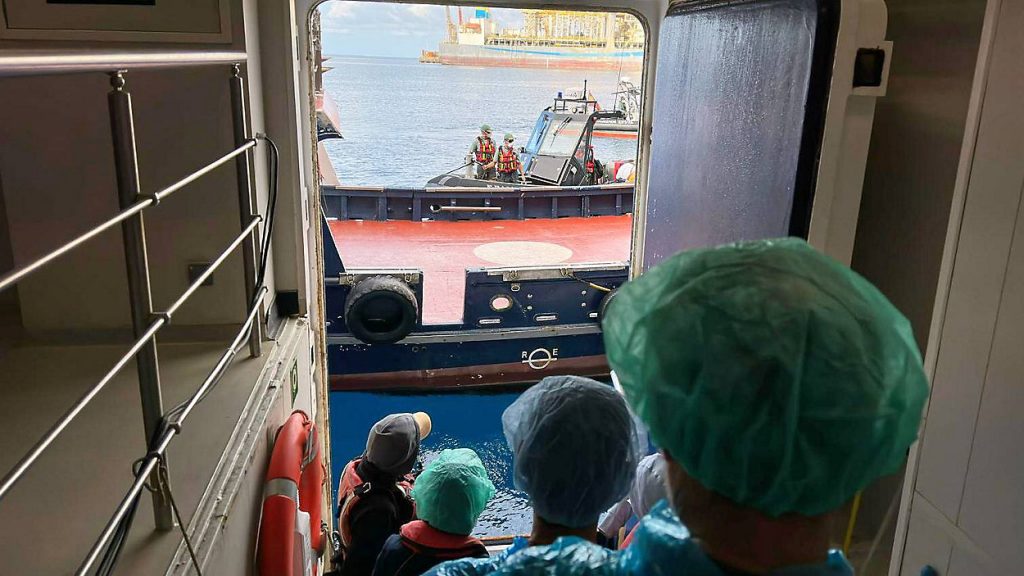
The cruise sector, the most shining engine of tourism, is facing since this May a reputation crisis that threatens to transform the docks of the Canary Islands into the epicenter of a new logistical insecurity. The departure this Monday of the MV Hondius from the coasts of Tenerife does not mark the end of a health emergency, but the beginning of an era of profound distrust. The image of the Canary ports has been degraded to that of makeshift sanitary cordons, evidencing a total absence of leadership and structural measures projecting an unprecedented image of operational ineffectiveness to the outside world.

The silence of regulators and risk exportation

As the MV Hondius heads to Rotterdam after a chaotic deployment at the port of Granadilla, the regulatory void is deafening. Despite the severity of the hantavirus outbreak, which has already left three deceased and confirmed cases in repatriated passengers —such as the French woman whose condition worsened in Paris this Monday after flying from Tenerife—, the Canary Islands have been unable to ensure a safe environment. Management has been based on a delayed reaction and a clash of competences, effectively exporting infected passengers to other continents due to evacuation protocols that have proven to be porous.

The industry seems to rely on individual crisis management to recover its image, ignoring that the ‘floating city’ model is under suspicion. Tenerife, this lack of clear guidelines resulted in a nightmarish spectacle, where the safety of the population was subjected to last-minute political arbitration instead of rigorous technical measures to prevent the virus from spreading globally.

The captain’s diplomacy against local ineffectiveness

In this tense scenario, the figure of Jan Dobrogowski, captain of the Hondius, has had to assume a role of stability that neither the regional nor the central government have been able to exercise. In a video message that reflects the fatigue of weeks of isolation, Dobrogowski has requested ‘privacy’ for a crew and passengers marked by mourning and uncertainty.

His appeal for ‘discipline and kindness’ from those who have remained on board acts as a human veil over a systemic management failure on land. The captain has warned against the decontextualization of images, aware that the public perception of the Canary ports has shifted from hospitality to fear. His gratitude for the ‘selfless bravery’ of his team highlights that the ship’s personnel have had to self-manage a lethal epidemiological crisis while Canary and state authorities became lost in a bureaucratic war and memes about swimming rodents.

Canary ports: From logistical centers to toxic assets

The image that the Canary docks export today to the international industry is profoundly negative. The conflict of competences between the regional Executive and the State has left shipping companies with a clear message: the Canary Islands is a destination of high institutional risk. The resolution of the Merchant Marine enforcing anchoring while nullifying the local ban demonstrates that there is no shared roadmap, making any call a potential legal and health battleground.

If major shipowners begin to see the Canary ports not as service centers, but as hotbeds of instability and legal conflict, the business model in the Mid-Atlantic becomes unsustainable. The inability to articulate a coordinated disembarkation in a single day, allowing the virus to ‘travel’ on commercial flights to France and the United States, is a reputational stain that will hardly be erased with tourism marketing campaigns.

An industry without a roadmap after management failure

As of today, neither the International Maritime Organization (IMO) nor local authorities have put forth a real emergency plan. The insistence on minimizing risks by the Ministry of Health and the response from Coalición Canaria focused on political confrontation instead of technical efficiency depict a landscape of administrative uselessness. The fact that positives have been confirmed outside Spain just hours after disembarking in Tenerife highlights that the Canary security filters failed spectacularly.

Operational responsibility should have been an absolute priority to protect the ‘Canarias’ brand. However, what has been projected is constant improvisation. The Canarian president Fernando Clavijo has defended his stance of firmness, but the reality is that the ship has operated under a state-imposed command due to the lack of viable regional alternatives.

The stigma of the ‘unsafe port’

The record of the MV Hondius is bleak: a trail of contagions spreading across the world after passing through Tenerife waters and an industry that looks askance at islands that have failed to respond appropriately to the emergency. The ‘silent force’ that Captain Dobrogowski mentions is, in reality, the silence of a sector that fears the incompetence displayed in this crisis becoming the norm.

Without measures to ensure that the next outbreak will not be managed with the same apathy, the Canary ports today export distrust. The luxury is no longer the main value of a cruise; now biological and legal safety is, and that is a currency that the archipelago has severely devalued following the events in Granadilla. The Hondius is leaving, but the stigma of ineffectiveness and insecurity threatens to anchor permanently in the Canary port network.


Google CONVIERTE CANARYMARITIME EN FUENTE DE NOTICIAS EN GOOGLE
Tags: Puertos de Tenerife
Previous Post

TSJC expels thousands of workers from the Canary Islands from union representation against the stevedore right

Next Post

Portugal exposes the CNMC: halts Boluda Towage to prevent a port monopoly

Raquel Molina Betancor

Raquel Molina Betancor

Raquel Molina Betancor is a veteran investigative journalist whose career has been defined by rigor, patience, and in-depth reporting on power structures, corruption, and institutional transparency. She trained in street reporting and court journalism and has collaborated with outlets such as Público, where she produced investigations and analytical pieces grounded in documentation, verified sources, and long-term judicial follow-up. A firm believer in journalism as a craft rather than a spectacle, her work focuses on exposing opaque administrative dynamics and telling uncomfortable stories with facts, context, and a healthy dose of well-aimed grit.

NewsRelated

El Puerto de Santa Cruz de Tenerife, pieza clave en la nueva ante el riesgo de terremotos
Defensa

Santa Cruz de Tenerife Port, a key element in the new earthquake-risk framework

16 October 2026
270
Elena Marín da el salto a la política con Teodoro Sosa en Las Palmas
Investment and European Funds

Elena Marín Enters Politics Alongside Teodoro Sosa in Las Palmas

16 October 2026
410
Santana se proyecta hacia la lista de Ángel Víctor Torres con el PSOE por Las Palmas
Financial Sustainability

Gustavo Santana left off PSOE’s Las Palmas lists and, for now, remains at the helm of Puertos del Estado

16 October 2026
307
Puertos Canarios abre al público sus recintos para potenciar el valor del dominio público marítimo
Financial Sustainability

Puertos Canarios clarifies scope of TSJC ruling on Puerto Rico and rules out extending concessions

16 October 2026
273
Lavinia lleva su batalla contra Hacienda ante el Tribunal Supremo
Financial Sustainability

Spain’s Supreme Court to rule on port concession extensions and their impact on Laskaridis’ business in Las Palmas

16 October 2026
311
Votorantim logra una prórroga de 15 años en el Puerto de Tenerife capital para ampliar su planta de Clinker
Financial Sustainability

Votorantim secures 15-year extension at Tenerife’s capital port to expand clinker plant

16 October 2026
274

Leave a Reply Cancel reply

Your email address will not be published. Required fields are marked *

© 2026 canarymaritime

  • Contact
  • Transparency
  • Code of ethics
  • Legal Notice
  • Privacy Policy
  • Cookie Policy (EU)
  • Intellectual Property Rights
  • Promise to Our Readers
  • Principles on the Use of AI
  • Commitment to Our Subscribers and Advertisers
  • Español
  • English
Gestionar consentimiento

Para ofrecer las mejores experiencias, utilizamos tecnologías como las cookies para almacenar y/o acceder a la información del dispositivo. El consentimiento de estas tecnologías nos permitirá procesar datos como el comportamiento de navegación o las identificaciones únicas en este sitio. No consentir o retirar el consentimiento, puede afectar negativamente a ciertas características y funciones.

Funcional Always active
El almacenamiento o acceso técnico es estrictamente necesario para el propósito legítimo de permitir el uso de un servicio específico explícitamente solicitado por el abonado o usuario, o con el único propósito de llevar a cabo la transmisión de una comunicación a través de una red de comunicaciones electrónicas.
Preferences
The technical storage or access is necessary for the legitimate purpose of storing preferences that are not requested by the subscriber or user.
Estadísticas
El almacenamiento o acceso técnico que se utiliza exclusivamente con fines estadísticos anónimos. Sin un requerimiento, el cumplimiento voluntario por parte de tu proveedor de servicios de Internet, o los registros adicionales de un tercero, la información almacenada o recuperada sólo para este propósito no se puede utilizar para identificarte. The technical storage or access that is used exclusively for anonymous statistical purposes. Without a subpoena, voluntary compliance on the part of your Internet Service Provider, or additional records from a third party, information stored or retrieved for this purpose alone cannot usually be used to identify you.
Marketing
The technical storage or access is required to create user profiles to send advertising, or to track the user on a website or across several websites for similar marketing purposes.
  • Manage options
  • Manage services
  • Manage {vendor_count} vendors
  • Read more about these purposes
Ver preferencias
  • {title}
  • {title}
  • {title}
No Result
View All Result
  • Home
  • Atlantic Ports
    • Atlantic Africa
  • Blue Energy
  • Logistic
  • Shipbuilding Industry
    • Shipyards and Ship Repair
    • Offshore and platforms
    • Industrial innovation and naval R&D
  • Blue Economy
    • Investment and European Funds
    • Financial Sustainability
    • Private Venture Capital
  • Atlantic Geopolitics
    • West Africa
    • Port Security and Defense
    • Blue Diplomacy
    • Canary Islands as a strategic hub
    • Drug Trafficking

  • Login

© 2026 canarymaritime.com


