




Holy Week in the Canary Islands. In Las Palmas, the availability of fuel for immediate deliveries remains scarce. Local operators warn that any order requires at least five days’ notice to ensure supply. This shortage is even more severe on the African continent. In Luanda (Angola), VLSFO fuel has vanished from storage facilities, and the arrival of new stocks is not expected until after April 10, causing a price surge. In Lagos (Nigeria), buyers must book ten days in advance, while in Port Louis (Mauritius), the situation is extremely limited.
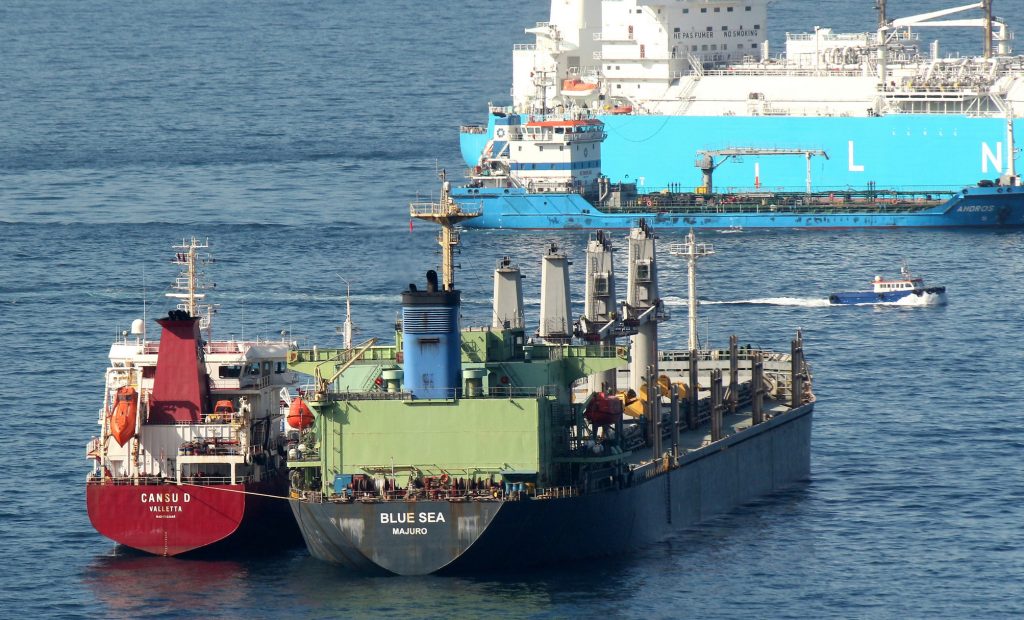
The global maritime refueling map is facing an unprecedented bottleneck. The military instability in the Middle East has led to a mass displacement of vessels towards West African routes, driving up demand and depleting stocks at strategic points. In the Strait of Gibraltar, the situation is one of technical saturation: suppliers are demanding notice periods of up to eight days, while the port of Gibraltar has a waiting list of 24 vessels. According to the agency A Mateos & Sons, 61 ships are expected to stop for refueling before April 4, a pressure exacerbated by forecasts of strong winds and intense waves that will hinder operations until April 2.
In the southernmost part of the continent, the ports of Durban and Algoa Bay (South Africa) are projecting a slight normalization, with deliveries scheduled for the end of the month. In Walvis Bay (Namibia) and Lomé (Togo), availability remains low, although traders are detecting a gradual improvement compared to last week. This recovery is vital for vessels avoiding the Red Sea, but congestion in the anchorage areas of Algeciras and difficulties in the Delta anchorage due to bad weather keep logistics in a constant state of alert for shipping companies.
The impact of cargo diversion on the ARA axis is evident. The Amsterdam-Rotterdam-Antwerp (ARA) hub reflects the impact of this change in trade flows. Insights Global data confirms that fuel oil stocks have fallen by 19% in March compared to the previous month. According to consulting firm Vortexa, imports in the region have decreased to 148,000 barrels per day, down from 192,000 in February. This reduction in supply mainly comes from Denmark, Sweden, and Libya, while diesel reserves have also slipped by 1% due to declining shipments from the United States, Kuwait, and Saudi Arabia.
Despite the drop in inventories, availability in the ARA axis remains stable for those who plan with a four to five-day lead time, thus avoiding surcharges for urgent deliveries. In Northern Europe, the port of Hamburg is operating normally, although long delivery times are recommended to ensure coverage. In contrast, the situation in Scandinavia is tense: in Gothenburg (Sweden) and Skaw (Denmark), delivery times have surged to ten days due to very limited supply.







