




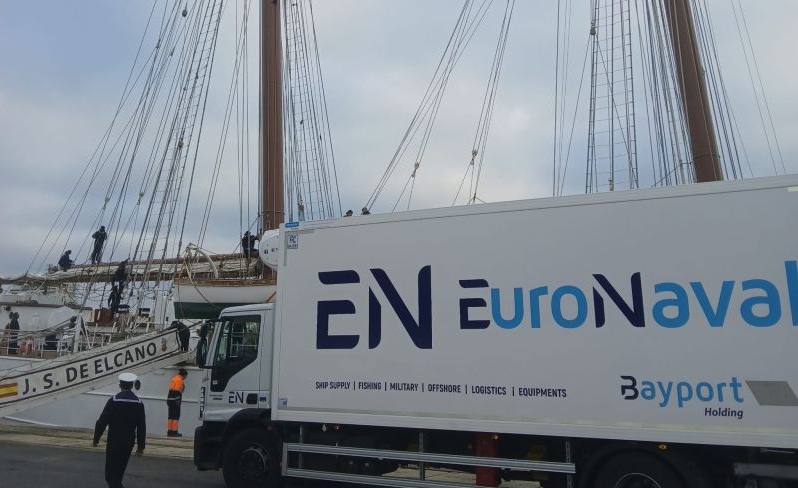
In naval diplomacy, there are traditions that are pure strategy. The Juan Sebastián de Elcano, the training ship of the Spanish Navy, has commenced its 98th training cruise. As per an unwritten but logistically vital norm, the Canary Islands will be its first stop before crossing the ocean to Fortaleza (Brazil). For the Canary ports, receiving the Elcano is not only a high-level ceremonial act; it is a reminder of the archipelago’s position as the ‘natural aircraft carrier’ and key resupply point in the Atlantic corridor. For this, the company Bayport is the one providing the technical support.
The Navy is committed to the classical training of its midshipmen. This year’s route is a declaration of intent: from the Panama Canal to London, passing through Mexico and the United States. The stopover in the islands serves to cohesively prepare the crew before facing the months of navigation that will take them back to Marín and Cádiz in July. It is, in essence, the training of the future military elite in an increasingly complex global scenario.
The deployment is massive: 20 countries and stops in hot spots like New Orleans or Boston. For the Port Authority of the Bay of Cádiz, bidding farewell to the vessel is an honor, but for the Canary institutions, receiving it is a golden opportunity to reinforce the bond between civil society and the Navy. At a time when controlling maritime flows and security in the mid-Atlantic are priorities on the agenda of the Government of the Canary Islands, the passage of the Elcano acts as a symbol of stability and sovereignty.
The 98th Training Cruise is the perfect balance between traditional sailing and modern diplomatic mission. The Canary Islands will welcome the midshipmen with an eye on the horizon of a 2026 that promises to be intense at the docks. The stay of the Elcano in the islands will be brief, but its impact on the international visibility of the Canary ports, as the first stage of this partial round-the-world voyage, is immeasurable.







