




This is more serious than it seems because a forecasting issue concerning the continuity of energy supply due to poor tides in Las Palmas can lead to public disorder in a country where there are severe racial tensions arising from immigration controls.
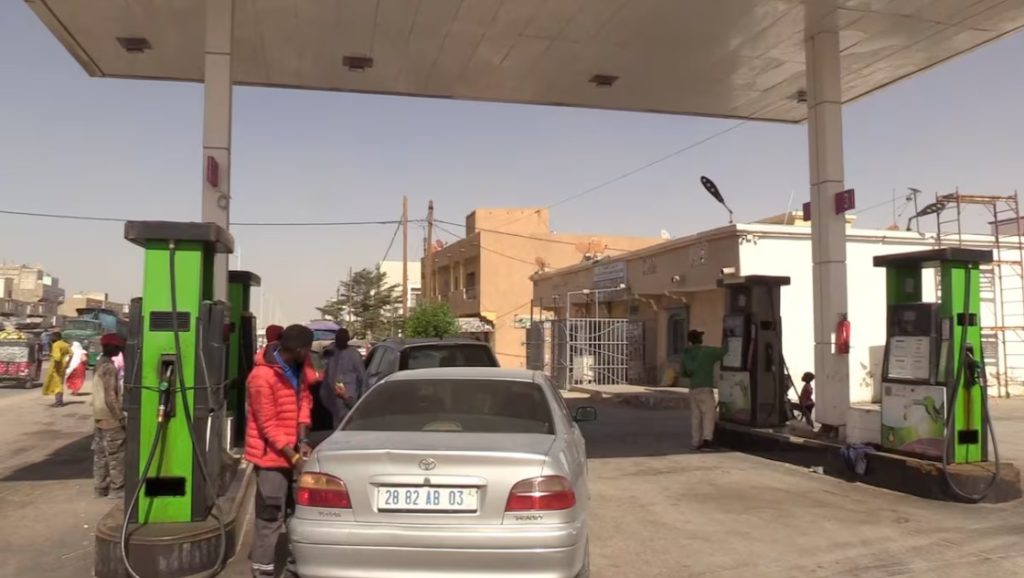
What began as a logistical disruption at the Oryx Energies depots in the Port of La Luz and Las Palmas has ultimately morphed into a supply crisis with elements reminiscent of a war economy across the Atlantic. Nouakchott, the Mauritanian capital, presents a scene more akin to Havana than an emerging gas power: long queues, sealed service stations, and a hydrocarbon market on the verge of technical collapse. The Switzerland-based company, which reportedly has its own shipping line, enjoys a special regime in the islands and built its business partly with European funds, faces this reputational blow just months before it puts the country’s supply tender out to bid.
The genesis of this crisis lies in the extreme vulnerability of the supply chain that connects the Canary Islands to the African continent. At the end of January, a storm with rough seas blocked the operations of the tanker chartered by Oryx Energies, the supplier holding the exclusive supply contract in Mauritania until December 2026 via Addax. With the flow from storage centers in Las Palmas failing, the Mauritanian system, which has barely 30 days’ worth of national consumption security reserves, went into a tailspin. Other consulted sources indicate that Mauritania has an emergency margin of just 3 days, which may seem logical in light of the current situation.
The emergency response from the Ministry of Oil and Energy has unveiled the seams of the model. El Hadramy Mohamed MBareck, the director of Supply, has had to authorize the use of strategic security reserves and coordinate the urgent transport of fuel by road from depots in Senegal. This maneuver, while alleviating tension at critical points, does not hide the structural problem: any logistical hiccup at the Port of Las Palmas translates into an economic pneumonia for a country that, despite its vast natural resources, remains hostage to a ‘just-in-time’ logistics system dictated from the Canary archipelago, as it is the only area operating under EU legal guarantees and is part of the Eurozone.
The paradox is purely economic. On February 2, 2026, the Mauritanian government activated a regulatory mechanism to pass on the drop in international crude oil prices to consumers. The result was a reduction in gasoline, which fell to 1.25 euros per liter (53.8 ouguiyas), and diesel, which was set at 1.13 euros per liter (48.79 ouguiyas). However, deflation has proven to be an illusion: citizens find prices on paper for products that are simply unavailable at the pumps.
The Mauritanian case is a warning about the fragility of Atlantic margins. While operators celebrate the efficiency of the Canarian hubs, the reality on the ground shows that the lack of storage infrastructure in West Africa turns weather fluctuations into economic disasters.







