
Saturday, 17 October 2026
  • Login
  • Español
  • English
Suscribirme
Subscribe
canarymaritime.com
No Result
View All Result
  • Home
  • Atlantic Ports
    • Atlantic Africa
  • Blue Energy
  • Logistic
  • Shipbuilding Industry
    • Shipyards and Ship Repair
    • Offshore and platforms
    • Industrial innovation and naval R&D
  • Blue Economy
    • Investment and European Funds
    • Financial Sustainability
    • Private Venture Capital
  • Atlantic Geopolitics
    • West Africa
    • Port Security and Defense
    • Blue Diplomacy
    • Canary Islands as a strategic hub
    • Drug Trafficking
  • Home
  • Atlantic Ports
    • Atlantic Africa
  • Blue Energy
  • Logistic
  • Shipbuilding Industry
    • Shipyards and Ship Repair
    • Offshore and platforms
    • Industrial innovation and naval R&D
  • Blue Economy
    • Investment and European Funds
    • Financial Sustainability
    • Private Venture Capital
  • Atlantic Geopolitics
    • West Africa
    • Port Security and Defense
    • Blue Diplomacy
    • Canary Islands as a strategic hub
    • Drug Trafficking
  • Español
No Result
View All Result
canarymaritime.com
es Español en English
No Result
View All Result
Home Blue Economy & Finance Investment and European Funds

20 years of maritime fiction in the Canary Islands: the Tarfaya sinkhole that Brussels keeps under surveillance

Raquel Molina Betancor by Raquel Molina Betancor
28 May 2026
in Investment and European Funds
Reading Time: 4 mins read
0
50
SHARES
310
VIEWS
Compartir en WhatsappCompartir en LinkedIn
Google CONVIERTE CANARYMARITIME EN FUENTE DE NOTICIAS EN GOOGLE

Commercial diplomacy in the Central Atlantic is often governed by institutional rhetoric that systematically dodges financial viability. The project to reestablish the maritime connection between Fuerteventura and the Moroccan enclave of Tarfaya embodies a loop of broken promises that has extended for two decades. Successive regional administrations in the Canary Islands and government authorities in Rabat have built a calendar of fictitious openings that clashes with the total absence of private operators willing to take on the logistical risk. This budgetary and administrative inertia acts as a focus of technical distrust that European Commission analysts observe with strict skepticism.

Collapse

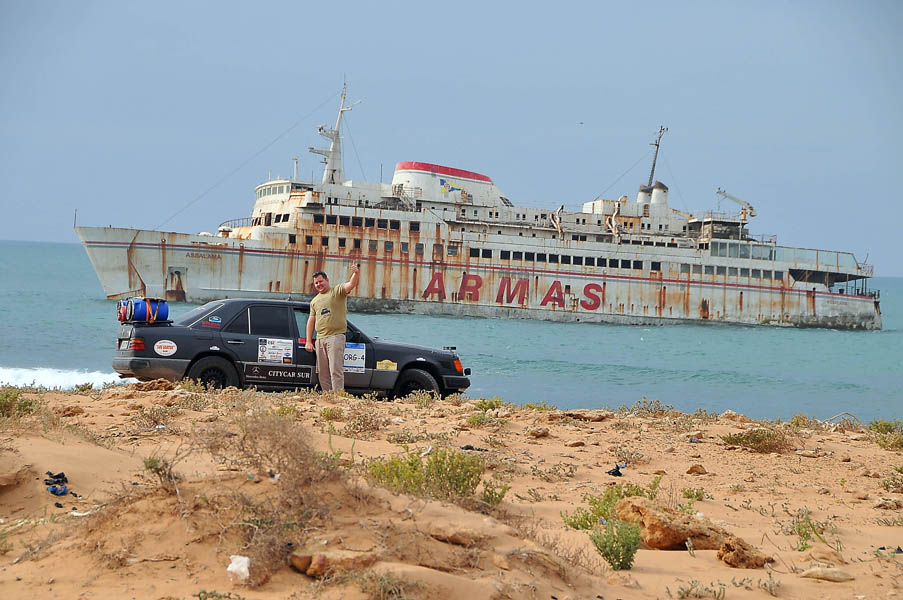
The actual collapse of this infrastructure dates back to the planning failures that began in 2006, reaching its definitive climax in 2008. The Assalama ferry, operated by Naviera Armas with a capacity for 170 passengers and 60 vehicles, ran aground on the shallow waters off the African coast after taking on water due to scraping against the breakwater of Tarfaya during a four-hour journey. That maritime disaster definitively interrupted the route, exposing the physical insecurity and lack of shelter at the receiving port. The loss of the vessel marked the beginning of a structural paralysis that later political announcements attempted to camouflage through systematically unmet deadlines.

Theater of operations

The sale of economic expectations regarding this route has historically approached the realm of accounting fantasy. On November 11, 2014, during the fifth edition of the Atlantic Logistics and Transport Fair (SALT 2014), it was advertised that five studies from regional and international consulting firms backed business prospects of up to 41 million euros for the line. Those theoretical reports, supported under the European connectivity program TransMaCa, were prepared by firms such as PWC, Corporación 5, the Canary Transport and Logistics Cluster, and independent consultant Fernando G. Calero, whose track record lacks verifiable digital footprint in the sector from then until 2026. This propaganda campaign was revived in April 2026 by Juan Jesús Rodríguez Marichal, president of the Fuerteventura Chamber of Commerce, who once again described the link as an essential turning point for diversifying the island economy.
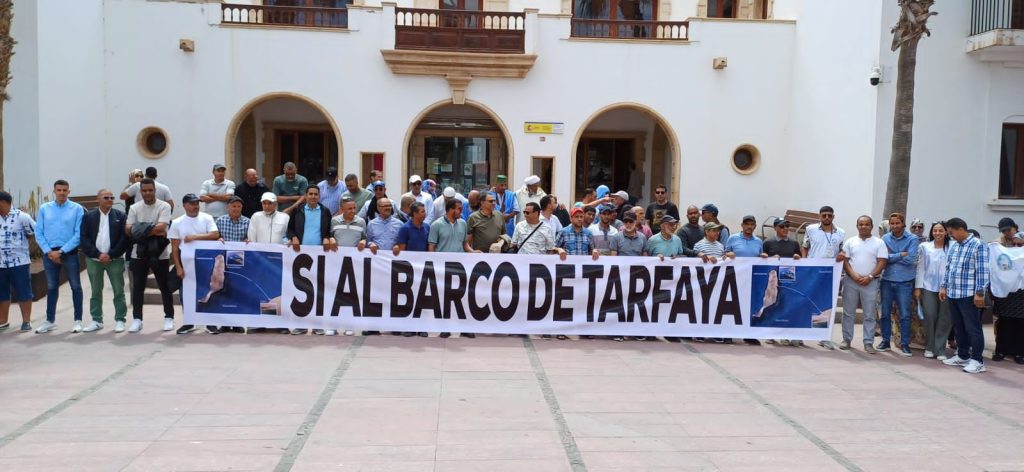
The accumulation of failed forecasts began to accelerate in the middle of the last decade. In 2014, the then director of Transport for the Government of the Canary Islands, Rosa Dávila, stated that the line would be operational within a maximum of six months. The falsehood of the estimate was exposed on June 24, 2015, when the director of the regional investment center of El Aaiún, Mohamed Boumesmar, postponed the inauguration to December of that same year. On November 20, 2015, the Moroccan consul in the Canary Islands, Ahmed Moussa, again modified the schedule, setting the opening for early 2016. On March 24, 2016, the president of the Cabildo of Fuerteventura, Marcial Morales, added another falsehood by publicly declaring that the dock works were already completed.

Chronology

The propaganda machinery maintained its activity despite the total inoperability of the dock. A delegation of institutional representatives from Fuerteventura traveled to the area on April 23, 2016, ensuring that the infrastructure was 93% complete and would open in August of that year. On October 15, 2016, the president of the Port Authority of Las Palmas, Luis Ibarra, moved the reactivation date to March 2017. The private market dealt the definitive blow to this political strategy on January 30, 2017, when Fred. Olsen Express categorically ruled out participating in the route due to its absolute lack of commercial profitability.

Falsehoods

Official denials continued alongside the rejection from the corporate shipping sector. Moroccan authorities set the opening for autumn 2017 in a statement made on April 22, 2017, a deadline supported on May 15, 2017 by the Canary government’s Department of Economy, alluding to a reactivation in the coming months. On May 18, 2017, the mayor of Sidi Ifni even suggested the existence of a hidden hand delaying the last details of the Fuerteventura-Tarfaya and Gran Canaria-Sidi Ifni lines, just a day before economic media confirmed, on May 19, 2017, that the opening of an alternative route between Las Palmas and the Sahara definitively strained Fuerteventura’s plans.

Smoke

The unviability of the maritime corridor persisted during the second half of that year. Morocco announced a fictitious agreement with Acciona to reopen the connection on May 28, 2017, followed by an appearance on July 21, 2017, by the Councilor of Public Works, Pablo Rodríguez, who promised a journey of one hour and forty-five minutes without specifying concrete dates. Technical reports from October 31, 2017, confirmed that no shipping company considered the axis with Tarfaya profitable without the injection of direct public subsidies. Despite the fact that on November 6, 2017 regional propaganda claimed that the dock was just waiting for the ship, the project was officially delayed again on February 9, 2018. Promoters then blamed the fear of the central government in Madrid that the Canary Islands would consolidate direct commercial ties with Africa, hiding the technical deficiencies.

Turrón

The institutional stagnation continued through budgetary intention statements. The Canary Islands and Morocco staged a new revival alliance on January 20, 2019, followed by twinning plans on October 24, 2019, and a formal commitment from the Cabildo of Fuerteventura on November 14, 2019. The autonomous government noted that they were still waiting for the corridor on July 28, 2020, resuming the rhetoric of an opening soon on November 1, 2021. On November 10, 2021, island president Sergio Lloret again called for the connection amid the wear of public opinion, which on November 19, 2021, censured sterile insistence with the so-called Tarfaya refrain.

The last cycle of this administrative labyrinth was reactivated with the official trip of the president of the Canary Islands to Rabat in February 2023. The regional delegation announced the formal reactivation of the route in March 2023, when Morocco accepted that a Spanish company would take over the operation after the bids for Moroccan firms were left vacant. Applause from the Chamber of Commerce in May 2023 and the umpteenth coordination meetings of the Cabildo of Fuerteventura in June 2023 preceded the bilateral summit of December 2023. Twenty years later, the balance of this corridor offers a clear diagnosis of tariff distrust, an explicit rejection from shipping companies due to a lack of critical cargo mass, and a sinkhole of funds that Brussels keeps under strict control. Any day now, the UCO could appear in official and private offices in Las Palmas and Tenerife.


Google CONVIERTE CANARYMARITIME EN FUENTE DE NOTICIAS EN GOOGLE
Tags: Africa Occidentalpuerto las palmas
Previous Post

The Fiasco of Freiremar: Treasury Buries the Attempt to Save the RIC Through Document Chaos in the Canaries

Next Post

Three and a half years in prison for the brains behind a scam network at the Port of Las Palmas

Raquel Molina Betancor

Raquel Molina Betancor

Raquel Molina Betancor is a veteran investigative journalist whose career has been defined by rigor, patience, and in-depth reporting on power structures, corruption, and institutional transparency. She trained in street reporting and court journalism and has collaborated with outlets such as Público, where she produced investigations and analytical pieces grounded in documentation, verified sources, and long-term judicial follow-up. A firm believer in journalism as a craft rather than a spectacle, her work focuses on exposing opaque administrative dynamics and telling uncomfortable stories with facts, context, and a healthy dose of well-aimed grit.

NewsRelated

Elena Marín da el salto a la política con Teodoro Sosa en Las Palmas
Investment and European Funds

Elena Marín Enters Politics Alongside Teodoro Sosa in Las Palmas

16 October 2026
410
Enagás, Sabadell y el ICO reestructuran el negocio de los buques en Tenerife
Financial Sustainability

Bunkering: Naturgy and Enagás confirm LNG bunkering at Santa Cruz de Tenerife port from 2028

15 October 2026
286
EMSA: Península arrebata a DISA la anticontaminación de Canarias con el Panama 100
Investment and European Funds

EMSA: Peninsula takes over Canary Islands oil-spill response from DISA with Panama 100

12 October 2026
283
Puertos de Las Palmas invita a una empresa del presidente de Fedeport para darle 150.000 euros y esta se olvida de responder
Investment and European Funds

Canary Islands port business groups pivot: alignment with the PP takes shape ahead of the Nov. 29 elections

7 October 2026
305
La burbuja de la eólica marina de Canarias choca en Bruselas con Vox y la pesca artesanal
Investment and European Funds

The Canary Islands’ offshore wind bubble runs into Vox and small-scale fisheries in Brussels

7 October 2026
297
Aegean (Laskaridis) frena el rescate de Volotea y aboca a la aerolínea a un ajuste drástico
Investment and European Funds

Aegean (Laskaridis) Halts Volotea Bailout, Forcing the Airline Into Drastic Restructuring

29 September 2026
331

Leave a Reply Cancel reply

Your email address will not be published. Required fields are marked *

© 2026 canarymaritime

  • Contact
  • Transparency
  • Code of ethics
  • Legal Notice
  • Privacy Policy
  • Cookie Policy (EU)
  • Intellectual Property Rights
  • Promise to Our Readers
  • Principles on the Use of AI
  • Commitment to Our Subscribers and Advertisers
  • Español
  • English
Gestionar consentimiento

Para ofrecer las mejores experiencias, utilizamos tecnologías como las cookies para almacenar y/o acceder a la información del dispositivo. El consentimiento de estas tecnologías nos permitirá procesar datos como el comportamiento de navegación o las identificaciones únicas en este sitio. No consentir o retirar el consentimiento, puede afectar negativamente a ciertas características y funciones.

Funcional Always active
El almacenamiento o acceso técnico es estrictamente necesario para el propósito legítimo de permitir el uso de un servicio específico explícitamente solicitado por el abonado o usuario, o con el único propósito de llevar a cabo la transmisión de una comunicación a través de una red de comunicaciones electrónicas.
Preferences
The technical storage or access is necessary for the legitimate purpose of storing preferences that are not requested by the subscriber or user.
Estadísticas
El almacenamiento o acceso técnico que se utiliza exclusivamente con fines estadísticos anónimos. Sin un requerimiento, el cumplimiento voluntario por parte de tu proveedor de servicios de Internet, o los registros adicionales de un tercero, la información almacenada o recuperada sólo para este propósito no se puede utilizar para identificarte. The technical storage or access that is used exclusively for anonymous statistical purposes. Without a subpoena, voluntary compliance on the part of your Internet Service Provider, or additional records from a third party, information stored or retrieved for this purpose alone cannot usually be used to identify you.
Marketing
The technical storage or access is required to create user profiles to send advertising, or to track the user on a website or across several websites for similar marketing purposes.
  • Manage options
  • Manage services
  • Manage {vendor_count} vendors
  • Read more about these purposes
Ver preferencias
  • {title}
  • {title}
  • {title}
No Result
View All Result
  • Home
  • Atlantic Ports
    • Atlantic Africa
  • Blue Energy
  • Logistic
  • Shipbuilding Industry
    • Shipyards and Ship Repair
    • Offshore and platforms
    • Industrial innovation and naval R&D
  • Blue Economy
    • Investment and European Funds
    • Financial Sustainability
    • Private Venture Capital
  • Atlantic Geopolitics
    • West Africa
    • Port Security and Defense
    • Blue Diplomacy
    • Canary Islands as a strategic hub
    • Drug Trafficking

  • Login

© 2026 canarymaritime.com



