
Saturday, 17 October 2026
  • Login
  • Español
  • English
Suscribirme
Subscribe
canarymaritime.com
No Result
View All Result
  • Home
  • Atlantic Ports
    • Atlantic Africa
  • Blue Energy
  • Logistic
  • Shipbuilding Industry
    • Shipyards and Ship Repair
    • Offshore and platforms
    • Industrial innovation and naval R&D
  • Blue Economy
    • Investment and European Funds
    • Financial Sustainability
    • Private Venture Capital
  • Atlantic Geopolitics
    • West Africa
    • Port Security and Defense
    • Blue Diplomacy
    • Canary Islands as a strategic hub
    • Drug Trafficking
  • Home
  • Atlantic Ports
    • Atlantic Africa
  • Blue Energy
  • Logistic
  • Shipbuilding Industry
    • Shipyards and Ship Repair
    • Offshore and platforms
    • Industrial innovation and naval R&D
  • Blue Economy
    • Investment and European Funds
    • Financial Sustainability
    • Private Venture Capital
  • Atlantic Geopolitics
    • West Africa
    • Port Security and Defense
    • Blue Diplomacy
    • Canary Islands as a strategic hub
    • Drug Trafficking
  • Español
No Result
View All Result
canarymaritime.com
es Español en English
No Result
View All Result
Home Atlantic Geopolitics

The dilemma of the Canary Islands ports in the face of the logistical pinch from Senegal and Morocco

Raquel Molina Betancor by Raquel Molina Betancor
24 February 2026
in Atlantic Geopolitics
Reading Time: 3 mins read
0
52
SHARES
328
VIEWS
Compartir en WhatsappCompartir en LinkedIn
Google CONVIERTE CANARYMARITIME EN FUENTE DE NOTICIAS EN GOOGLE

In the cartography of global trade, the destiny of Mali has historically been dictated by its geography. As a landlocked nation, its economy has been a hostage to the stability of its neighbors and the precariousness of land routes that inflate the cost of every gram of gold and every bale of cotton. However, the announcement of the opening of the Saint-Louis–Ambidédi river corridor suggests that the Palace of Koulouba is finally willing to rewrite its fate. Starting April 2026, the Senegal River will cease to be just a water resource and will become a strategic highway to the Atlantic.

Chain effect

The effect for the archipelago is a loss of strategic relevance. If the Senegal corridor becomes the exit route for interior resources and Dakhla the service center on the coast, the Canary Islands risk becoming a ‘museum-island’: a territory with impeccable European standards but devoid of the actual trade flows that move the region. The awakening of Bamako and the ambition of Rabat are building a new reality where the Atlantic horizon no longer necessarily passes through the Canary docks.

The project, driven by the Organization for the Utilization of the Senegal River (OMVS), represents a direct challenge to the logistical inefficiency that has suffocated the region for decades. With a projected reduction in transport costs of up to 60 percent, the viability of transforming Ambidédi, in the Kayes region, into an inland port is not just a matter of engineering but of economic arbitration. For global markets, a Mali with access to the sea means smoother and cheaper access to the mineral and agricultural resources of one of the most complex frontiers in the Sahel.

Funds

From an investment perspective, the backing of SOGENAV and the four-party cooperation among Mali, Senegal, Mauritania, and Guinea signify a rare moment of infrastructural cohesion in a volatile political climate. This ‘sovereignty corridor’ aligns with the rhetoric of the Sahel States Alliance (AES), which desperately seeks to reduce dependence on traditional coastal ports, whose relationships with Bamako have been eroded by sanctions and diplomatic tensions. In this case, infrastructure acts as a tool of geopolitical emancipation.

Still thinking of Brussels

The Mid-Atlantic board is being reconfigured at a speed that threatens to leave the Canary Islands out of play because they have nothing behind them. While Canary institutions focus on managing their internal balances, two tectonic movements on the African coast are poised to break the logistical monopoly that the islands have held for decades. The opening of the Senegal river corridor for Mali and the arrival of the Dakhla Atlantique megaport are not just infrastructure projects; they signify the end of the African isolation that justified the existence of the Canary Islands as the only safe platform.

Stevedores?

The Saint-Louis–Ambidédi project is, in essence, a geopolitical bypass. By allowing Mali—a powerhouse in gold and cotton—direct access to the sea, the Sahel stops looking north for transshipment services. Historically, the Canary Islands have functioned as the ‘safe warehouse’ for trade that could not directly enter inefficient African ports. With a 60% reduction in logistics costs on this new river route, the incentive for trade flows to pass through Las Palmas or Santa Cruz fades in favor of a sovereign African corridor. The stevedoring right-wing in Las Palmas must be celebrating all of this.

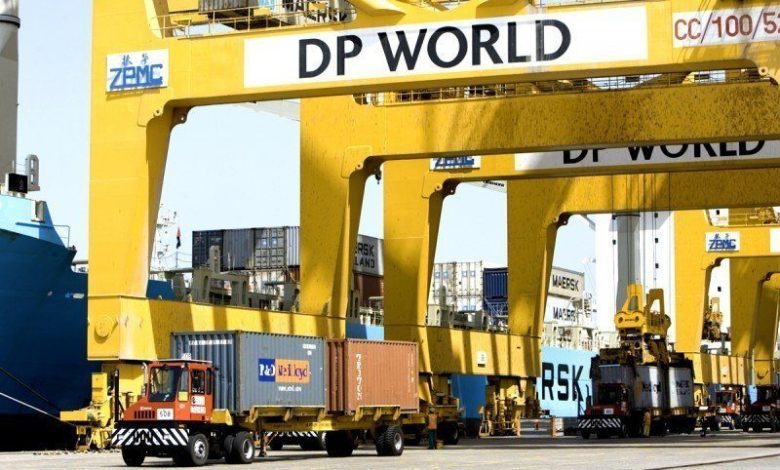
In addition, there is the ‘Maersk operation’ in Morocco. The injection of 243 million dollars from AP Moller Capital to bolster Moroccan logistics is a direct message to Canary hegemony. Dakhla Atlantique competes not only on proximity but also on a model of costs and operational freedom that the rigid regulations of the European Union in the Canary Islands cannot replicate. The Danish giant is not investing in Morocco to complement the Canary Islands but to offer a comprehensive alternative that absorbs traffic from the Mid-Atlantic from a continental base.


Google CONVIERTE CANARYMARITIME EN FUENTE DE NOTICIAS EN GOOGLE
Previous Post

Stonepeak places the port of Tenerife on its radar of operations

Next Post

The Great Game of Gas: Washington Accelerates the Sahara Ahead of the Opening of the Trans-Saharan Tap

Raquel Molina Betancor

Raquel Molina Betancor

Raquel Molina Betancor is a veteran investigative journalist whose career has been defined by rigor, patience, and in-depth reporting on power structures, corruption, and institutional transparency. She trained in street reporting and court journalism and has collaborated with outlets such as Público, where she produced investigations and analytical pieces grounded in documentation, verified sources, and long-term judicial follow-up. A firm believer in journalism as a craft rather than a spectacle, her work focuses on exposing opaque administrative dynamics and telling uncomfortable stories with facts, context, and a healthy dose of well-aimed grit.

NewsRelated

Puertos Canarios lanza un plan para reducir el impacto de la contaminación lumínica
Port Security and Defense

Puertos Canarios Launches Plan to Reduce the Impact of Light Pollution

12 October 2026
264
El Instituto de la Marina renueva los permisos a Centro de Formación Marítima en Tenerife
Port Security and Defense

Social Marine Institute renews authorization for Centro de Formación Marítima in Tenerife

6 October 2026
272
El ejército invisible que custodia los puertos de Tenerife: la Policía Portuaria
Port Security and Defense

The Invisible Army Guarding Tenerife’s Ports: The Port Police

2 October 2026
328
40 años del Ángela Pando: la epopeya subacuática de José Luis Samper que transformó al puerto de Las Palmas
Blue Diplomacy

40 Years of the Ángela Pando: José Luis Samper’s Underwater Epic That Transformed the Port of Las Palmas

1 October 2026
306
Una trola en un reconocimiento del GEAS en Puertos de Tenerife desata una tormenta en la Guardia Civil
Defensa

A Lie About a GEAS Inspection at Tenerife Ports Sets Off Turmoil Within the Guardia Civil

29 September 2026
297
La Fiscalía pide revisar la grieta legal que ampara impunidad en aguas no españolas de Canarias
Financial Sustainability

Prosecutors call for review of legal loophole shielding impunity in non-Spanish waters off the Canary Islands

28 September 2026
285

Leave a Reply Cancel reply

Your email address will not be published. Required fields are marked *

© 2026 canarymaritime

  • Contact
  • Transparency
  • Code of ethics
  • Legal Notice
  • Privacy Policy
  • Cookie Policy (EU)
  • Intellectual Property Rights
  • Promise to Our Readers
  • Principles on the Use of AI
  • Commitment to Our Subscribers and Advertisers
  • Español
  • English
Gestionar consentimiento

Para ofrecer las mejores experiencias, utilizamos tecnologías como las cookies para almacenar y/o acceder a la información del dispositivo. El consentimiento de estas tecnologías nos permitirá procesar datos como el comportamiento de navegación o las identificaciones únicas en este sitio. No consentir o retirar el consentimiento, puede afectar negativamente a ciertas características y funciones.

Funcional Always active
El almacenamiento o acceso técnico es estrictamente necesario para el propósito legítimo de permitir el uso de un servicio específico explícitamente solicitado por el abonado o usuario, o con el único propósito de llevar a cabo la transmisión de una comunicación a través de una red de comunicaciones electrónicas.
Preferences
The technical storage or access is necessary for the legitimate purpose of storing preferences that are not requested by the subscriber or user.
Estadísticas
El almacenamiento o acceso técnico que se utiliza exclusivamente con fines estadísticos anónimos. Sin un requerimiento, el cumplimiento voluntario por parte de tu proveedor de servicios de Internet, o los registros adicionales de un tercero, la información almacenada o recuperada sólo para este propósito no se puede utilizar para identificarte. The technical storage or access that is used exclusively for anonymous statistical purposes. Without a subpoena, voluntary compliance on the part of your Internet Service Provider, or additional records from a third party, information stored or retrieved for this purpose alone cannot usually be used to identify you.
Marketing
The technical storage or access is required to create user profiles to send advertising, or to track the user on a website or across several websites for similar marketing purposes.
  • Manage options
  • Manage services
  • Manage {vendor_count} vendors
  • Read more about these purposes
Ver preferencias
  • {title}
  • {title}
  • {title}
No Result
View All Result
  • Home
  • Atlantic Ports
    • Atlantic Africa
  • Blue Energy
  • Logistic
  • Shipbuilding Industry
    • Shipyards and Ship Repair
    • Offshore and platforms
    • Industrial innovation and naval R&D
  • Blue Economy
    • Investment and European Funds
    • Financial Sustainability
    • Private Venture Capital
  • Atlantic Geopolitics
    • West Africa
    • Port Security and Defense
    • Blue Diplomacy
    • Canary Islands as a strategic hub
    • Drug Trafficking

  • Login

© 2026 canarymaritime.com



